Stainless steel pans: size, handles and everyday care
A stainless steel pan is easier to choose when you compare its cooking surface, weight and handle arrangement before its finish or number of layers.
Match the geometry to the meal
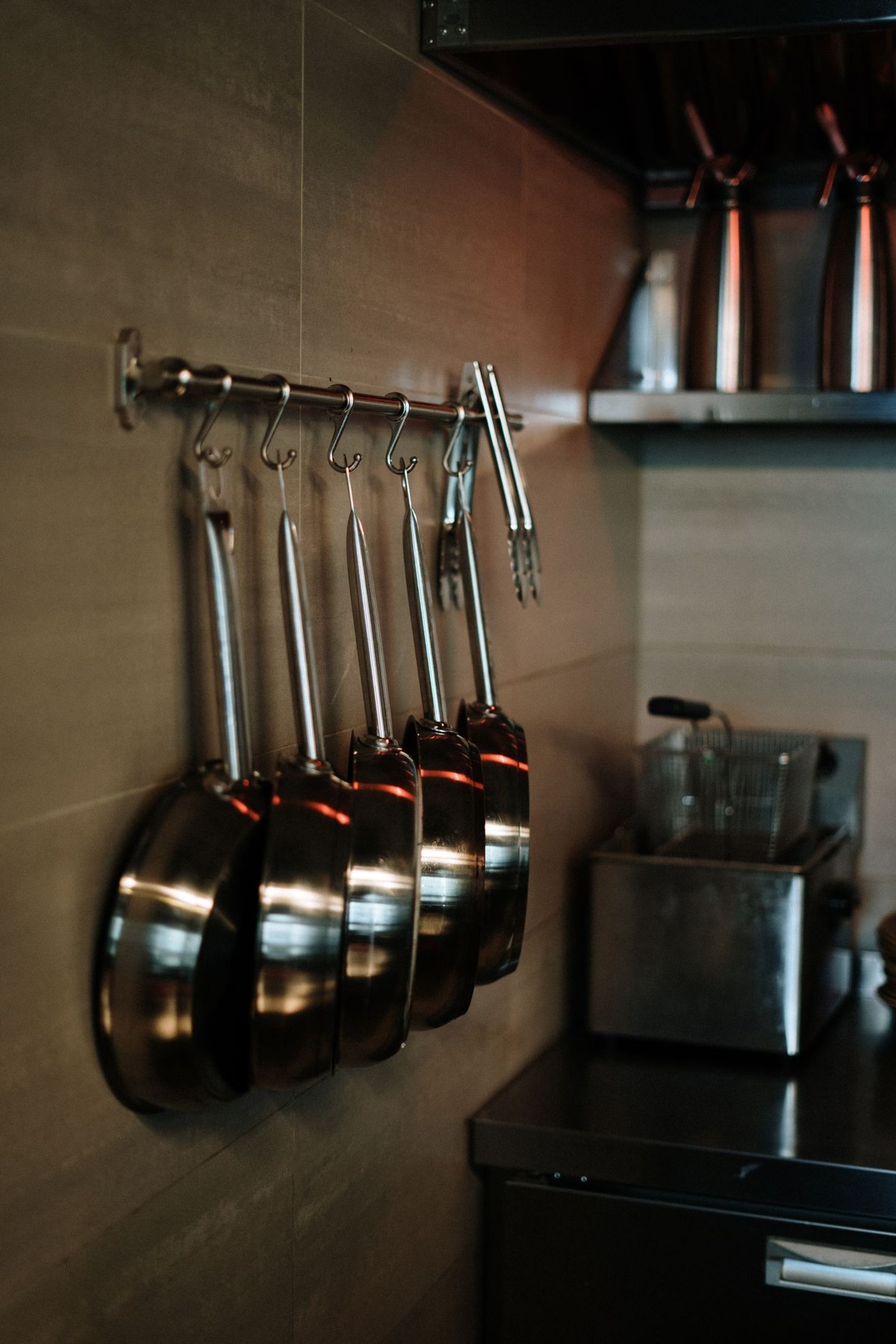
Measure the usable flat base, not just the diameter across the rim. A wide sloping-sided frying pan and a straight-sided sauté pan can have the same advertised diameter but hold food differently. Consider whether you need room to turn several pieces, stir a sauce or lift a full pan to drain it.
Check hob compatibility, especially for induction, on the exact product. Stainless steel describes a family of alloys and does not by itself establish induction performance. The base construction matters. The pan should also suit the size of the cooking zone; an oversized pan on a small ring may not heat as you expect.
For a concrete comparison, imagine a wide shallow pan and a narrower deep pan sold at the same price. The shallow pan gives more space to brown food in one layer, but the deep pan may contain stirring and splashes more conveniently. Neither shape is inherently superior. Choose according to the dishes you repeat most often, and check the flat cooking area rather than judging capacity from a photograph taken at an angle.
Handle the empty pan before imagining it full
If shopping in person, lift it with the grip you normally use. Add the idea of several portions of food to that weight. A helper handle can make a large pan easier to move, but it also needs space in the oven and cupboard. Check whether the handle shape remains comfortable when wearing oven gloves.
Read oven limits for the body, handle, lid and lid knob separately. A metal pan may have a handle component with a lower limit. A glass lid may have another restriction. Do not transfer a stovetop-safe claim into permission for a grill or an oven's cleaning cycle.
A large set can be poor value if only two pieces fit your cooking habits. One well-sized pan with a compatible lid may cover more meals than a collection of overlapping sizes. Include storage and cleaning access in the comparison rather than assuming more pieces are automatically useful.
Look at how the lid sits and where steam exits when it is lifted. A close-fitting lid may be useful for simmering, while a pouring rim or straining feature adds another handling step. If you usually drain pasta, consider whether you can manage the filled pan and lid together or whether a separate colander is more comfortable. Do not let a feature count replace a realistic assessment of grip and weight.
Keep the surface within its care instructions
Use the heating guidance supplied with the pan and avoid treating maximum power as the default. Allow the pan to cool as directed before cleaning; do not improvise a sudden cold-water treatment for a very hot pan. Choose cleaners and tools approved for the finish, and address stuck food with the permitted soaking or cleaning method.
Stainless steel can mark or develop deposits without every mark representing a safety problem. Ask the manufacturer about an unfamiliar change rather than attacking it with an abrasive intended for another material. Health Canada's guidance notes that adding salt after water is boiling helps avoid surface pitting. If you have a diagnosed nickel allergy, discuss cookware material choices with a clinician and obtain the actual composition information from the supplier.
If food regularly sticks, check the recommended heating sequence and the amount of food in the pan before assuming the surface is defective. Overcrowding, moisture and technique can affect cooking results. Keep troubleshooting within the manufacturer's guidance rather than chasing extreme-temperature water tests from unrelated videos. A loose handle, warped base or damaged joint is a different issue and should be assessed as a product fault rather than a cooking-technique problem.