Microwave-safe does not mean suitable for every use
Microwave suitability is tied to a container and its instructions. It is not permission to put that container through every hot kitchen process.
Check which cooking mode is running
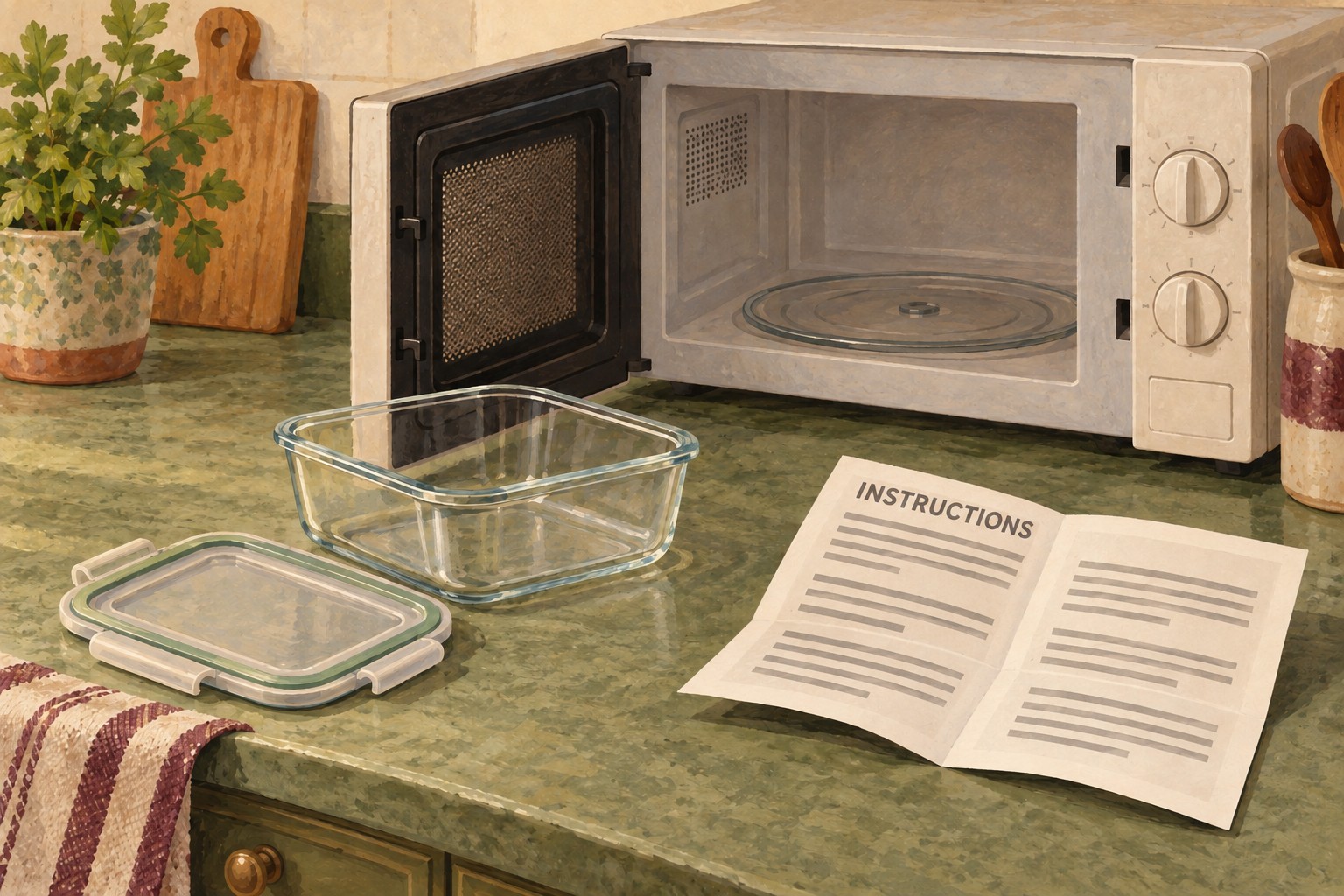
Combination ovens can operate as a microwave, grill or conventional oven. A plastic box allowed for microwave reheating may be unsuitable for the other modes, even when the controls are on the same appliance. Read the appliance manual as well as the container directions. If either is unclear, transfer the food to a vessel with explicit permission for the selected mode.
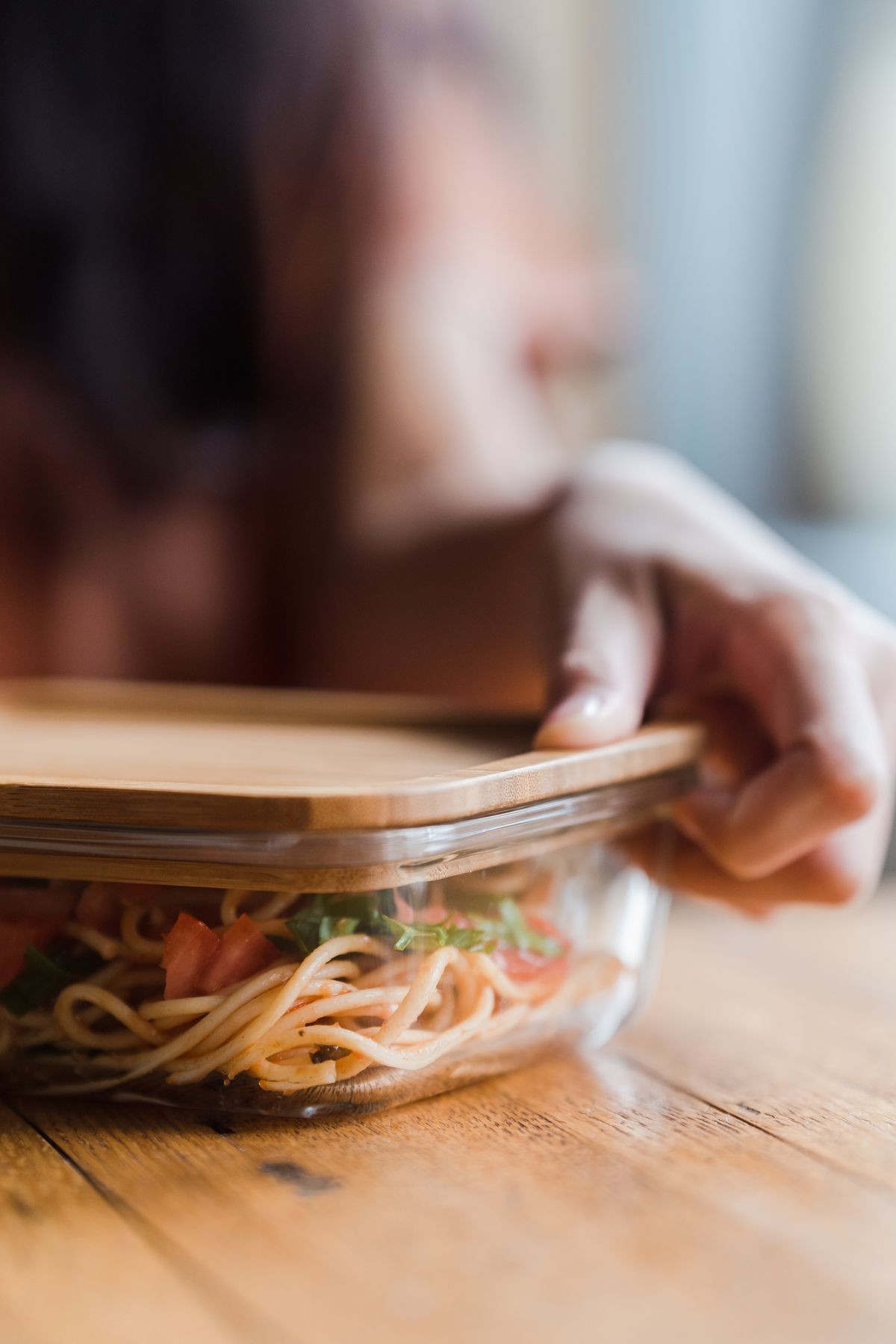
The lid needs its own check. Some covers must be removed, loosened or positioned to release steam. A sealed storage arrangement is not automatically a heating arrangement. Never improvise by tightly closing an ordinary food-storage box to keep splashes inside. Use a cover designed for the task and follow the specified venting method.
Food changes the heating conditions
The FDA explains that containers can become hot from the food they hold. A cool-looking handle or plastic rim does not tell you the temperature of the contents. Fatty or sugary foods can also behave differently from a bowl of water, so a home trial with water cannot validate every possible meal.
Match portions and heating duration to the food and appliance instructions. Stir or turn food when directed, allow the stated standing time and check reheating as recommended for that food. Container suitability does not ensure even heating or make leftovers safe indefinitely. Steam released when opening a cover can burn; direct it away from your face and hands.
Avoid assuming that a container rated for reheating is intended for lengthy cooking, melting concentrated sugar or heating without food. Those are different conditions. The words beside the symbol often explain more than the symbol itself, including limitations that are absent from a retailer's thumbnail image.
A short check before pressing start
Confirm the product is intact, the lid arrangement is correct and the appliance is in the intended mode. Use the same model-specific directions after replacing a lid; similar-looking covers may have different venting features. Keep instructions somewhere accessible to everyone who uses the kitchen.
If the container warps, cracks, leaks or changes unexpectedly, stop using it for heating and ask the manufacturer what to do next. Do not continue because the microwave-safe mark is still visible. Conversely, the presence of that mark does not prove a product is suitable for the freezer, dishwasher or oven. Those are separate purchases of information, even when one container happens to support them all.