Plastic food containers: follow the intended-use instructions
The useful question about a plastic container is what this particular product was designed to do, not whether plastic has one universal rating.
Find the permitted uses
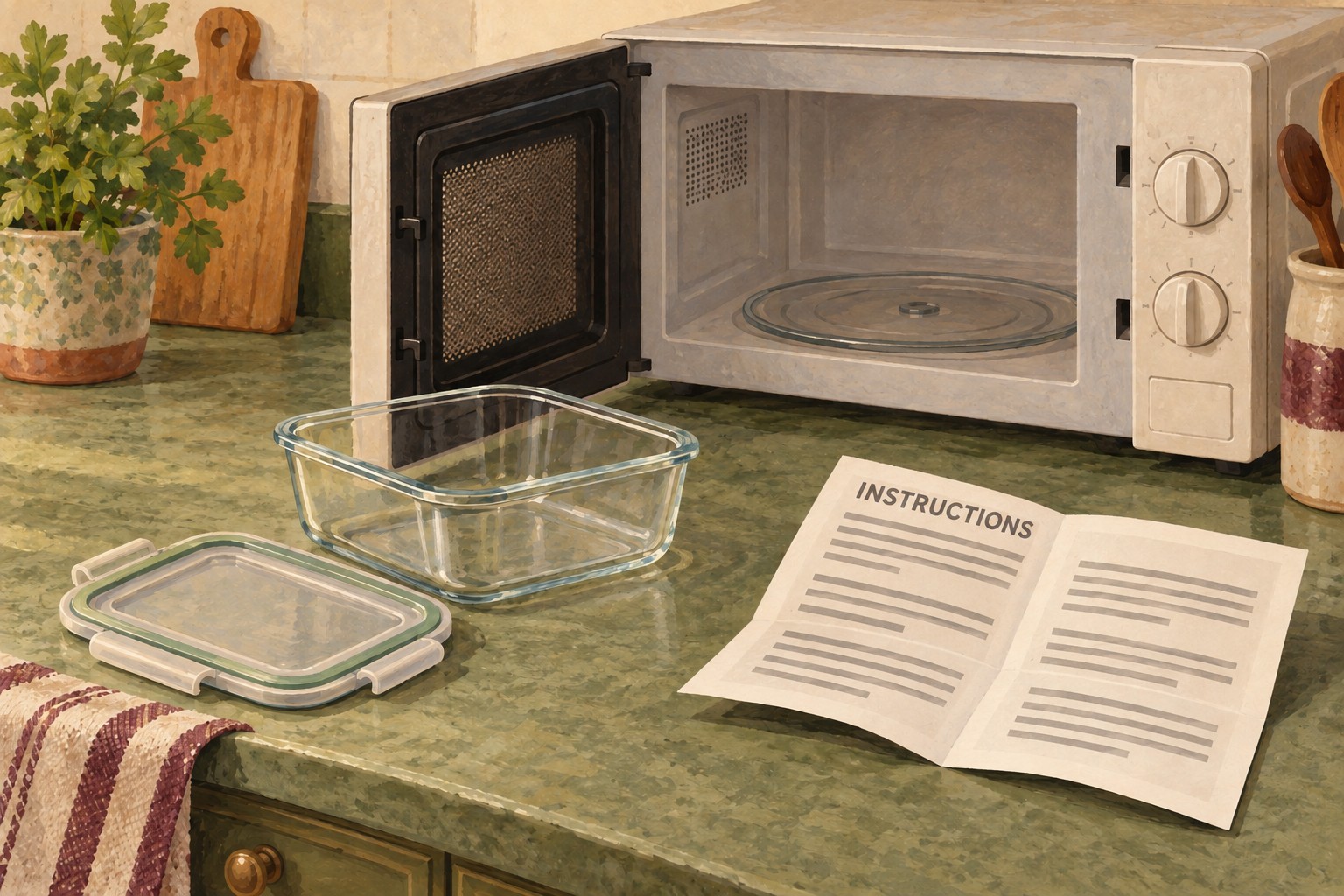
Look on the base, lid, packaging and manufacturer's product page for food-contact use, microwave directions, freezer suitability and cleaning limits. These are separate permissions. A tub sold for cold leftovers may be suitable in the fridge without being intended for reheating. A lid can have different limits from the body it fits.
Do not treat the resin identification number as a cooking instruction. It describes a material category used in identification and recycling systems; it does not specify the finished container's allowable temperature, duration or foods. Nor does a recycling arrow prove your local collection accepts the item. Keep use instructions with the model name so they remain available when the sleeve has been discarded.
Consider two boxes bearing the same resin identification number. One may be designed as disposable packaging for a cold salad, while another is sold as a reusable reheating container. The shared number does not erase differences in wall thickness, design, additives, testing or intended use. The practical conclusion is to follow the finished product's directions, not to build a household permission chart from resin numbers alone.
Make the instructions fit your routine
Imagine a normal sequence: fill after cooking, refrigerate, carry to work, reheat, wash and store. Check each stage rather than stopping at one microwave-safe logo. If the manufacturer says to vent the lid or use reheating only, those conditions matter. Oven cooking and a microwave's grill setting are different applications from ordinary microwave reheating.
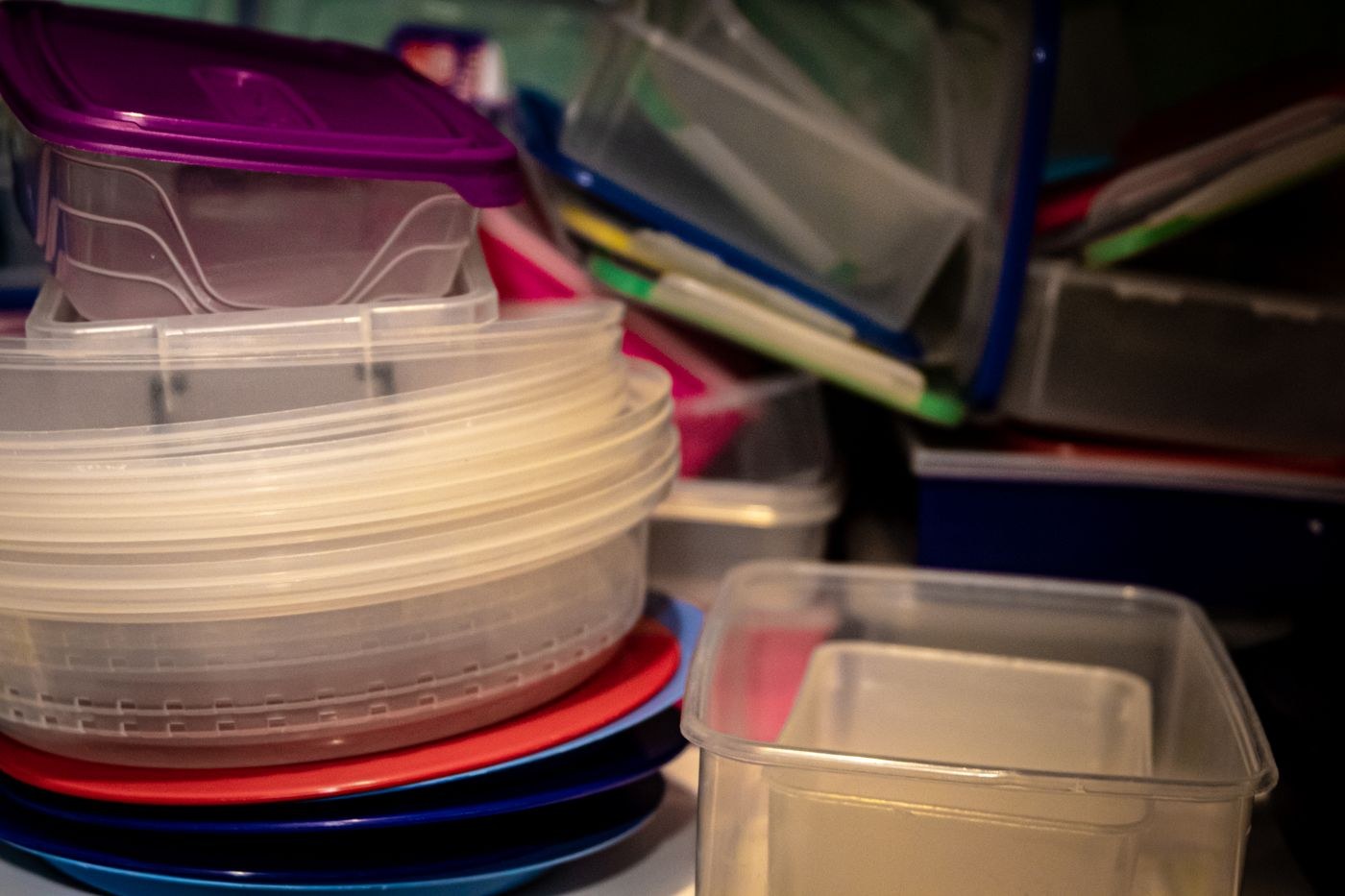
Buy sizes that let you divide portions without packing food against the lid. A matching set can simplify storage, but avoid mixing lids that only appear to fit. Poor closure may cause leaks and can make it hard to follow venting directions correctly. Keep the original food-storage identity clear if other similar tubs are used for craft materials or household maintenance.
Health Canada advises using plastic food containers for their intended purpose and avoiding visibly damaged, stained or unpleasant-smelling examples. That does not provide a home test for every kind of migration. It gives a reason to inspect condition and consult the supplier when a product changes unexpectedly.
When comparing sets online, count the sizes you would actually fill. A twenty-piece listing may count lids as separate pieces and include several tiny tubs you do not need. Calculate cost per useful container rather than cost per advertised piece. Check whether replacement lids are available individually and whether the shape nests without wedging, since forcing nested containers apart can damage rims or catches.
Keep use-specific evidence
For an online purchase, a photograph of food inside the tub is not enough. Ask for the care sheet and the exact product code. If the seller cannot confirm the use you need, choose a product with clearer information rather than carrying out a heat experiment yourself.
Once in use, do not extend the product's role because it survived one attempt. A takeaway tub that remained intact after warming has not thereby become a reusable cooking vessel. Replace damaged parts when the maker provides compatible replacements, and retain usable containers that still meet their instructions instead of replacing an entire cupboard solely because a new material has become fashionable.
If the package and online listing disagree, preserve photographs of both and ask the manufacturer to resolve the conflict. Do not simply follow whichever statement permits more uses. A retailer may have copied information for another size or generation. Until the permission is clear, use a different container for the disputed heating or washing task. This is a way to handle missing information without making assumptions about the entire material category.