Replacing water-filter cartridges on the right schedule
A cartridge replacement date is part of using a filter as designed. Clear-looking or pleasant-tasting water cannot tell you that every reduction claim still applies.
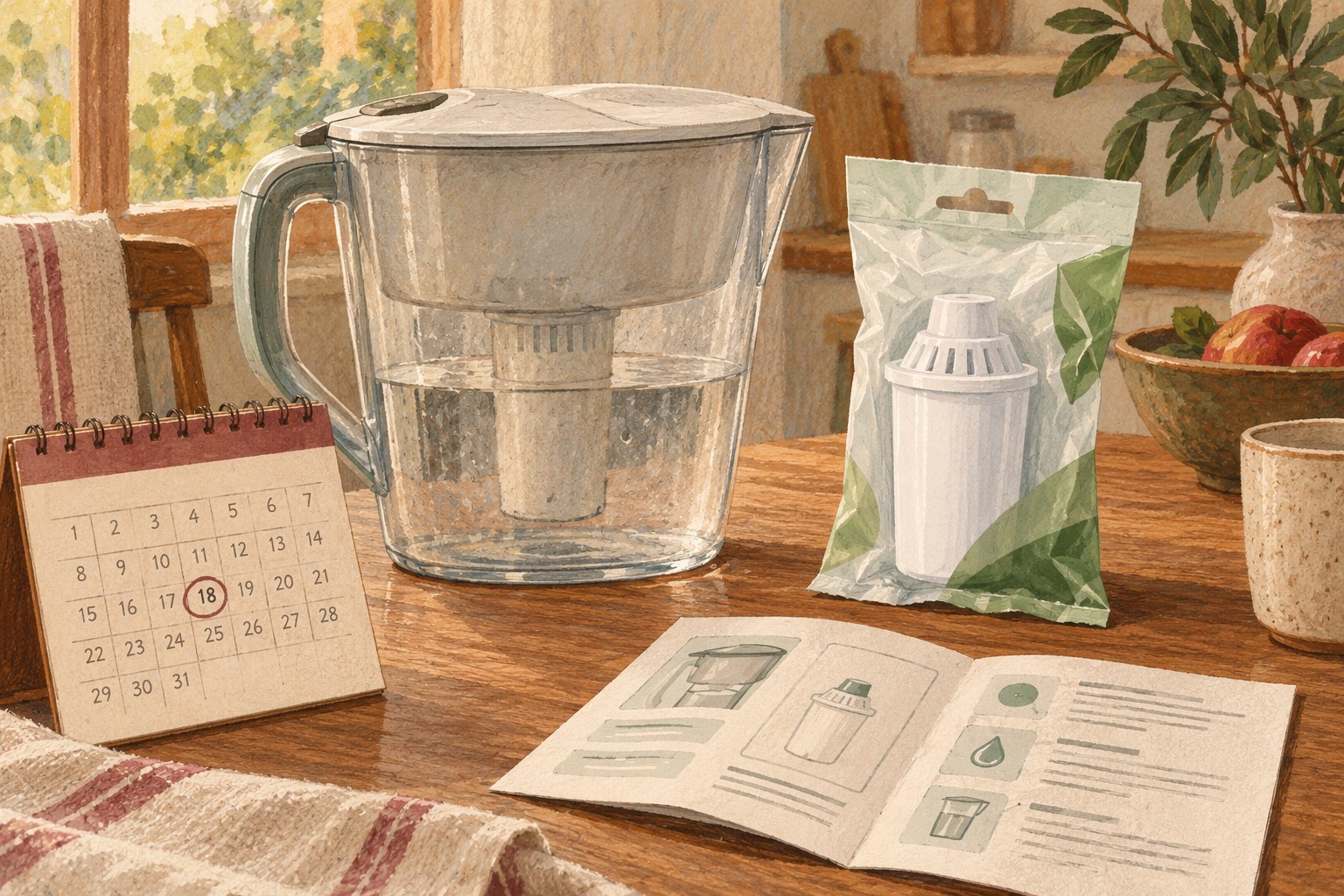
Find out what the indicator measures
Read the system manual and performance sheet for both time and capacity limits. Some indicators are timers; others estimate volume. They may not measure the substances the filter is intended to reduce. Do not interpret a green light as a laboratory result or assume that low use always removes the need for a time-based replacement.
Use the exact cartridge reference listed for the system. A cartridge that fits the housing may not have the same certified claims, flow characteristics or seals. If the brand changes a part number, ask for the compatibility statement and check the current listing. Keep the old model details until the new cartridge is correctly installed.
Suppose the instructions specify replacement after a certain volume or a stated number of months, whichever comes first. A household using little water should not automatically ignore the calendar limit, while a busy household may reach the volume limit earlier. Use the manufacturer's rule as written. If the indicator only counts time, it may not alert you when unusually high consumption reaches capacity sooner.
Make the change a complete task
Set aside time to follow shutdown, removal, cleaning, installation and flushing instructions. Prepare the required container or towels before opening the housing. If the unit needs plumbing work beyond the user-maintenance instructions, use an appropriately qualified installer rather than improvising a connection.
Clean accessible components only as directed. Do not add a household disinfectant or boil a part unless the manual specifies that treatment. Fit seals correctly, check for leaks and complete the prescribed flushing before use. Reset an indicator only after the actual replacement, not simply because its warning has become inconvenient.
Write the date and, where relevant, the starting meter reading in a small log. A photograph of the cartridge packaging can preserve the reference for the next purchase. Keep one unopened spare if it can be stored within its stated conditions and shelf life; a large stockpile may be unnecessary.
Before removing the old cartridge, confirm that the replacement pack contains all required seals or fittings. Read whether any protective wrapping or plugs must be removed and whether a new seal needs a particular orientation. Keep the old parts separate until installation is complete so they are not accidentally refitted. After the specified flushing, check connections as instructed; an apparently normal flow at the tap does not rule out a small leak inside a cupboard.
Plan for gaps in use
Look up the instructions for holidays and extended disuse. A filter left unused may need flushing, cleaning or replacement depending on the system. Do not invent a single rule for all jugs and plumbed units. If the manual is missing, obtain it from the manufacturer before restarting.
If the water changes unexpectedly, contact the water supplier or relevant local service. Replacing a cartridge is not a diagnosis of the cause. NSF emphasises regular maintenance as part of home treatment; the replacement routine supports the system's defined function, while supply notices and new contamination concerns require their own response.
If the system has been out of service because the correct cartridge was unavailable, ask the manufacturer for restart guidance rather than resetting the indicator and resuming automatically. Record the period of disuse and any maintenance already attempted. For a rented property or a shared household, agree who checks replacement dates and orders parts. A named responsibility and a visible log prevent each person assuming that someone else has already changed the cartridge.