Replacing scratched or damaged food containers
Visible damage is a reason to reassess a food container. The useful decision depends on where the damage is and whether the product can still be used and cleaned as intended.
Inspect while the container is empty
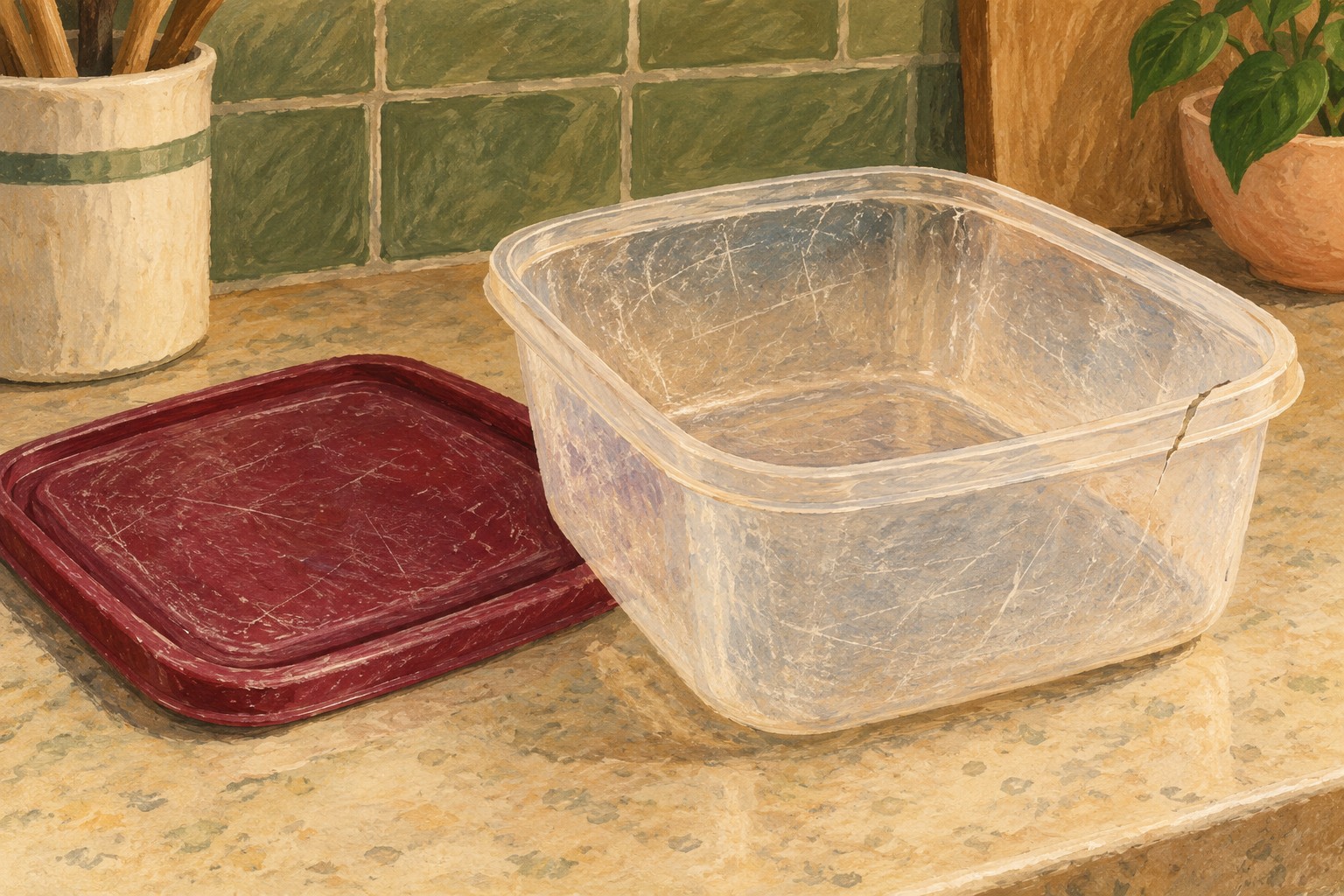
Wash according to the care instructions, then look at the rim, inner surface, base and closure under good light. Check for cracks, deep scoring, flaking coatings, distortion and a seal that no longer sits properly. Do not run a finger along a chipped glass edge to judge its sharpness. Keep damaged pieces out of normal use while you decide what to do.
A cosmetic mark and a structural defect are not necessarily the same thing, but a photograph or brief online description may not be enough to distinguish them. Send the manufacturer the model number and clear pictures if you are unsure. Describe what happened, such as dropping the box or accidentally using an unsupported dishwasher cycle, rather than asking only whether the material is safe.
Replace the part that has failed
For a sound body with a damaged removable seal, check whether a matching replacement exists. The replacement must be specified for the model, not simply close in circumference. A wrong gasket may appear to close while leaving gaps or obstructing a vent. Cracked glass, flaking food-contact surfaces or a distorted body are not repaired by fitting a new lid.
Do not sand plastic food-contact surfaces, glue cracks or paint over chips as a home repair. Such alterations add materials and change the surface in ways the original instructions do not cover. Repurposing is also not an obligation: a sharp or crumbling object may be unsuitable for other household jobs as well.
Health Canada's cookware guidance advises against visibly damaged, stained or unpleasant-smelling plastic containers. Persistent changes after permitted cleaning therefore deserve attention. Stronger cleaners and hotter washing are not automatically suitable remedies; they may exceed the product's care limits without resolving the underlying problem.
Record the cause before buying again
Note whether failure followed a particular use. A lid repeatedly cracked by opening it straight from the freezer may call for a different routine or closure design. A box that never fitted the dishwasher rack may need a different shape. This information is more helpful than replacing it with the same unsuitable arrangement.
Ask the local waste service how the body, lid and seal should be handled. Food containers are not all accepted with packaging recycling, and mixed materials may have different routes. Buy only the replacement capacity you need. Keeping the remaining intact, suitable containers avoids turning one damaged item into an unnecessary whole-set replacement.