Cast iron cookware: seasoning and drying
Seasoned cast iron and enamelled cast iron need different care. Identify the surface before deciding how to wash, dry or oil the pan.
Seasoning is a cooking surface
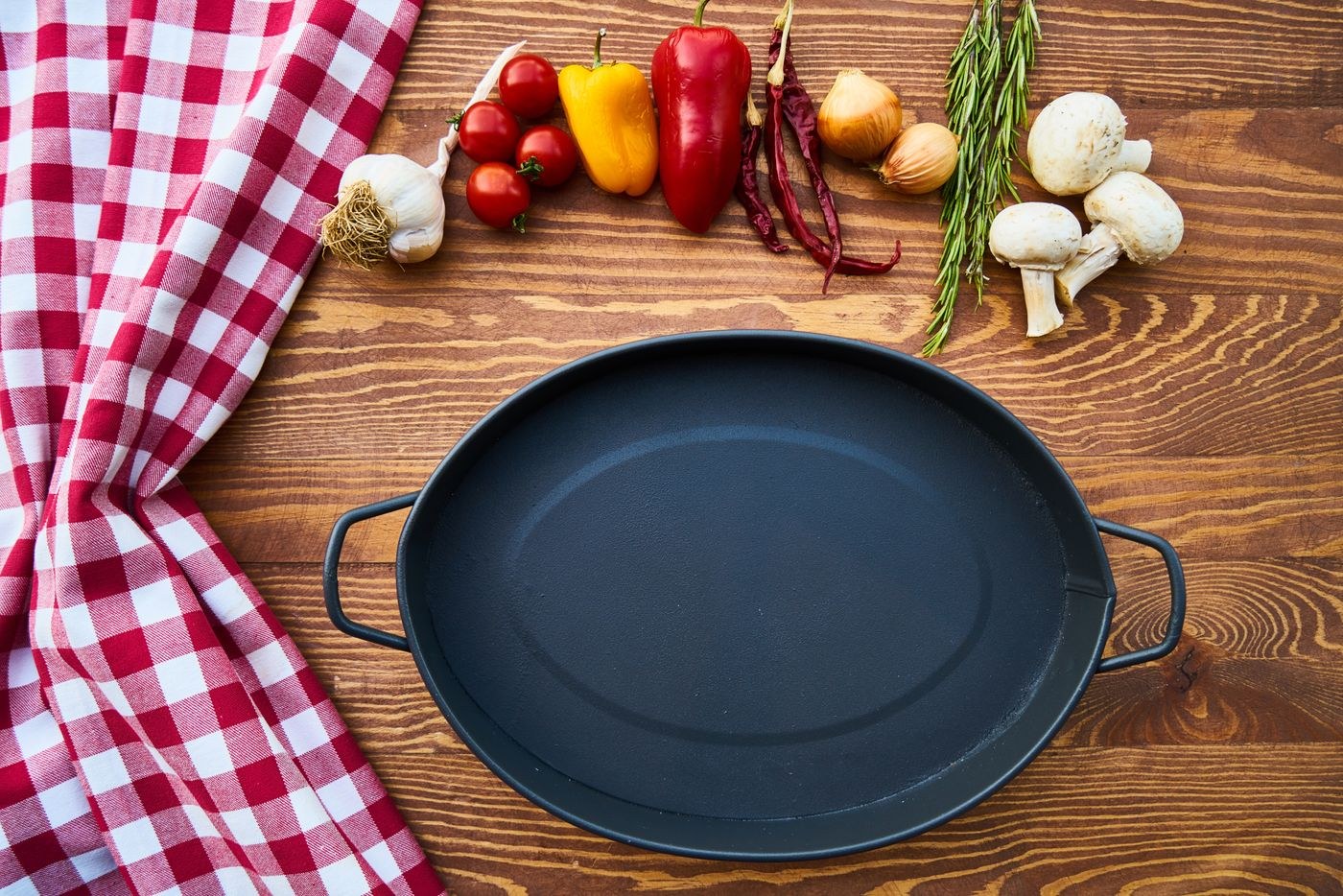
On bare seasoned cast iron, seasoning is a layer of oil that has been heated onto the surface. It is not a reason to leave food residue in the pan. Lodge describes routine care as washing, drying and applying a light layer of oil. Follow your own manufacturer's method, especially where handles or other components change the instructions.
Do not apply a bare-iron seasoning routine to enamel. Enamel is a different surface and generally does not need seasoning. A dark interior is not sufficient to identify the material: some enamelled pans have a black interior that can look like seasoned iron. Check the product description or contact the maker if an older pan's identity is unclear.
Wash, then remove the moisture
After the pan has cooled to a suitable handling temperature, clean it using the permitted tools and detergent. Do not leave it soaking for a prolonged period or put it in the dishwasher unless the particular product's directions allow this. Some specialist iron products have different care requirements, which is why a general rule from another pan should not override the manual.
Dry the surface thoroughly, including the outside and handle junction. If the maker recommends a short warming step, follow it carefully and remain nearby. Apply only the light coating of suitable cooking oil specified by the instructions, wiping away excess. A thick oily layer can leave a sticky surface rather than improving the next meal.
Store the pan where it can stay dry. Avoid trapping damp cloths or a wet lid against it. If pans are stacked, make sure any separator is dry and suitable for the surfaces. A pan put away wet may need attention before it is ready to cook again.
Choose restoration advice carefully
A small rust spot and a cracked pan are different problems. The manufacturer may provide a method for removing surface rust and restoring seasoning, but a structural crack is not solved by oiling. Avoid improvised chemical stripping or an oven self-cleaning cycle unless the maker explicitly supports the process for that product.
Do not use cast iron as a nutritional treatment or assume every dish benefits from prolonged storage in it. Move leftovers into appropriate food-storage containers. Health Canada advises against cooking or storing acidic foods in uncoated cast iron for long periods. A pan used for the cooking jobs it suits is easier to maintain than one expected to be a universal vessel.