Stain treatments: checking the garment first
A stain remover has to suit both the stain and the garment. Start with the fabric care information before choosing a treatment.
Identify what can be identified
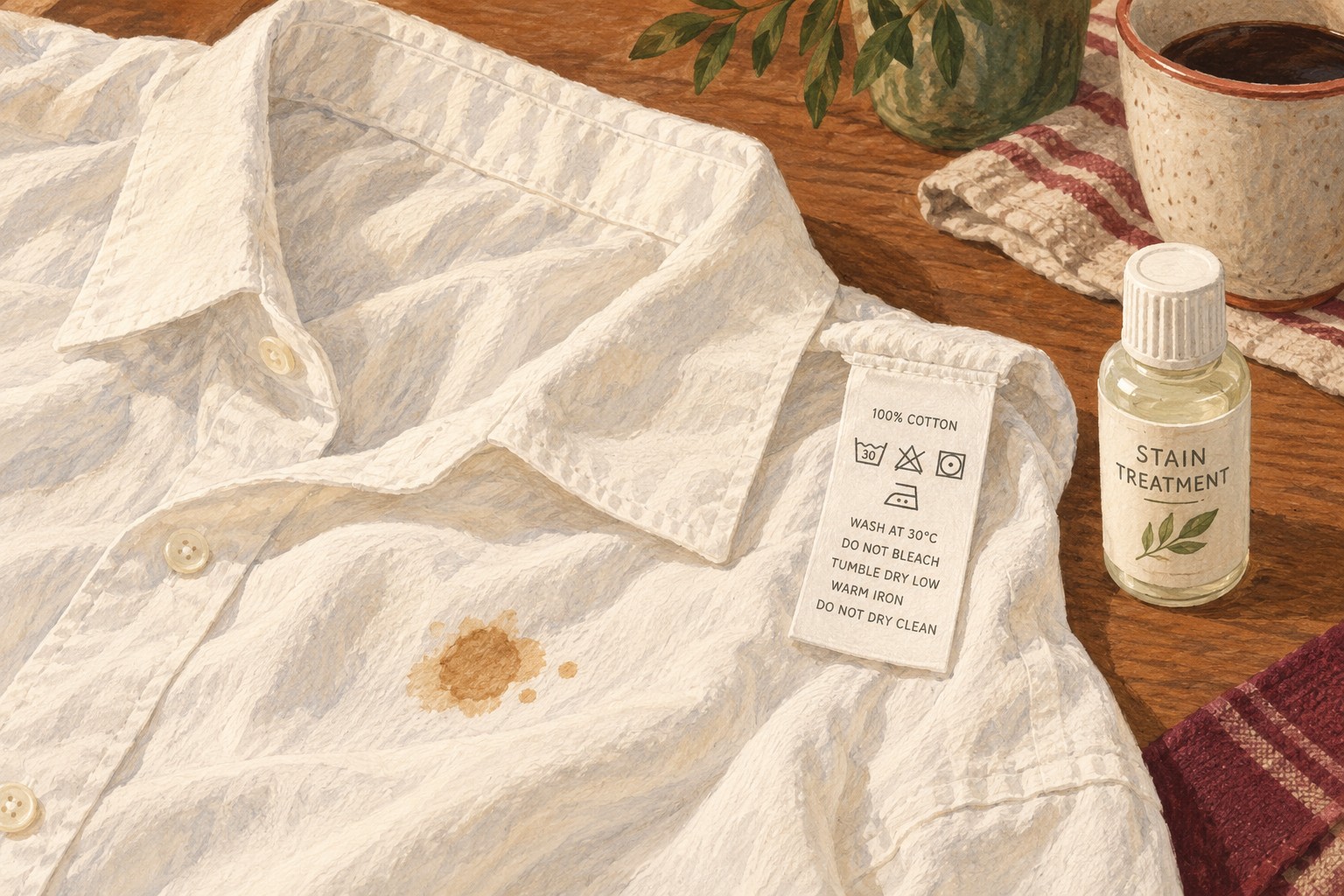
Read the garment label and note the material, permitted washing method and any bleach restrictions. Include trims, prints and linings in the decision. A cotton body with delicate decoration may need more care than the fibre name alone suggests.
If you know what caused the mark, record it. Food oil, ink and mineral staining are different problems. If you do not know, avoid repeatedly applying products from several categories. Tell a professional cleaner what has already been attempted if you later seek help.
Read the treatment’s limits
Check whether the remover is for washable fabrics, which colours or materials it excludes and whether a hidden-area test is required. A product described as colour-safe does not override every garment restriction. Follow the stated contact time and washing stage.
Do not leave a pre-treatment on indefinitely because the stain is stubborn. Some products specify a short interval before washing. Likewise, do not apply a treatment intended for laundry to upholstery or carpets without explicit directions for those materials.
Work without spreading the problem
Use the method specified for the stain and product rather than rubbing vigorously by default. Protect the surface beneath the item and avoid transferring the treatment onto other clothing. Keep the product container closed when not dispensing.
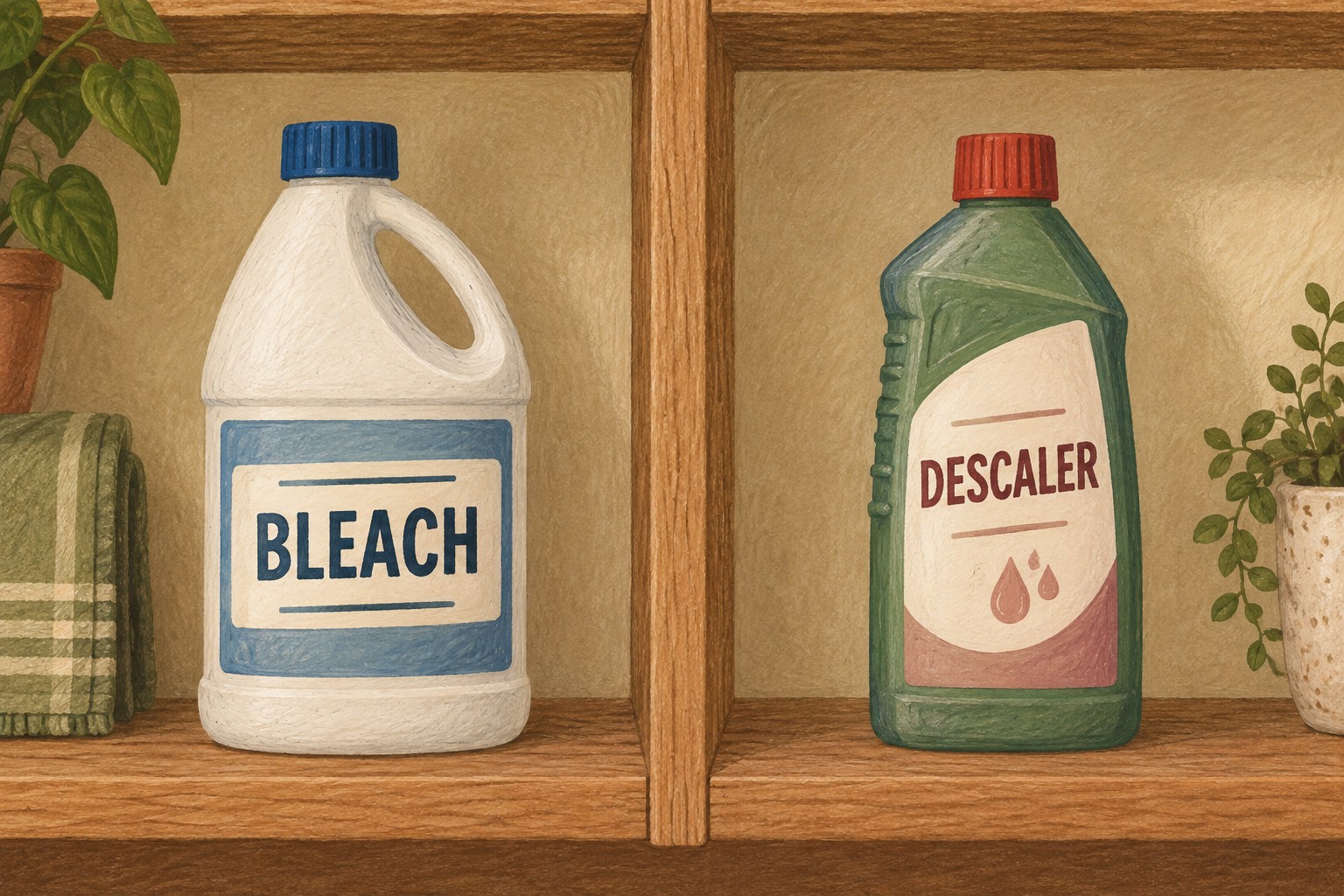
Never combine stain removers, bleach or other household cleaners. A second product can react with residue from the first. If the first treatment fails, consult the instructions or supplier about the next step instead of adding a different chemical to the same wet patch.
Check before finishing the laundry
Inspect the result at the stage advised by the product and garment instructions. Do not assume that a mark will disappear in the dryer. Some remaining stains may become harder to address after heat, while delicate garments may not permit tumble drying at all.
For valuable, unknown or non-washable items, professional advice may be preferable to a trial-and-error purchase. Bring the care label and a factual account of the stain. Keep your cleaning cupboard small by buying for recurring tasks rather than accumulating a different bottle for every unexplained mark.