Reading a household cleaner label before opening it
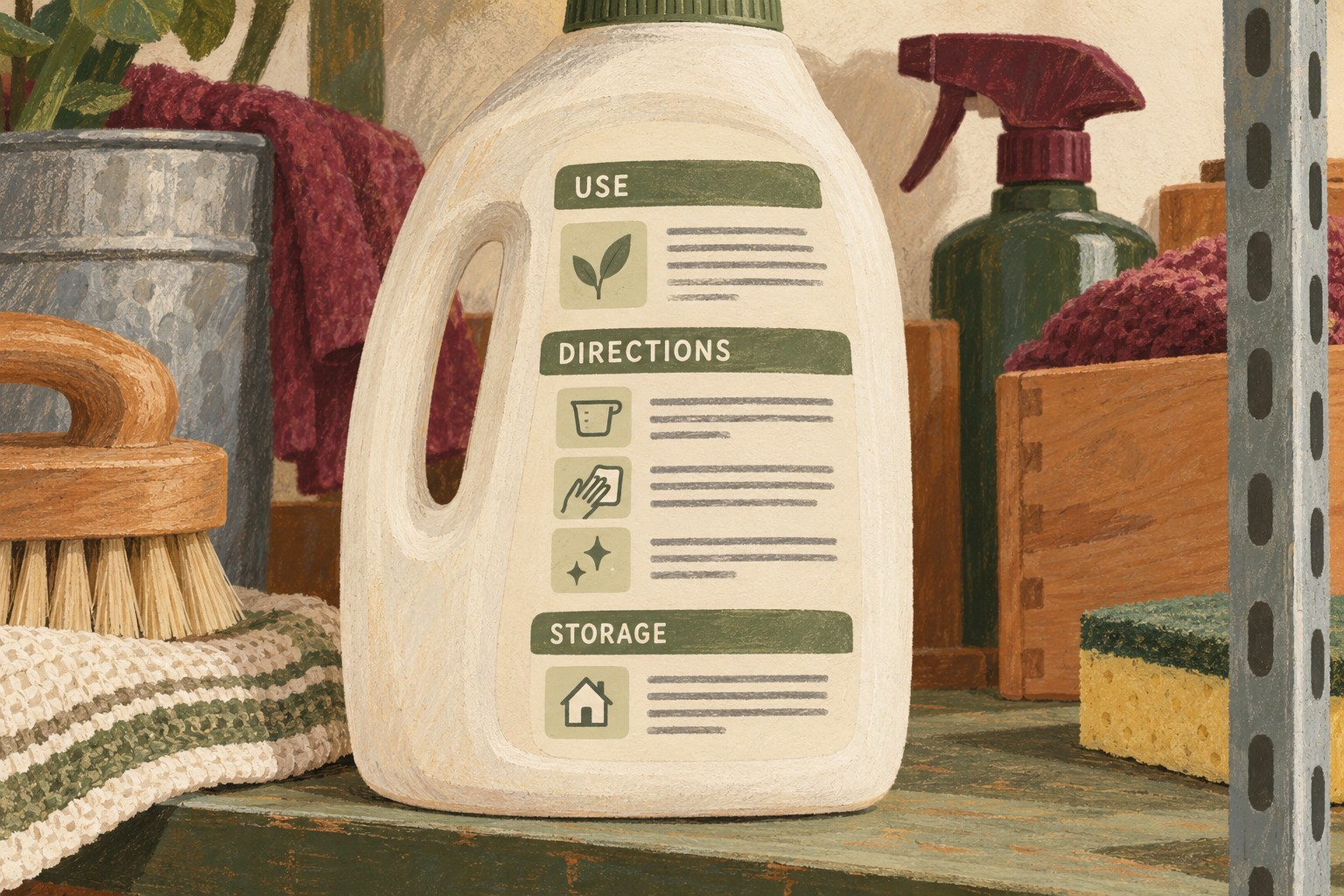
A cleaner’s label tells you where it can be used, how to apply it and what precautions belong to that exact product. Read it before you need the cleaner in a hurry.
Confirm product and surface
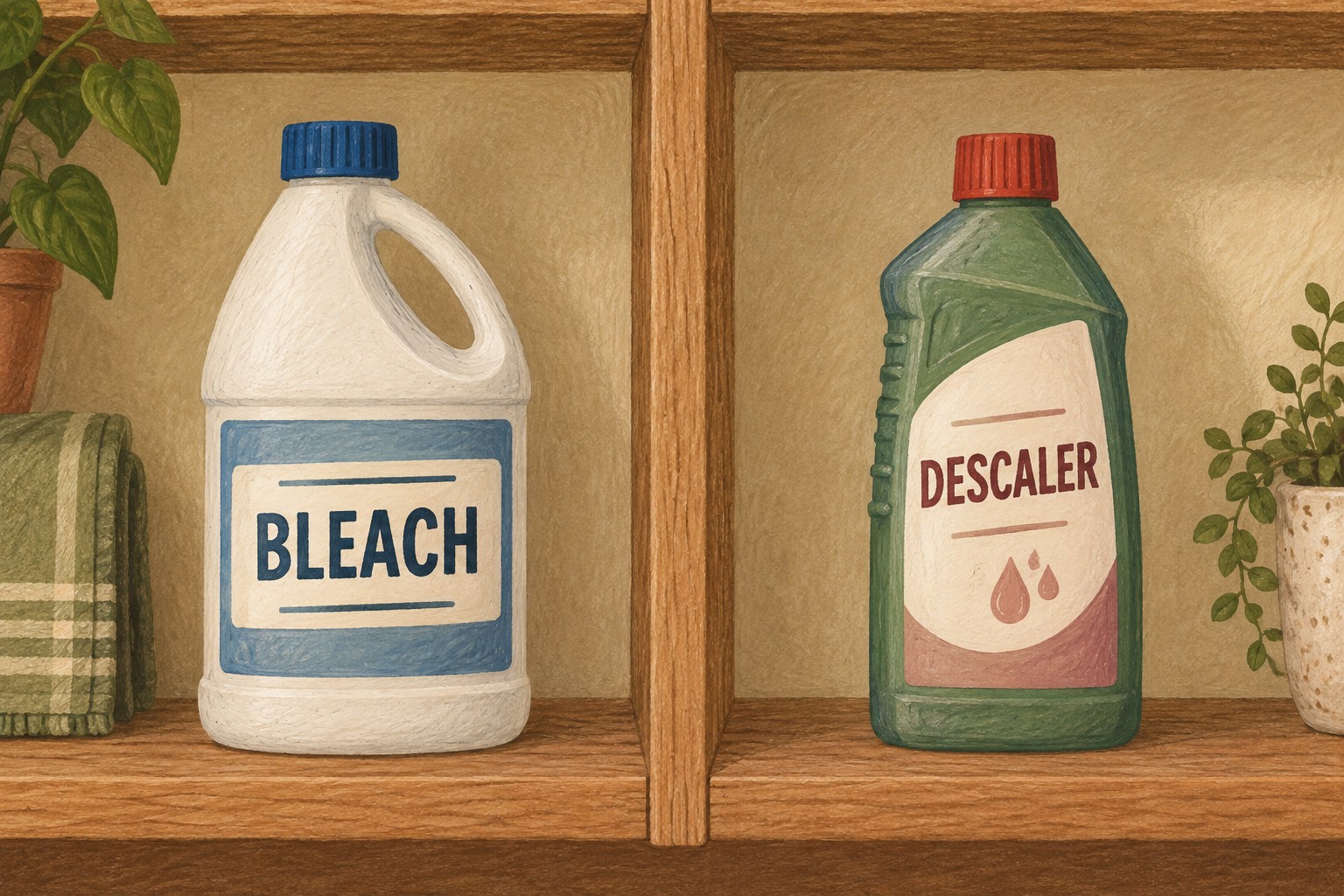
Begin with the intended use. A bathroom cleaner may target limescale, soap residue or disinfection, and those are different jobs. Check the material of the surface as well as the room. A product suitable for glazed ceramic may exclude natural stone, a plated fitting or an acrylic panel nearby.
Look for the ready-to-use or concentrate description. Similar bottles can contain very different strengths. If dilution is required, make sure you have the specified measuring arrangement and an appropriate container before opening the product.
Read warnings as instructions for preparation
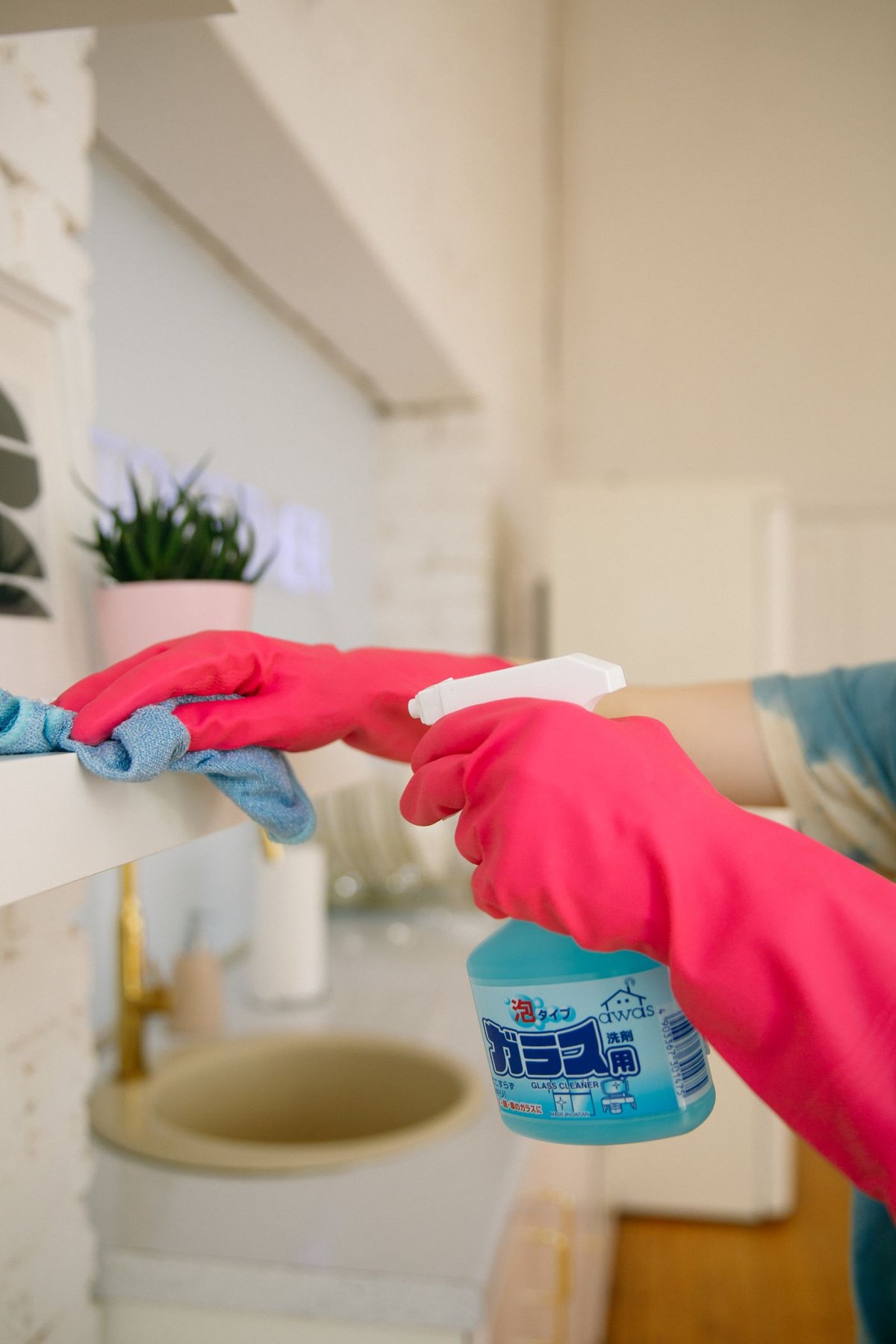
Hazard symbols and signal words should lead you to the accompanying statements, not to a quick ranking of products by how frightening the label looks. The text may specify gloves, eye protection, ventilation or precautions around heat. A symbol is not a complete method on its own.
Check how the cleaner is applied. Some are sprayed onto a surface, others onto a cloth, and some are poured into a specified area. Do not transfer instructions from a familiar product merely because both bottles have triggers. For disinfectants, identify contact time and any rinse requirement separately from ordinary cleaning directions.
Find the first-aid instructions before using the product. Knowing where they are saves time if a splash occurs. Do not cover that information with a decorative label or allow dried residue to obscure it.
Keep a short use note without replacing the label
For a frequently repeated task, a household note can identify the chosen product, permitted surface and where the full instructions are kept. It should not omit or contradict a critical precaution. Avoid reducing a complex disinfectant method to “spray and wipe” when the labelled process contains a contact time or rinse.
Date the note and review it when the product changes. A refill or new bottle can introduce revised instructions even when the brand remains familiar. The note should help the user find the current method, not freeze an old one indefinitely.
If two people share the cleaning, ask each to identify the product and method from the available information. If they interpret the same shelf differently, improve the labelling or reduce unnecessary duplicates. This is a straightforward check of clarity before a mistaken use occurs.
Check online images against the delivered bottle
A retailer may show an old label or only a promotional rendering. When the order arrives, read the physical pack before use even if you researched it beforehand. If its instructions differ, pause and ask which information is current. This is especially relevant when a familiar product is sold in a new concentration or imported from another market.
Plan the end of the job
Read storage and disposal guidance as part of the same task. A bottle left open on the floor while you fetch another tool creates a preventable handling problem. Set up a secure place for the product between steps and return it there promptly.
Never mix cleaners, including products remaining on a surface or in a bucket. If you need to change methods, follow the relevant rinsing instructions and obtain advice if compatibility is unclear. “A little extra” from another bottle is still a mixture.
When buying online, ask for a readable current label if only the front is shown. Keep the product name and variant exact when seeking help. A general question about “bathroom spray” may produce an answer that belongs to a different formula and does not resolve your uncertainty.