Recyclable packaging: checking local collection rules
Recyclable describes a possible route only when the right collection and processing exist. Your local service's instructions decide what belongs in the bin you use.
Identify each component
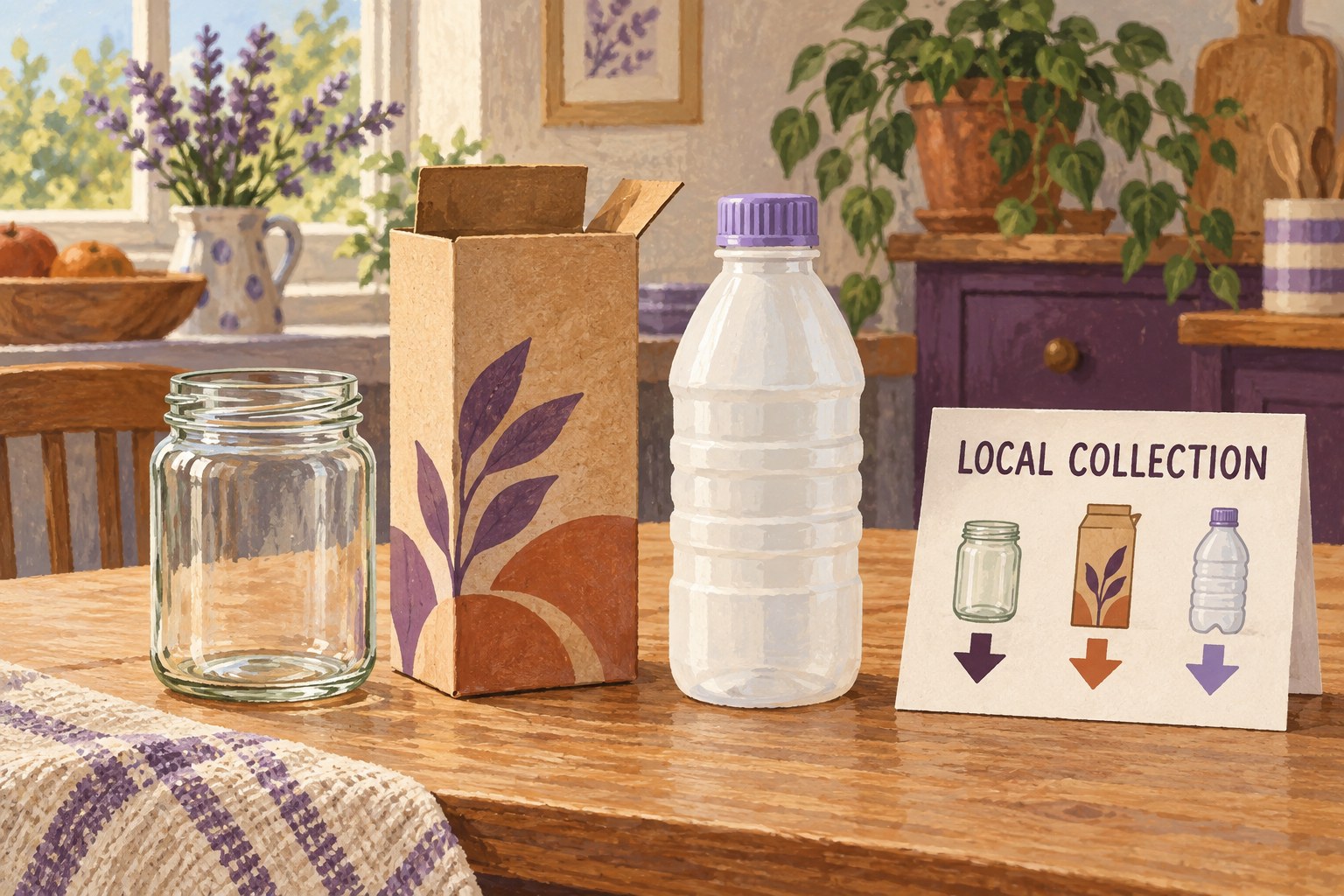
Separate the question into bottle, cap, pump, sleeve and outer carton. A recyclable bottle statement may not include a pump containing several materials. Read whether components should stay together or be separated; local instructions can differ. Do not dismantle something unnecessarily if the collection service asks for it to remain assembled.
A resin number identifies a plastic category but does not guarantee local acceptance. Shape, size, colour and product type can matter to a collection system. A rigid tub and a flexible pouch made from related materials may have different routes. Use the item description, not only the symbol, when checking.
Use the collection you actually have
Look up the current local authority or collection-provider guidance. In the UK, Recycle Now offers item and postcode information, but the relevant service's current instructions should settle uncertainty. Check whether the route is household collection, a store drop-off or a specialist scheme.
If a label says check locally, do that before putting the item in mixed recycling. A technically recyclable material with no available route should not be added in the hope that someone will sort it out. Likewise, a shop collection for certain films does not necessarily accept every compostable or multilayer pouch.
Prepare it as requested
Follow the service's instructions about emptying, rinsing, lids and labels. Do not use excessive hot water trying to make packaging look unused when a simple rinse is what the guidance asks for. Packaging that contained a hazardous product may need a different route from ordinary food or toiletry packaging.
Keep an uncertain item aside briefly while checking, but avoid creating a permanent pile of unclassified waste. A small note near the bin can record recurring local instructions, such as where a particular refill pouch is accepted. Update it when the service changes.
Use the information when buying again
If two suitable products meet your needs, accessible disposal can be one comparison point. Be precise: a package accepted by your local system is a narrower claim than a product with no environmental impact. Do not assume a recyclable container makes the entire product sustainable.
The FTC's US Green Guides discuss qualifying recyclability claims according to access to facilities. That is US marketing guidance, not a universal bin rule. For the household decision, connect the packaging in your hand to a real collection route rather than treating the front-of-pack word as the final instruction.