Hazard and risk: reading a claim in context
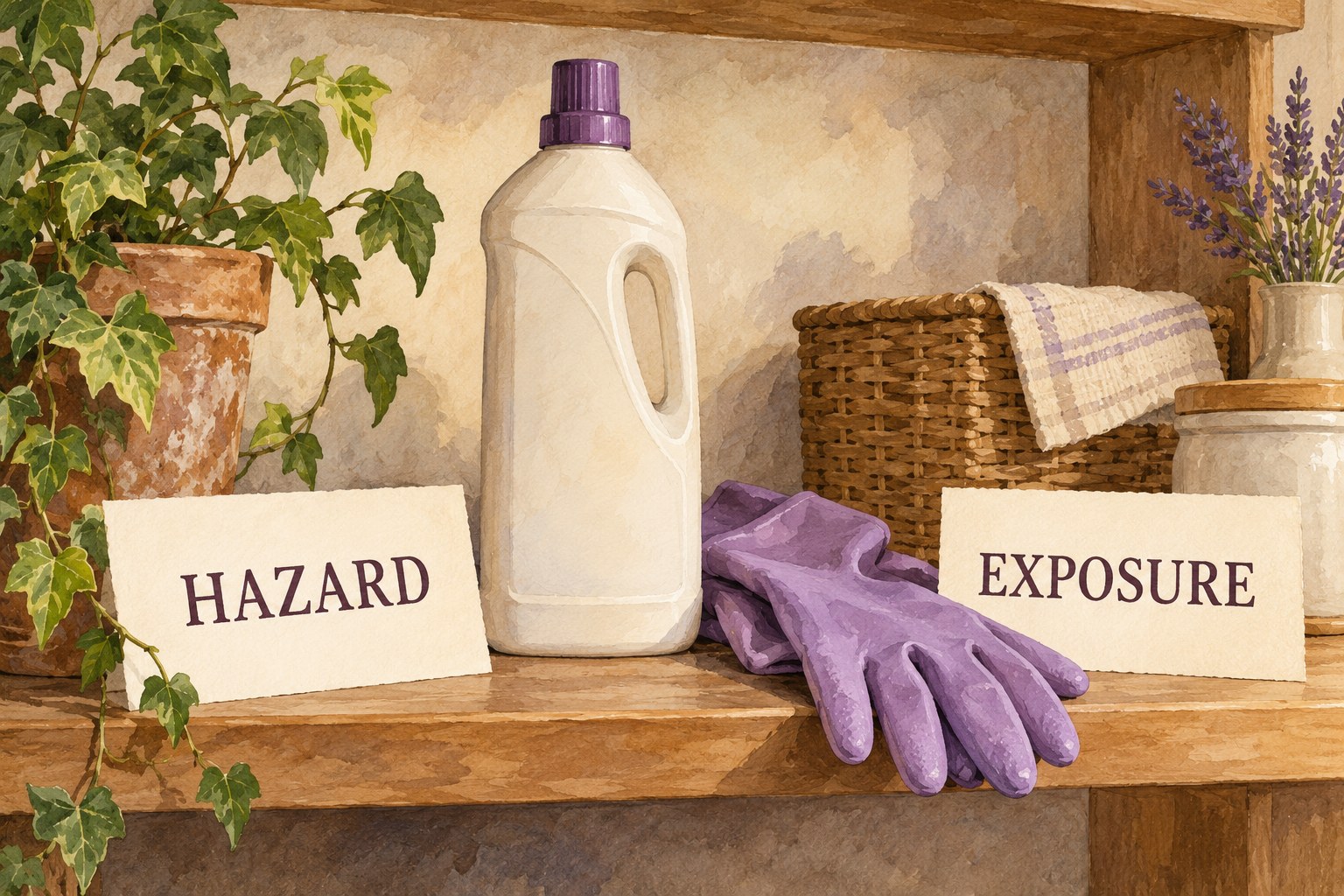
Hazard describes a capacity to cause harm. Risk concerns the chance and severity of harm in a particular exposure situation. Both matter when reading product claims.
Keep the two questions separate
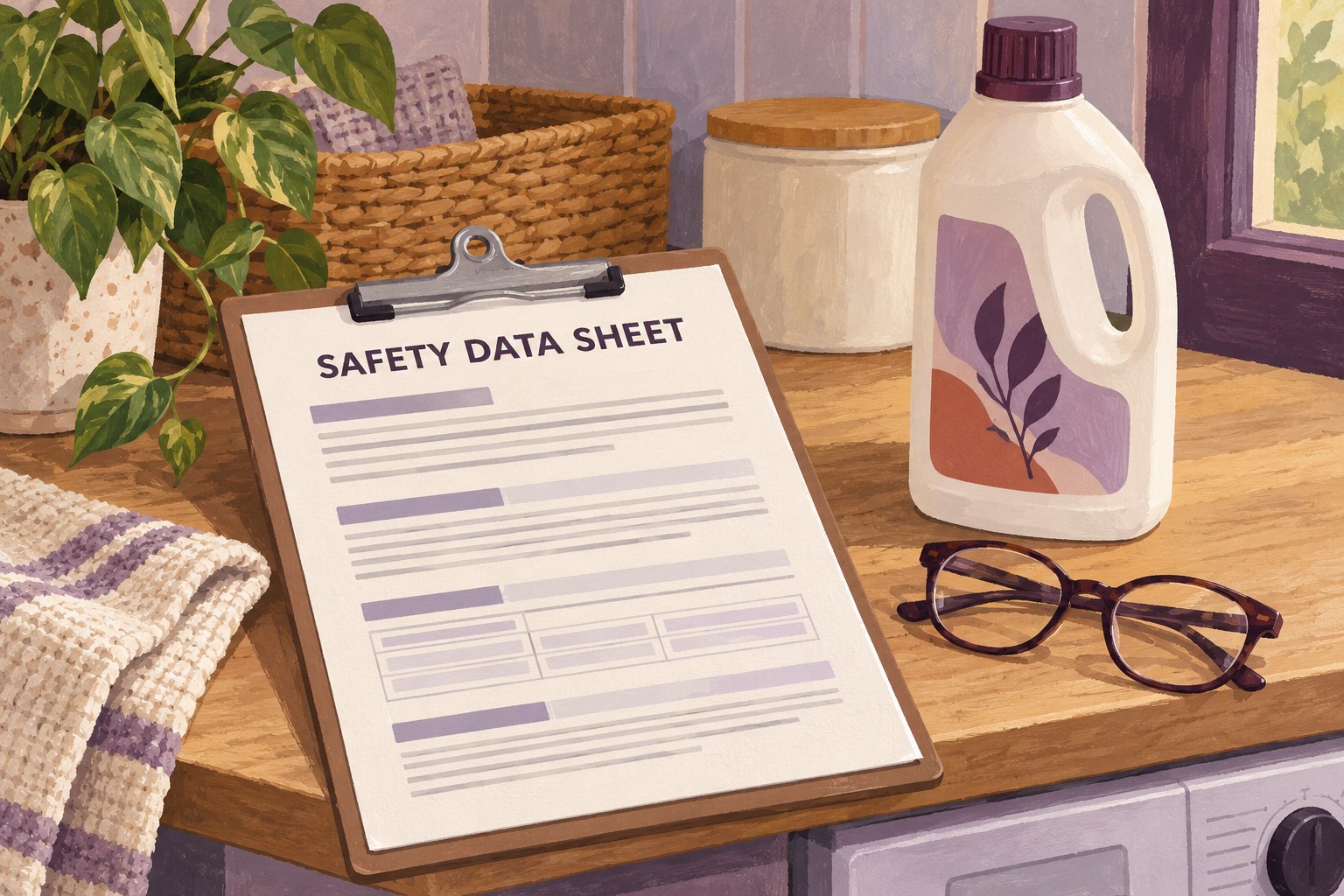
A hazard statement helps identify what a substance or mixture can do. A risk assessment considers how exposure could occur in the actual task and what controls are needed. HSE explains that classification follows rules for hazardous properties; a safety data sheet then provides information that can support, but does not replace, an assessment of a task.
This distinction does not mean warnings can be ignored. It means that a warning should lead to an appropriate method, not an unsupported conclusion that every use has the same outcome. Equally, a product used successfully before still needs its precautions the next time.
Describe the exposure before judging a claim
Ask who uses the product, where, how much, how often and by what route contact might occur. Skin contact, inhaling a spray and accidentally swallowing a product are different situations. A small enclosed bathroom and an outdoor work area may also provide different conditions.
Consider the stage of use. Handling a concentrate, preparing a permitted dilution, applying it and disposing of leftovers are separate tasks. A statement about one stage does not automatically describe the others. This is why a bottle can require careful handling even when the intended diluted application is familiar.
Individual circumstances can matter too, including a known allergy or medical condition. A general label cannot provide personalised medical advice, and an internet hazard score cannot fill that gap.
A worked household example
Suppose a cleaner is suitable for a particular surface but requires gloves and ventilation. The purchasing decision is not complete when you discover that it removes the deposit. You also need to know whether the room can be ventilated, whether compatible gloves are available and whether the product can be stored securely.
If those conditions are impractical, a different suitable product or method may be preferable. That conclusion follows from the task, not from declaring the first product universally bad. Conversely, using the first product without its precautions because a friend likes it is not a risk assessment.
The same reasoning applies to concentration. A stronger product may reduce the volume transported but increase measuring and handling demands. A ready-to-use format may be easier for an occasional task. Neither format wins every comparison.
Read studies and headlines with the same distinction
When a claim cites a study, check what was tested: a raw ingredient or finished product, what concentration, which route and which outcome. A result under one set of conditions does not automatically establish the risk from a different household use. Absence of a reported effect in one study also does not prove that every use is harmless.
You do not need to reinterpret technical toxicology yourself to make every purchase. Use the product’s instructions, relevant official guidance and qualified advice where needed. Ask for clarification when a seller turns a narrow test into a sweeping safety promise.
Do not confuse uncertainty with proof of harm
Missing information can be a reason to ask a question or choose a product with clearer instructions. It is not, by itself, evidence that the product causes harm. Similarly, a seller’s confident tone cannot replace missing evidence.
A proportionate response depends on what is unknown. Missing surface compatibility is a clear practical obstacle to using a cleaner on an expensive finish. Missing a decorative packaging detail may not matter to the same decision. Identify the uncertainty that could change the outcome instead of treating every unanswered question as equally serious.
Make the conclusion specific
A useful conclusion might be that a product is unsuitable for your unventilated room, incompatible with the surface or difficult for you to measure. Another might be that the label gives a method you can follow for a defined task. These are clearer than calling the product toxic or non-toxic without qualification.
Keep the distinction when sharing advice. Explain the condition that changed the decision. This helps another person assess their own situation without borrowing a conclusion that depended on different exposure, equipment or users.