Reading the directions on a face exfoliant
An exfoliant’s directions explain more than how often to apply it. They identify the area, method and conditions under which it is intended to be used.
Identify the method
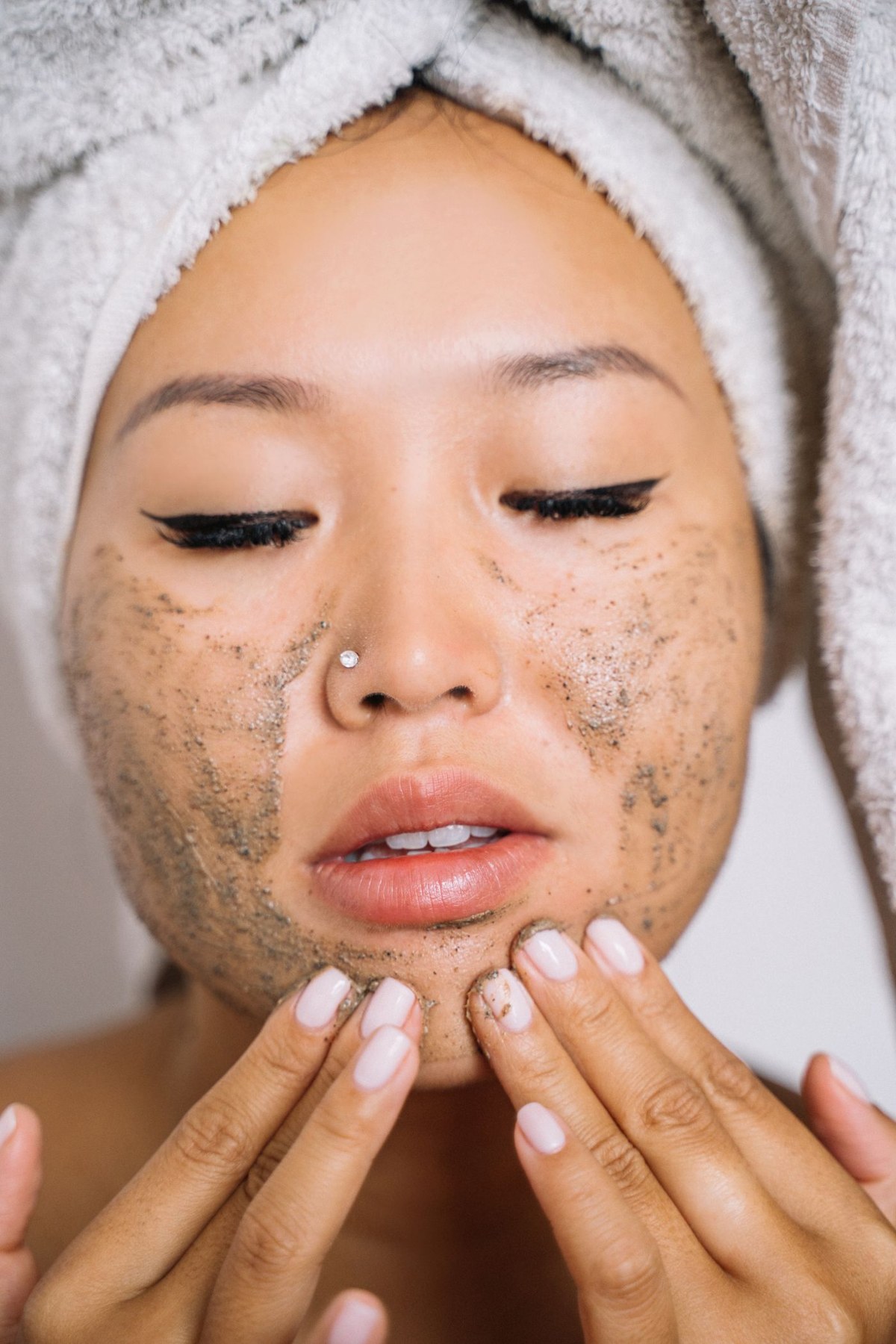
A scrub acts differently from a leave-on liquid or a rinse-off mask. Read whether the product should be used on wet or dry skin, how it is spread and whether it must be removed. Do not compare two products only by the percentage printed on their fronts.
An exfoliant is an optional part of skincare, not a task everyone must add. Consider why you want to use one and whether your current routine already includes products that can irritate or exfoliate. Prescribed treatments are a reason to ask for advice before adding more steps.
Respect the boundaries
The American Academy of Dermatology advises considering skin type and other products when exfoliating and avoiding exfoliation on damaged or sunburned skin. Read the product’s own exclusions too, including the eye area and any warnings about sunlight.
Use the stated amount and frequency. Increasing contact time, rubbing harder or combining several exfoliants does not provide a reliable shortcut to better results. A tingling or burning sensation is not a target to pursue. Stop if the product causes irritation rather than treating discomfort as proof that it is working.
If instructions say to rinse, rinse as directed. A rinse-off mask should not be turned into an overnight treatment. Likewise, a face product should not be applied to other sensitive areas without clear directions for that use.
A percentage comparison that does not work
Imagine one bottle highlights a percentage on a leave-on formula and another gives a different percentage for a mask that must be rinsed away. Choosing the larger number as the stronger or better product overlooks the method, formulation and contact period. It also overlooks whether either product is suitable alongside your existing routine.
Instead, compare the intended effect, application area, frequency, removal and warnings. If you cannot obtain those details, the percentage has not supplied enough information to make a choice. Ask the brand about the specific product rather than asking the internet to infer instructions from the featured ingredient.
A higher price or professional-looking package does not fill that gap either. Products labelled for professional use may require knowledge or controls that an ordinary home routine does not provide.
Do not make frequency a competition
If the label provides a range of frequency, that range is not a challenge to reach its maximum. Consider your existing routine and any professional advice. A product used less often according to its directions can be a better fit than one that requires a complicated schedule you cannot maintain. Avoid treating skipped exfoliation as a failure of basic hygiene.
Keep the experiment small and interpretable
When you decide to try a suitable product, avoid introducing several other new products at the same time. Keep a note of frequency and any discomfort so that you can describe the routine accurately if you need advice. Do not attempt to diagnose an allergy from a single application or from an online ingredient score.
Choose a package you can dispense carefully. A free-flowing bottle can make it easy to use much more than intended, while a jar needs clean handling. Store it where it will not be confused with toner or moisturiser in a shared bathroom.
If a product’s full directions are missing from a retailer listing, ask for the current label before buying. A short promotional instruction such as “use for glowing skin” is not enough to establish frequency, contact time or compatibility with an existing treatment.