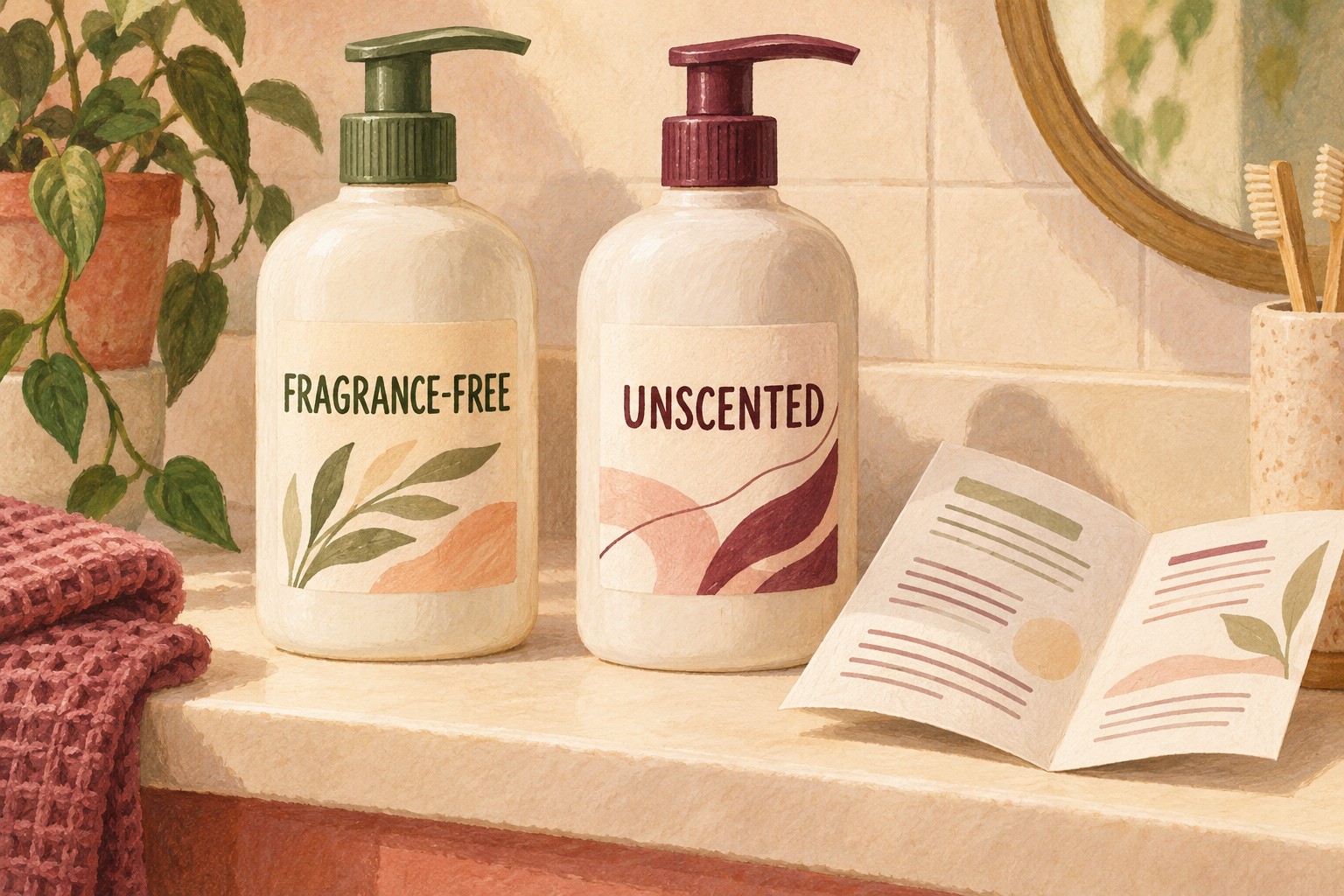
Reading an ingredient list without treating it as a safety score
An ingredient declaration is useful evidence, but it is not a laboratory report or a personalised prediction of how your skin will respond.
Start with the exact product
Compare the full name, format and country of sale before comparing ingredients. A cream and a cleansing gel in the same range may have different formulas. A retailer may also show an older photograph. When a particular ingredient matters to you, the declaration on the pack you receive deserves attention, even if you have bought the product before.
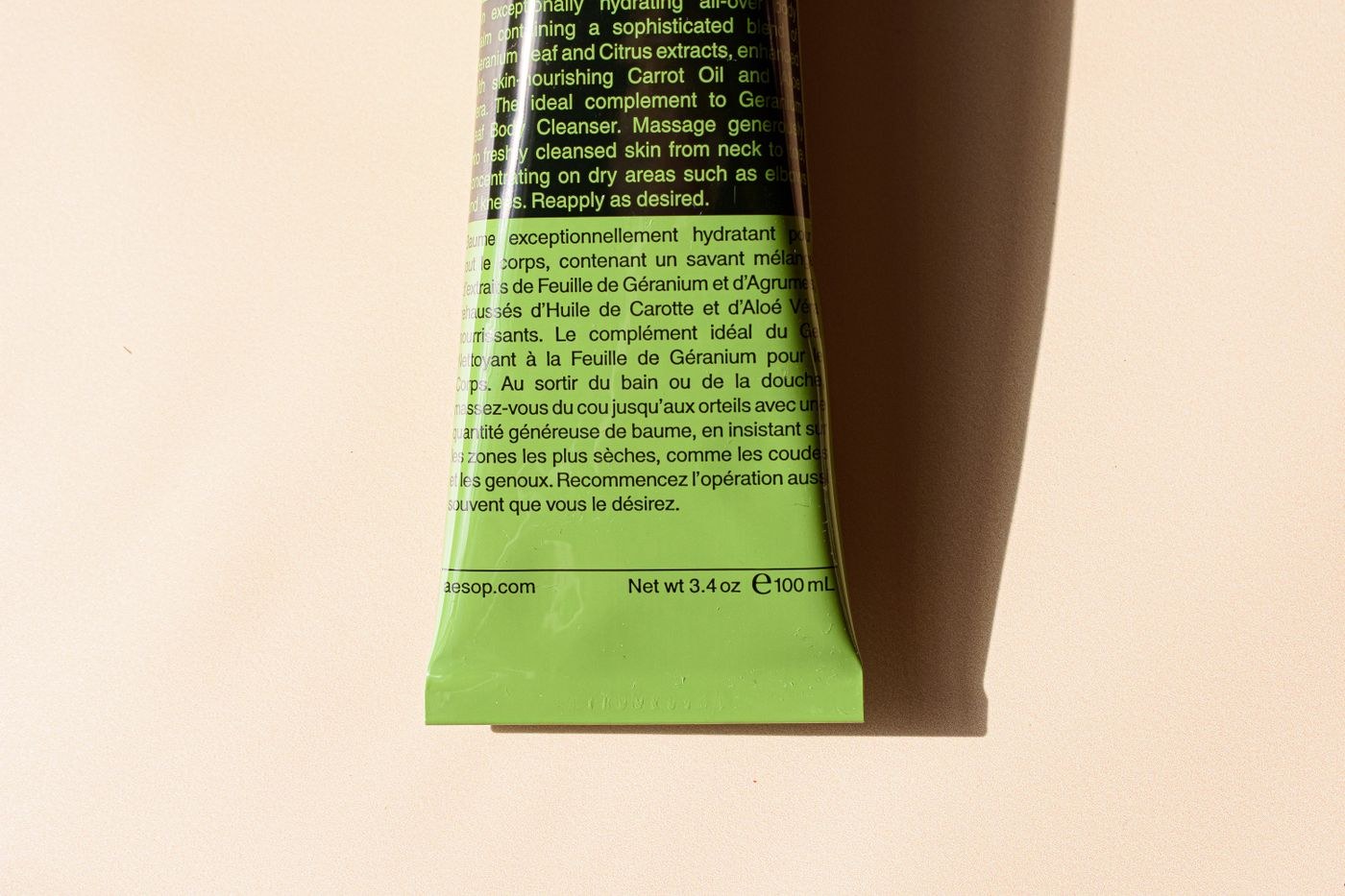
Keep the outer carton until you have recorded any information that is missing from the container. Small bottles sometimes depend on a leaflet or carton for the full declaration. A cropped photograph of the front is not enough to compare products. Ask the seller for a readable back-label image rather than trying to reconstruct the formula from promotional ingredients.
Read order without inventing percentages
In US cosmetic labelling, ingredients generally appear in descending order of predominance, with exceptions including ingredients at one per cent or less and colour additives. This does not turn the list into a set of percentages. Two neighbouring names could represent quite different amounts, and the position of a low-level ingredient does not establish whether it works.
For example, a shopper comparing two moisturisers might notice water near the beginning of both lists. That observation does not establish that the products have the same texture, preservation system or suitability. Nor does a longer name identify a harsher substance. Ingredient names are identifiers; pronunciation is not a measurement of exposure or irritation.
A short list can be convenient when checking a known allergy, but fewer entries are not automatically better. Removing a preservative or a stabiliser can change how a formula behaves. Consumers usually cannot evaluate that trade-off from the label alone.
Turn a concern into a specific check
If a clinician has identified an allergy, use the ingredient names they provide and ask about relevant alternative names. Do not replace that advice with a general internet list of ingredients to avoid. If you are unsure whether a botanical name represents something you must avoid, take the pack or a clear photograph to a pharmacist or your clinician.
For ordinary shopping, write down the question you need answered: is the product intended for the eye area, should it be rinsed away, or does it contain added fragrance? These questions lead to directions, warnings and manufacturer information as well as the ingredient declaration. A numerical rating that compresses all of these issues into one score can conceal the very distinction you need.
When two versions do not match
Suppose the carton lists one preservative but a retailer page shows another. Do not try to average the two lists or assume that the shorter one is newer. Record the batch and market of the physical product and ask the brand which declaration applies. A product can be reformulated while old photographs remain in circulation.
The same caution applies to a shade range. An online ingredient list may cover several colours with qualifications that a cropped screenshot omits. If a particular colour additive matters to you, ask about the exact shade rather than treating the range-level description as a precise declaration for every tube.
Translation can introduce another mismatch. A retailer may translate a marketing paragraph while leaving the ingredient declaration in its standard naming form. That does not mean the two sections are supposed to be identical lists. Use the full label and supplier response to resolve the question, not a machine translation of a few isolated words.
Keep scores out of the comparison table
A useful table can have columns for intended use, rinse method, fragrance information, pack size and an ingredient you specifically need to check. Leave a cell marked unknown when the information is missing. Do not fill it with a guessed safety grade. This makes the unresolved issue visible and helps you decide whether to ask a question or choose a product with clearer information.
A useful comparison record
Save the product name, date, ingredient photograph and the reason for your choice. Record what actually happened during use separately from your interpretation. “Stung immediately after application” is more useful than “contains bad chemicals”. If irritation occurs, stop using the suspected product and seek appropriate advice rather than testing more products to prove which single ingredient caused it.