Fragrance-free and unscented: reading the difference
Two bottles can have very little smell and still make different claims. Start with the wording, then look at the product information behind it.
A smell is not an ingredient list
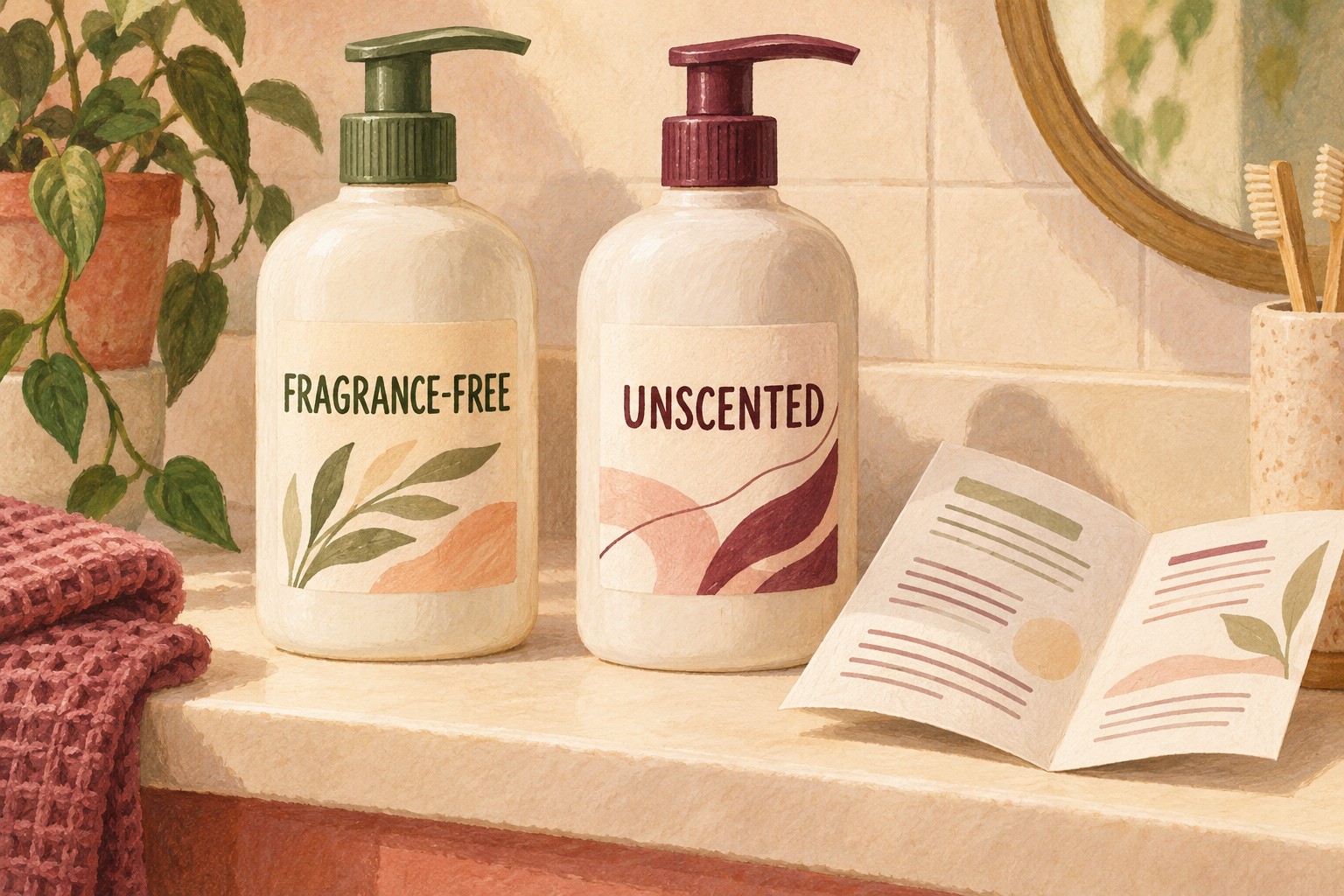
Unscented describes an experience you might expect from a product, but it does not necessarily mean that no fragrance ingredients were used. The US FDA notes that some unscented cosmetics contain fragrance ingredients. A masking scent can change the smell of the other ingredients without leaving an obvious perfume. Opening a tester and smelling it therefore cannot settle the question.
Fragrance-free is a more relevant phrase when your aim is to avoid added fragrance, but a phrase on the front of a bottle is only the beginning of the check. The FDA explains that terms such as fragrance-free and hypoallergenic do not have a federal standard or definition governing their use on US cosmetics. Do not treat either wording as a promise that a particular person cannot react to the product.
Compare the exact version
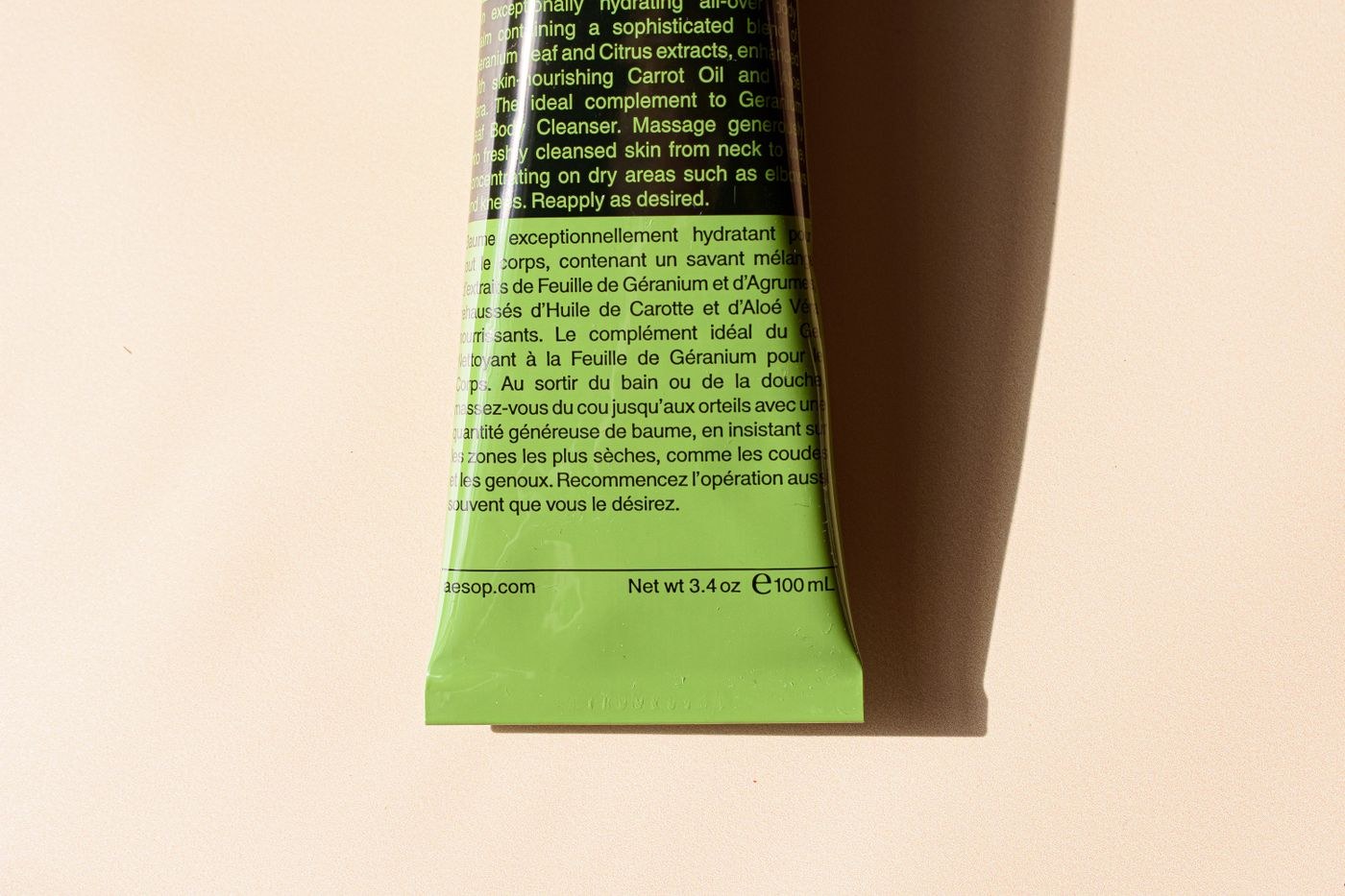
Pick up the bottle you intend to buy and read its ingredient list. A familiar brand may sell several versions with very similar packaging. Look for fragrance, parfum or perfume, and check any other ingredient you have been advised to avoid. A botanical name does not, by itself, tell you why that ingredient is present or how your skin will respond to it.
When shopping online, make sure the photograph and ingredient list describe the same size, variant and market. If a retailer combines reviews from several versions, those reviews may not tell you much about the one in your basket. Save the current label information rather than relying on an old screenshot from another website.
If the wording remains unclear, ask a narrow question: does this particular formula contain added fragrance or ingredients used to mask odour? Include the full product name. An answer about the brand's general philosophy is less useful than an answer about the product you will actually use.
A certification has a defined scope
For eligible household products, the US EPA Safer Choice programme has a separate fragrance-free designation. EPA reviews the formulation against its fragrance-free criteria. This is a specific programme claim, not a rule that automatically applies to every cosmetic labelled fragrance-free.
If you are choosing a cleaning product with that designation, look up the exact product in EPA's directory and check the fragrance-free entry. Do not assume that every item from the same manufacturer has the same certification. Keep the product's cleaning directions, dilution instructions and surface restrictions in the decision as well; the absence of fragrance does not replace them.
Make the choice fit the reason
For someone who simply dislikes scented toiletries, a clearly described fragrance-free option may make the shopping decision easier. For someone with a diagnosed contact allergy, the relevant question is whether the formula contains their identified allergen. These are different needs. Follow individual advice rather than building a personal avoidance list from a general article.
A useful comparison note has three lines: the exact product version, what the fragrance claim says, and the information still missing. That keeps the decision focused. You do not need to replace every item in your bathroom because one label was confusing. Check the product you are buying next, retain the label and use it according to its instructions.