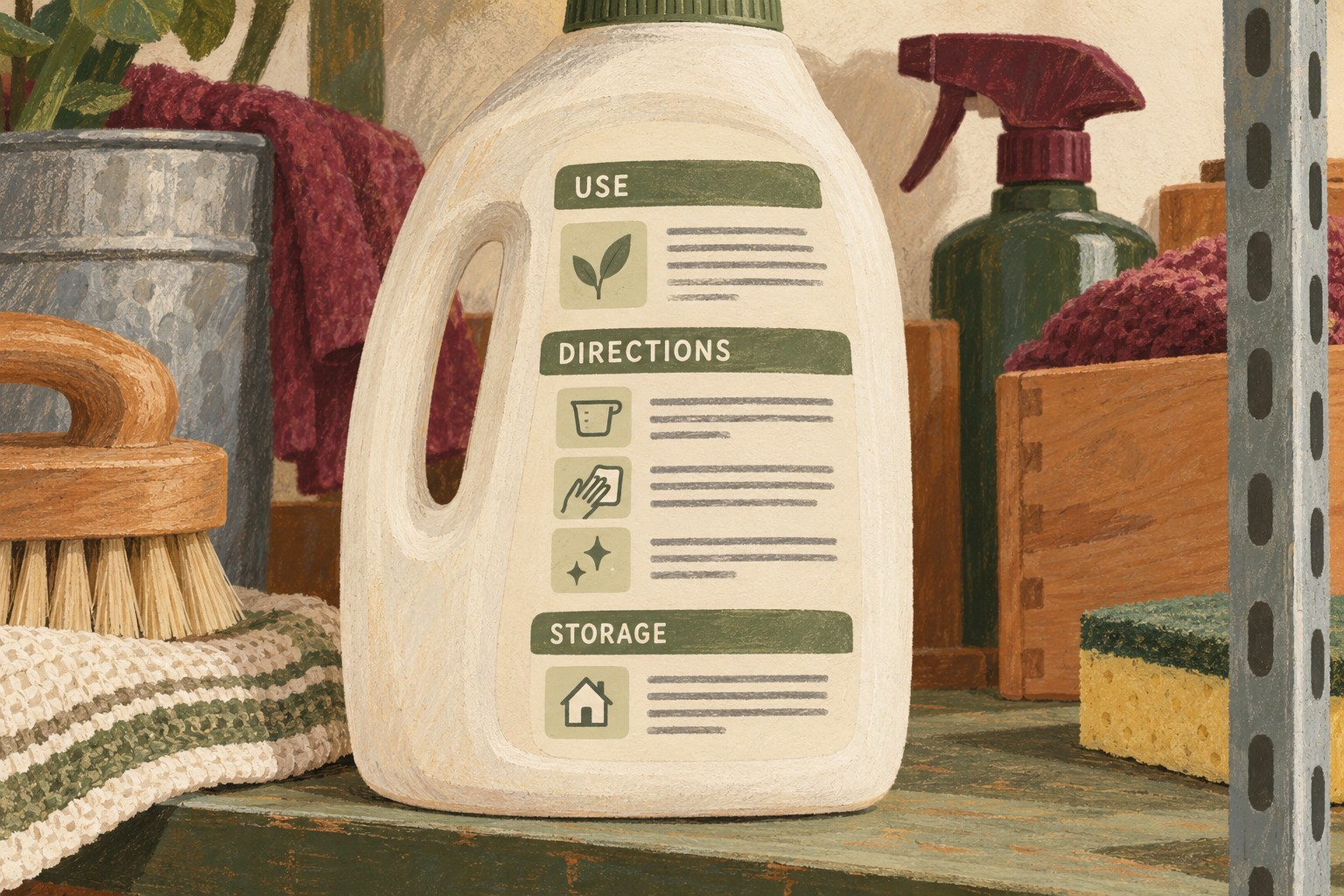
Laundry detergent dosage and water hardness
The right laundry dose depends on the product’s directions, the load and local water hardness. A full cap is not a universal unit.
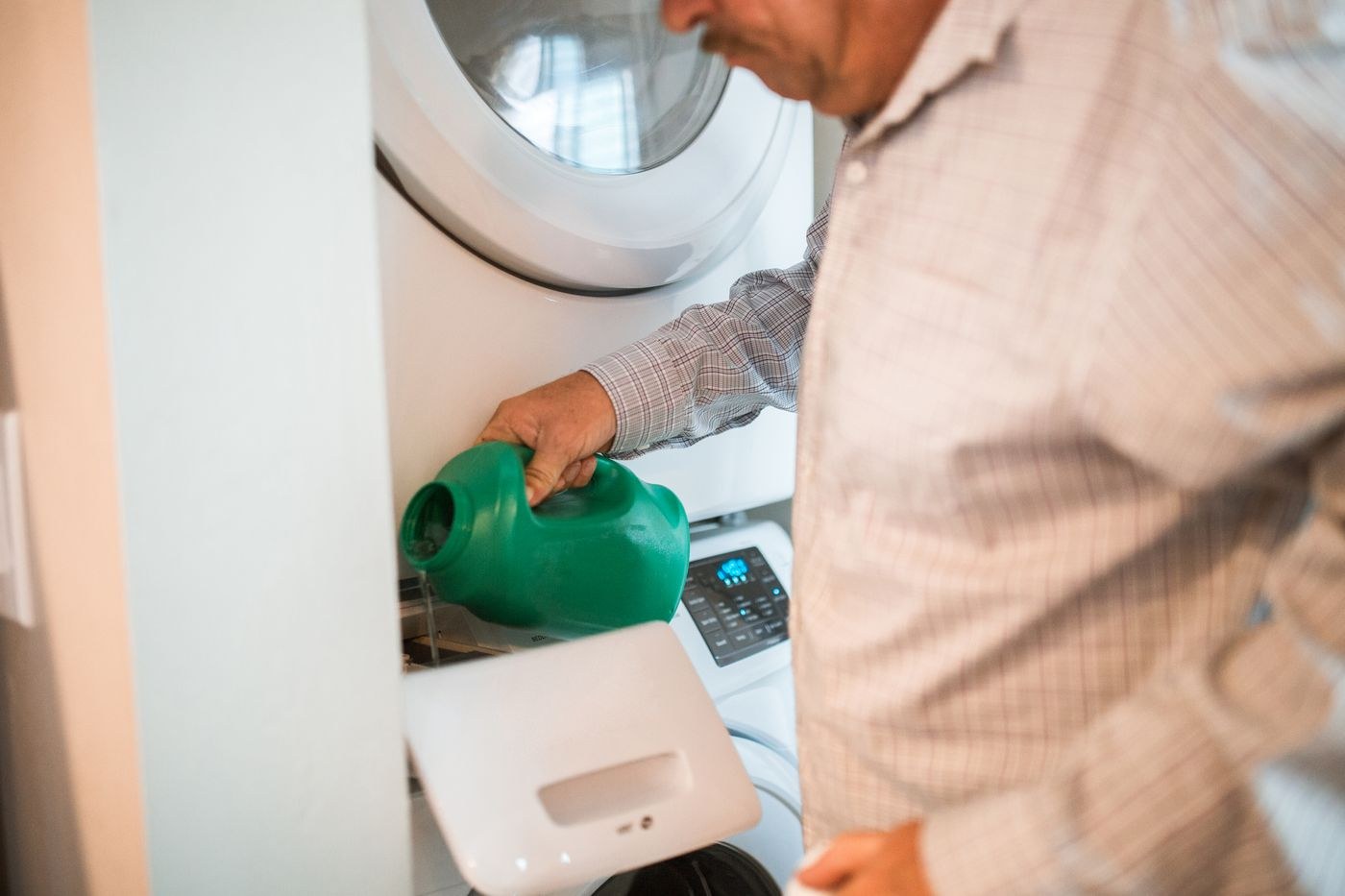
Read the dosing table for your load
Find the information for load size, soil level and water hardness on the detergent pack. A bottle’s headline number of washes is normally based on specified conditions. Your household may use different loads, so that number is not a promise of the exact number you will achieve.
Keep the measuring cap or scoop with the product it belongs to. A replacement cap from another brand may have different markings or volume. Read the units in good light rather than filling to whichever line is easiest to see.
Find out about the water
Your water supplier can usually provide information about hardness in your area. If you use a household softener, its effect and settings may also be relevant. Do not diagnose the required detergent dose solely from the amount of foam or the appearance of a tap.
Use the detergent maker’s hardness categories and instructions. Different products may express the information differently. If your supplier’s units do not match the pack, ask for clarification rather than converting from memory and guessing.
Account for the clothes and machine
A heavily soiled load and a lightly worn load are not identical tasks. Neither are a small drum and a large one filled to its permitted capacity. Follow the garment care labels and machine loading guidance, leaving appropriate room for the wash action.
Choose a detergent intended for the fabrics involved. Specialist wool or delicate items may have different requirements from everyday cotton laundry. A general dose table does not override a garment’s care restrictions.
If the machine has automatic dosing, set it according to its manual and the product information. Changing to a more concentrated formula without adjusting the relevant settings can make the old assumptions wrong.
Work out a household example
Suppose the pack provides a dose for a stated standard load and a separate adjustment for a larger or more heavily soiled load. Check your machine’s capacity and the actual load rather than assuming that every cycle fills that standard. A half-full large drum is not necessarily the same as a fully loaded smaller machine under the product’s assumptions.
If two people do laundry, agree where the relevant dose information is kept. One may habitually fill the cap while the other uses a marked line. The resulting inconsistency can make a product seem unpredictable even when the formula has not changed.
Price-per-wash calculations should use that realistic dose. If a promotion advertises a large wash count based on a small lightly soiled load in soft water, record those assumptions beside the price. You can then compare a second product on comparable terms instead of accepting the largest printed count as the lowest cost.
Review results without chasing suds
Too much or too little detergent can contribute to poor results. If laundry has residue or is not clean, review dose, loading, programme and maintenance together. Adding extra product is only one possible change and should remain within the instructions.
Make a simple note of the chosen dose for a common load if that helps everyone in the household use it consistently. Update the note when the detergent, machine or water arrangement changes. Keep it beside the original label rather than treating it as a permanent recipe.
For value, divide the price by the number of correctly dosed loads you expect under your conditions. A cheaper bottle that requires a larger dose may not be cheaper per wash, while a concentrated product can be poor value if it is routinely over-dispensed.