Keeping a small cleaning cupboard without missing essential jobs
A small cleaning cupboard should cover the home’s actual surfaces and recurring jobs. Reducing bottle count is useful only if the remaining products are suitable.
List jobs and surfaces
Walk through the home and note the tasks that recur: dishes, laundry, general surfaces, bathroom deposits and any specialist floor or appliance care. Write down materials that have restrictions. A single room can contain stone, glass, metal and coated surfaces that need different treatment.
Separate ordinary cleaning from circumstances that may require disinfection. Do not assume that every surface needs a disinfectant at every clean, and do not remove a product that is part of a specific health-related routine without appropriate advice.
Map existing products to those jobs
Read each product’s intended uses and exclusions. One compatible cleaner may cover several surfaces, while a particular material may need a dedicated product. The aim is a clear match between task and product, not a predetermined maximum number of bottles.
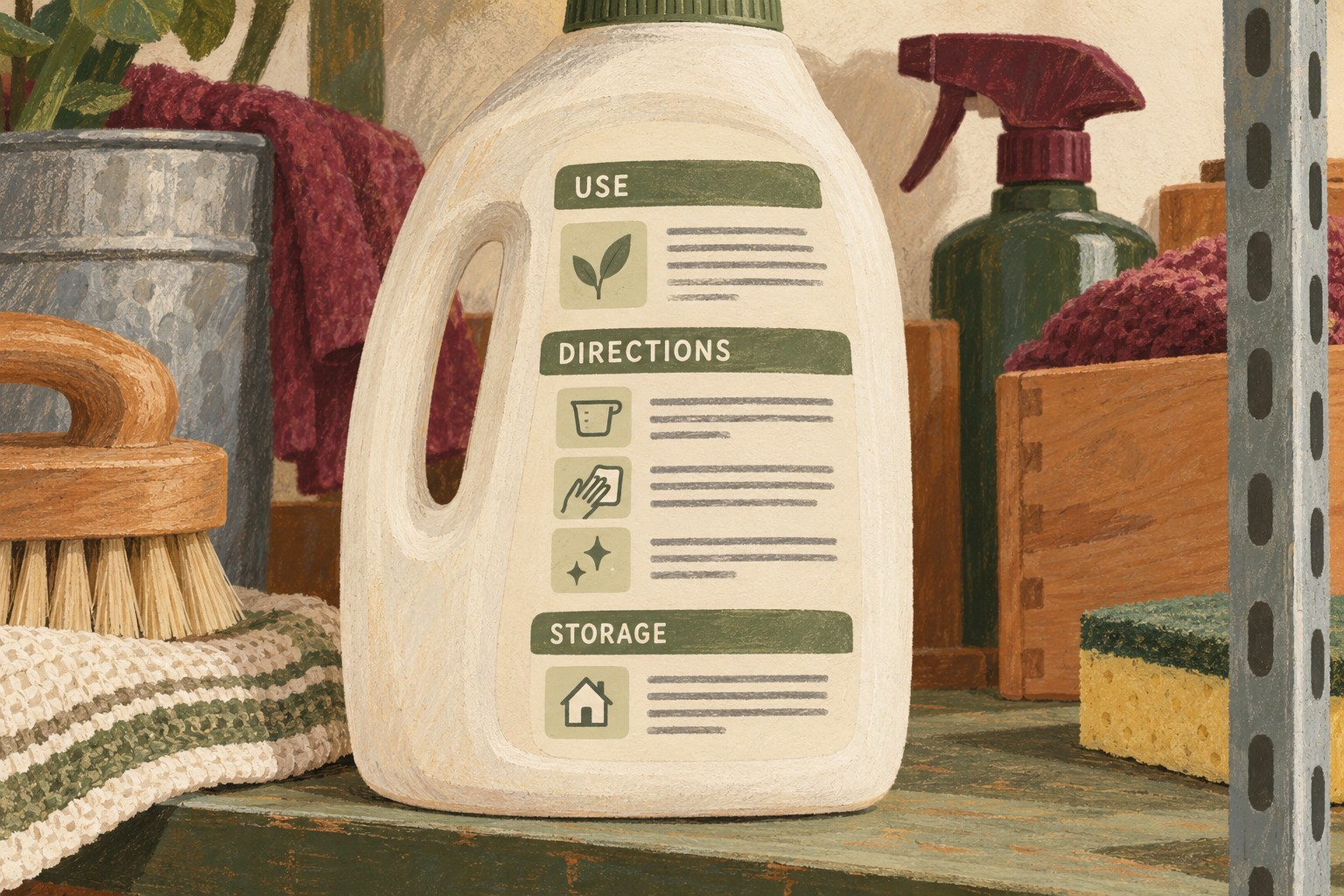
Identify duplicates by function rather than brand. Two fragranced sprays with different room names may overlap, while two plain-looking bottles may have entirely different purposes. Keep the labels intact so other users can understand the same map.
Keep the tools in the plan
A suitable brush, cloth or mop can make a recurring task easier without adding another cleaner. Include their maintenance and drying space. A cupboard that contains fewer bottles but a heap of damp cloths has not become easier to manage.
Store measuring equipment separately from food utensils and keep it with the product whose instructions it serves. If a concentrate needs a complicated preparation that nobody follows consistently, a suitable ready-to-use format may simplify the routine.
A small cupboard can still have specialist exceptions
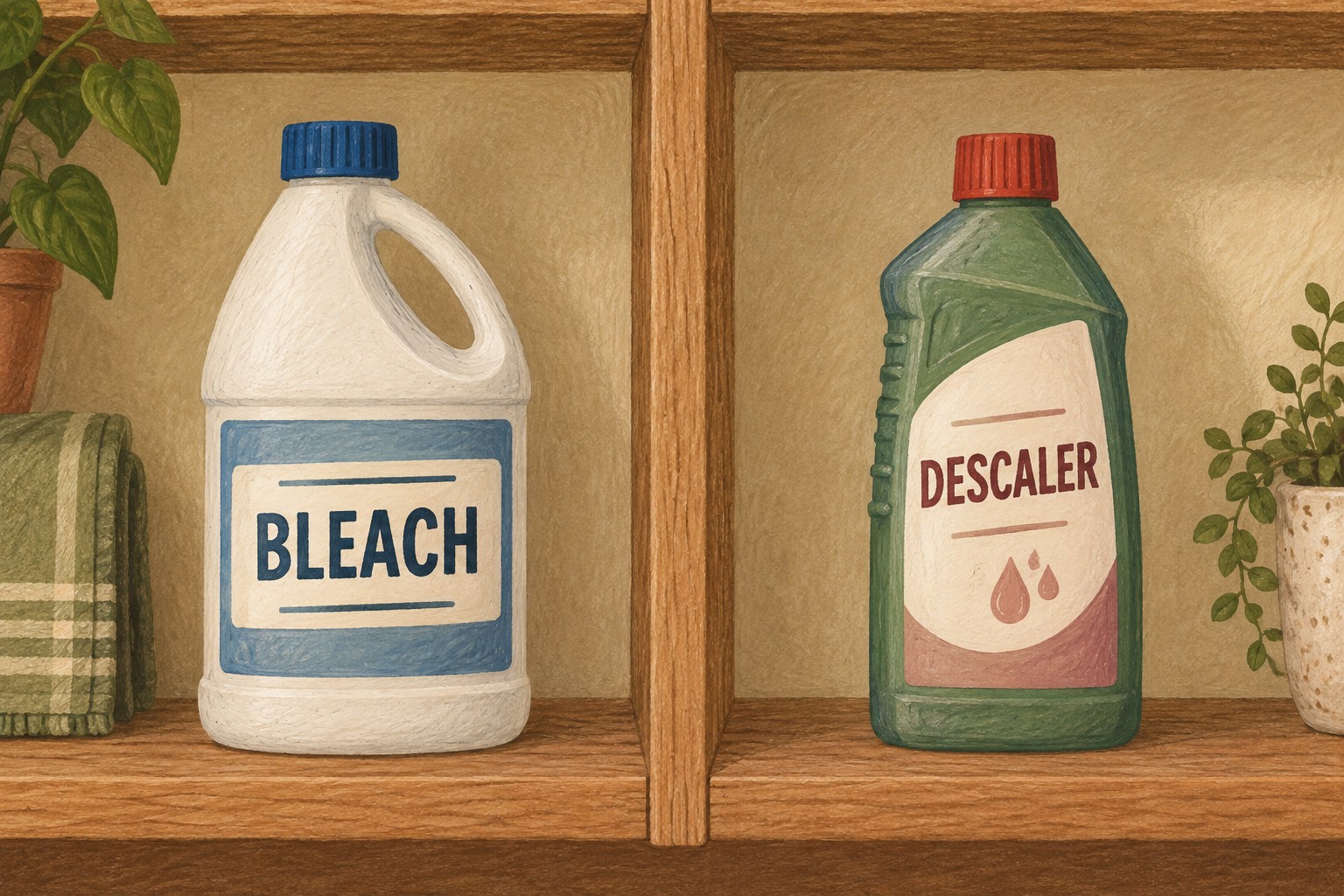
Imagine a home with washable laminate, an acid-sensitive stone basin and a kettle that specifies a particular descaling method. A general cleaner may cover some routine surfaces, but it cannot be assumed to replace the stone-care or appliance instructions. Keeping a suitable specialist product for an infrequent job can be more sensible than using the wrong general product.
The question is whether each item has an identified purpose and a manageable quantity. If two products cover the same permitted task, finish one before replacing it with the other where appropriate. If a product serves a genuinely different requirement, keep its instructions with it rather than treating it as clutter.
A seasonal review can focus on actual use: which bottle was never opened, which task needed a tool rather than a chemical, and which product ran out repeatedly? These observations improve the next purchase without forcing the cupboard to meet an arbitrary visual ideal.
Use a replacement rule
Buy another bottle when the existing supply reaches a sensible point, rather than keeping several open versions. A single sealed reserve may be useful for a frequently used product if secure storage allows it. Infrequent specialist products do not necessarily need a spare.
Dispose of unwanted leftovers through the appropriate local route. Do not combine them to reduce container count. Keep records of surface-care instructions so a future purchase can be checked without restarting the research.
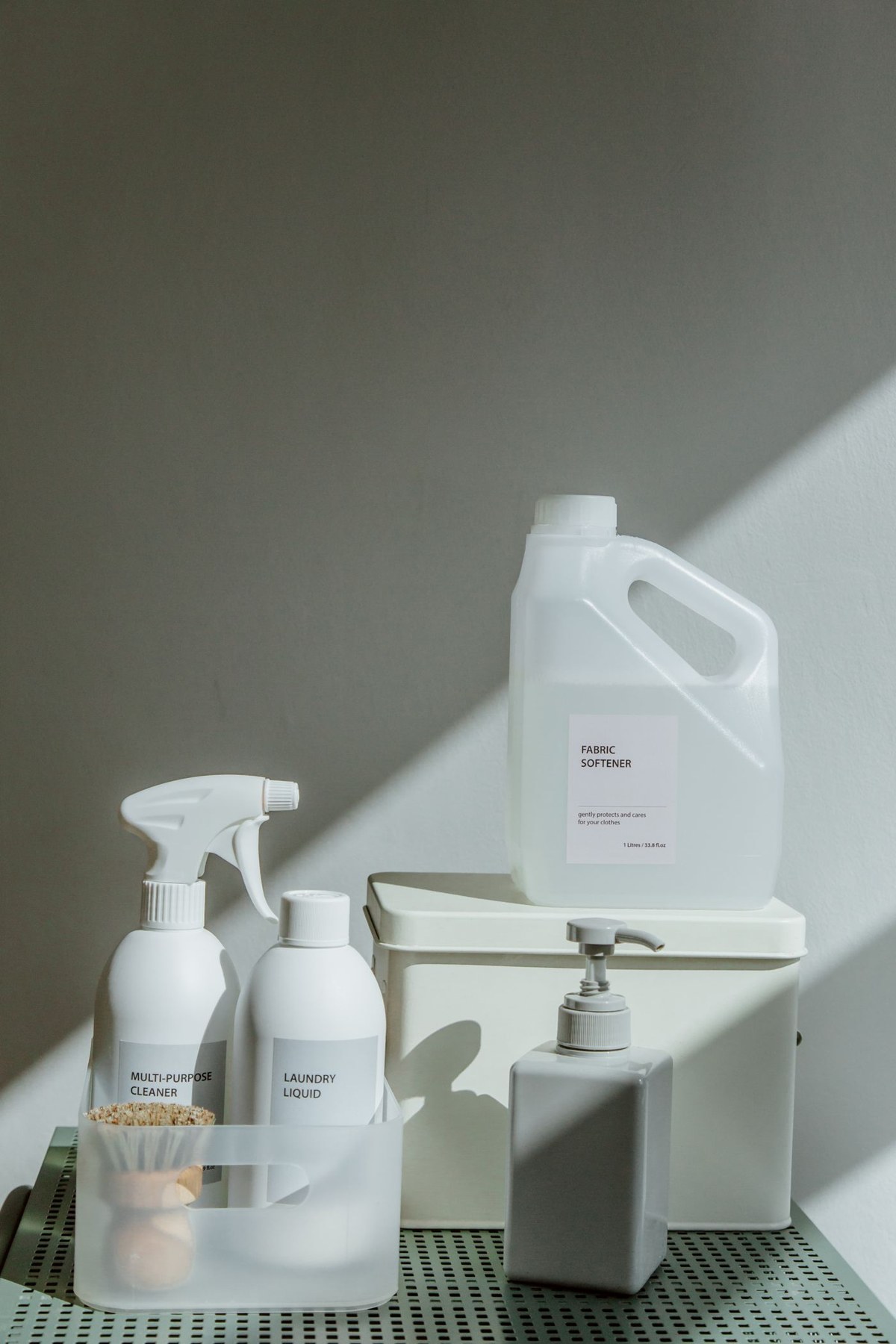
Explain the system to everyone who cleans. Clear placement, a readable label and a short note of permitted tasks can prevent misuse more effectively than an attractive row of anonymous dispensers. Review the cupboard when appliances, surfaces or household needs change.