Household batteries and small electronics: safe storage and disposal
Battery chemistry and condition determine the storage and disposal route. A drawer of loose mixed batteries is not a useful collection system.
Keep identification and terminals protected
Retain the battery's markings so you can distinguish alkaline, lithium and rechargeable types. Store new batteries in their packaging or another suitable arrangement that prevents contact with loose metal objects. Do not carry loose cells alongside keys or coins. Keep button and coin batteries securely away from children; small size does not mean small consequences if swallowed.
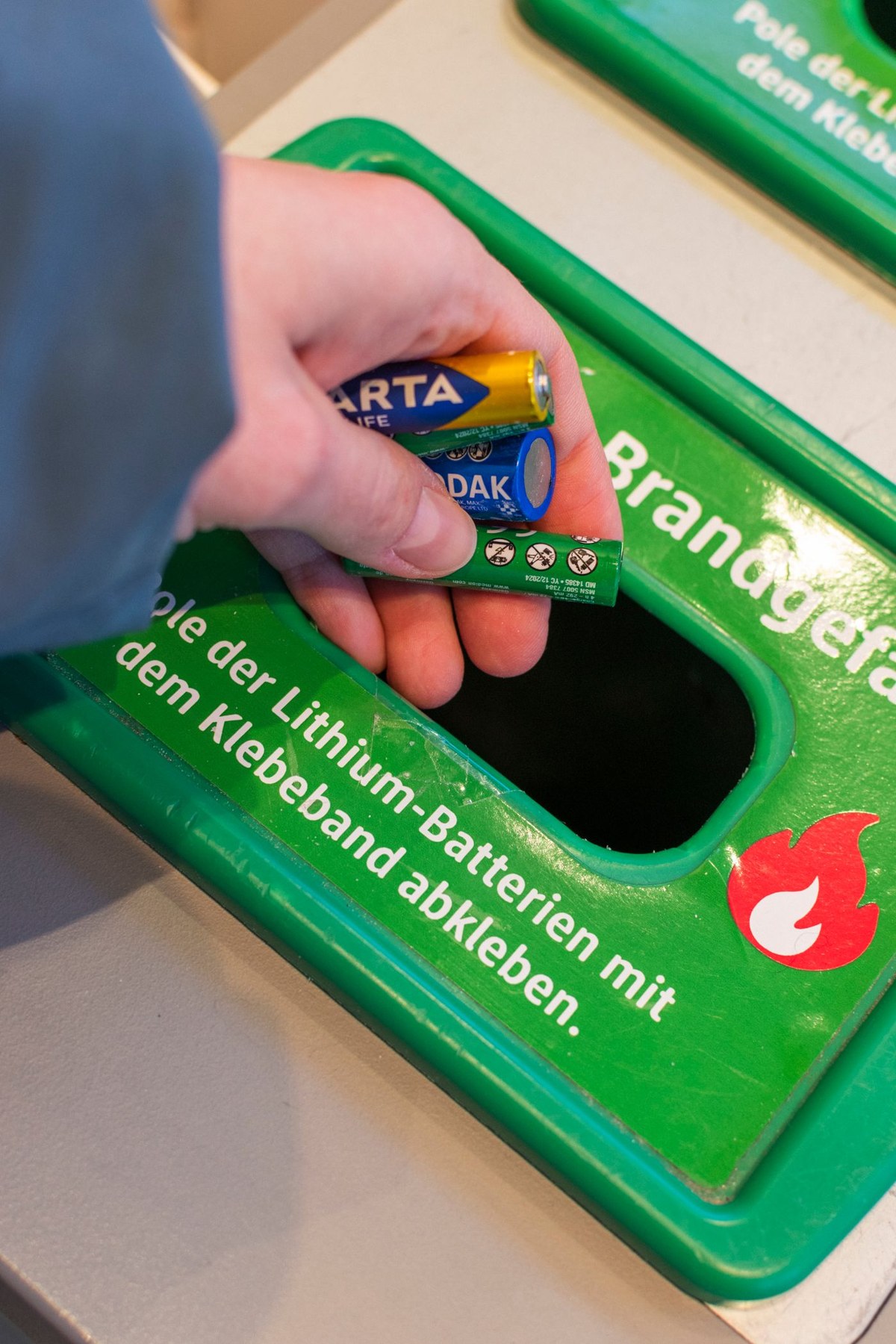
For used lithium batteries, follow the collection service's instructions for isolating terminals, often using non-conductive tape or individual bags. Do not cover the identifying label unnecessarily. Keep different batteries organised so a damaged one is not overlooked among a large pile awaiting disposal.
Use a small, clearly labelled collection arrangement rather than a communal bowl that also receives screws and spare keys. Keep batteries of unknown condition apart from new supplies, without letting children access either group. Do not test a coin cell by touching it to the tongue. If a battery may have been swallowed, seek emergency medical advice immediately and provide the battery or device information if available; do not wait for symptoms.
Damaged batteries need specific advice
Do not charge or continue using a battery that is swollen, leaking, unusually hot or visibly damaged. Follow the manufacturer or local emergency and waste guidance for the situation. Avoid puncturing, crushing or trying to repair a cell. If there is smoke or a fire risk, move away and contact the appropriate emergency service rather than handling it as ordinary rubbish.
For a device with a built-in battery, do not pry it open unless the manufacturer provides a user-removal procedure. A small electronic device may need to go to an electrical-waste collection route as a whole. Resetting personal data, where relevant and safe, is a separate step from removing the battery.
A leaking battery should not be cleaned or handled as though it were ordinary dust. Keep contact to a minimum and follow the maker's advice for the chemistry and device involved. If the product is damaged in transit or arrives swollen, contact the seller for a safe return or disposal route before posting it back. Battery transport can have special requirements, so a normal parcel return label may not settle the question.
Charging is part of routine care
Use the charger and charging conditions specified for the device. A connector that fits does not establish electrical compatibility. Keep charging equipment in good condition and stop using damaged cables or plugs. These precautions belong to ordinary product use, not only to disposal day.
Check the route where you live
EPA advises that lithium batteries should not go into household rubbish or mixed kerbside recycling. Local arrangements differ, so find the accepted collection point and ask about any condition or quantity restrictions. A supermarket battery box may not accept every damaged cell or large battery pack.
Keep used batteries stored safely until the planned collection trip, then clear the small stock rather than letting it grow indefinitely. Other chemistries can have different local rules, which is why a single instruction to recycle all batteries in one bin is insufficient. Keep small electronics separate from packaging recycling and follow the designated electrical-waste route.
Before visiting a collection point, check its current accepted types and whether staff need to receive damaged batteries directly. A box intended for small intact household cells may not accept a swollen power-bank battery or an e-bike pack. Describe the item accurately when asking. Plan collection without leaving batteries in a hot car or carrying them loose with metal objects, and retain enough labelling for the receiving service to identify them.