Humidity meters: placement and interpreting a reading
A humidity meter shows conditions at its sensor. Useful readings come from consistent placement and a short record of what was happening in the room.
Choose a representative position
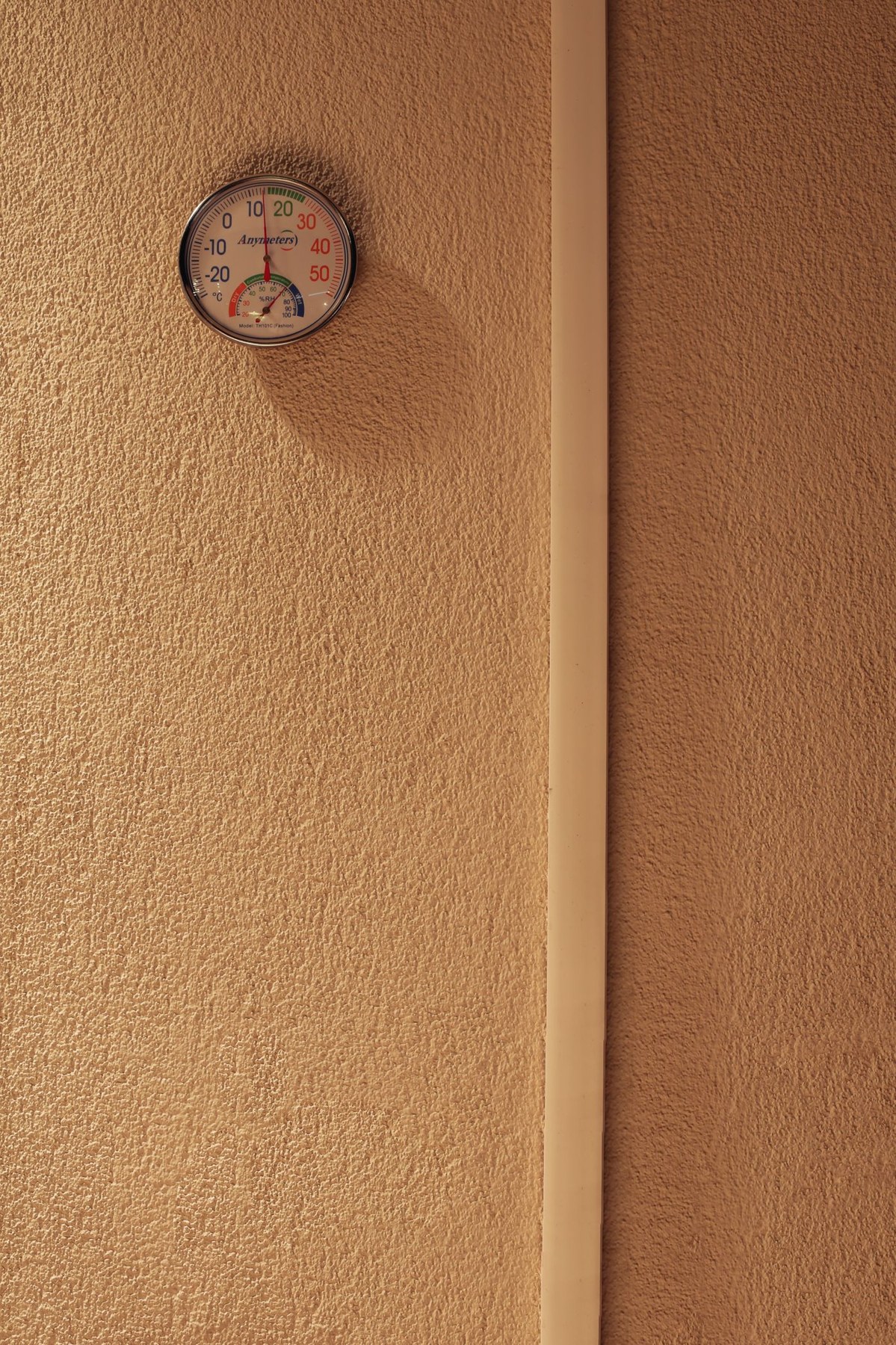
Read the meter's placement instructions and keep it away from direct heat, sunlight and immediate splashes. A reading beside a steamy shower or directly above a radiator may describe that small area rather than the room. Place it where air can circulate and where you can read it without moving it every time.
Allow the device to settle after moving it between rooms. Check its stated accuracy and operating range. Two inexpensive meters may differ slightly without one necessarily being broken. A single decimal place on a display does not guarantee that level of accuracy, so avoid reacting to tiny changes as though they were exact measurements.
Record patterns rather than one number
Note the room, time, temperature and recent activity. Cooking, showering, drying laundry and opening windows can change the reading. Several observations across ordinary days can be more informative than one unusually damp morning. If the meter records minimum and maximum values, reset and interpret them according to the manual.
Relative humidity depends on temperature, so a change in the number does not always mean an equal change in the amount of moisture present. Keep the temperature reading alongside it when available. Do not compare a cold unused room and a warm occupied room without considering that difference.
Use humidity ranges as context
EPA's moisture guidance recommends keeping indoor humidity below 60 percent and ideally around 30–50 percent where possible. Treat that as general moisture-control guidance, not a universal diagnosis or a command to buy a dehumidifier whenever a brief reading moves outside the range. Climate, building conditions and visible condensation matter too.
Know what the meter cannot explain
A room reading cannot rule out a leak, a cold damp corner or moisture hidden behind furniture. Condensation or a recurring mould patch still needs investigation even if the sensor in the middle of the room looks ordinary. Photograph visible changes and note where they occur.
Use the record to support a conversation with a landlord, building professional or relevant local service. Do not use it to blame occupants or to declare the building safe. If buying equipment, connect it to the actual moisture problem and its cause. A meter can help observe a routine; it cannot replace a building assessment.