FSC labels describe forest sourcing, not every product property
FSC labels relate to forest-based materials and their sourcing. They do not answer every question about a finished product's coating, emissions or use.
Read which FSC label is present
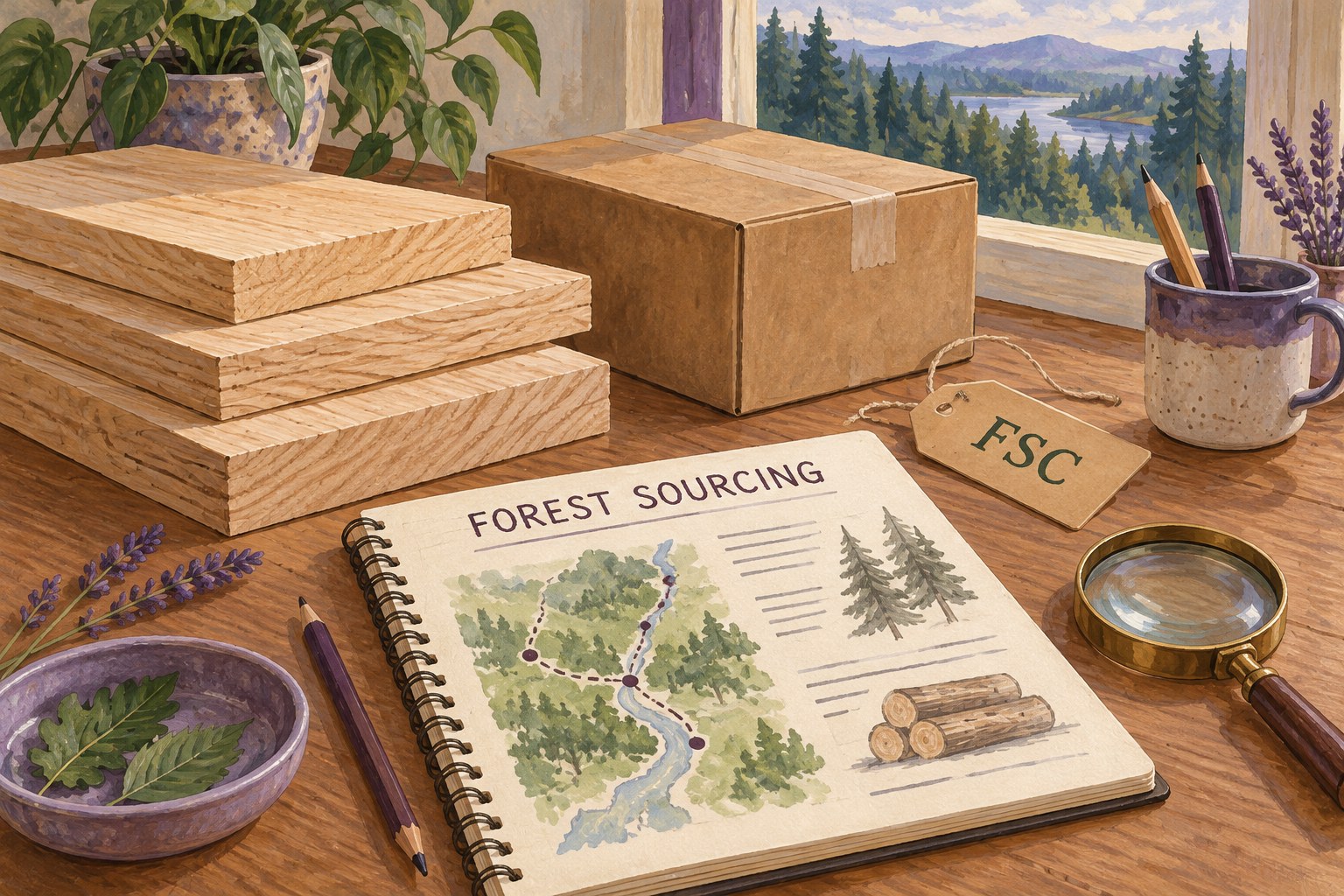
FSC distinguishes three principal labels. FSC 100% refers to forest-based material from FSC-certified forests. FSC Recycled identifies reclaimed material, while FSC Mix can involve certified forest material, recycled material and controlled wood. The words next to the tree symbol therefore matter; do not shorten every label to a claim that the item is made entirely from recycled material.
Look at what carries the label. On a cosmetic carton, it may describe the paper packaging rather than the formula inside. On a furniture listing, ask whether it applies to the item and the version being sold. A brand's use of certified material in one range does not automatically extend to every product it offers.
Keep the licence information and exact product description when comparing claims. If the label is unclear or appears only in a generic retailer banner, ask for the relevant product information. FSC provides explanations of its labels, so use those definitions rather than an informal summary that merges their meanings.
Add the other questions the product still needs
For a wooden chopping board, you still need food-contact and care instructions. For a cabinet, you may want construction, finish and emissions information. For a paper carton, you need local recycling instructions. None of those properties follows automatically from responsible forest sourcing.
Suppose two storage boxes both carry an FSC label. One fits your shelf and has replaceable fittings; the other is too large and has no care information. The sourcing label is relevant to both, but it does not make the second item suitable for the job. Compare dimensions, condition and use alongside the sourcing evidence.
Avoid treating certification as a score to add to unrelated badges. A forest-sourcing label and a textile substance test answer different questions. State the question each one helps resolve, and leave unanswered properties as unanswered rather than filling the gaps with a broad green claim.
If forest sourcing is your priority, choose a product with clear, verifiable information about that attribute. There is no need to turn it into a claim that the item is chemical-free, non-allergenic or universally safer. Accurate scope makes the label more useful, not less useful.