Fragrance-free laundry products and the rest of the wash
Changing detergent is only one part of a fragrance-free laundry routine. Other products and shared-machine habits can contribute scent.
Look at the whole wash
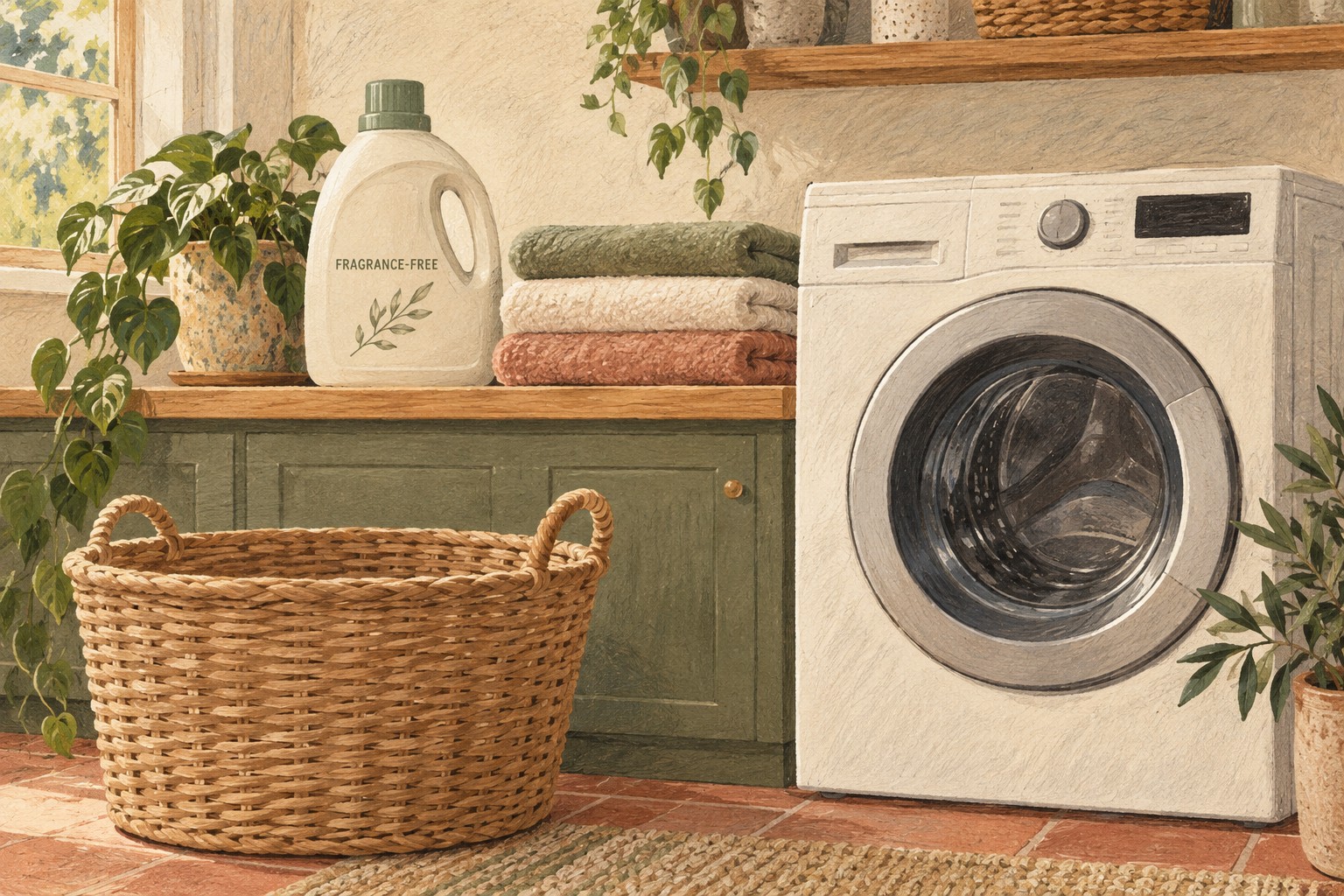
List what goes into the wash and drying process: detergent, stain treatment, conditioner, scent boosters, dryer sheets and machine-cleaning products. If the objective is to avoid added fragrance, check each relevant item rather than expecting one new detergent to determine the whole result.
Read the exact claim and ingredients or manufacturer information. Unscented and fragrance-free should not be treated as interchangeable without further information. A product with a floral illustration may still be fragrance-free, and neutral packaging may still contain fragrance; appearance is not the evidence.
Use certification within its scope
EPA’s Safer Choice product directory includes a filter for products meeting its fragrance-free criteria. If using that resource, match the exact product and variant. A brand with one qualifying product does not automatically qualify every item it sells.
This can help with a specific shopping requirement, but it is not a guarantee that no person will react to the product. A known allergy needs an ingredient-specific check and, where needed, professional advice.
Consider shared equipment
In a shared home or laundry room, another person may use a different detergent or conditioner. Check the machine’s permitted cleaning and maintenance instructions rather than trying to remove every scent with a strong chemical mixture.
Keep your own products labelled and agree which compartments are used for which products. If avoiding fragrance is important to someone, explain the specific requirement without assuming that everyone recognises the same packaging terms.
Do not add essential oils to an otherwise fragrance-free wash. Plant-derived scent is still scent and changes the routine you are trying to evaluate.
Evaluate the result carefully
Follow the correct dose and garment care instructions. If a scent remains, identify possible sources before buying several more products. A cupboard, fabric spray or previously used product may be relevant; the detergent is not the only possibility.
If skin symptoms continue, seek advice instead of repeatedly changing products and washing everything at progressively stronger settings. Record which products were used and what changed. A fragrance preference and a medically identified allergy are different situations, and the next step should reflect the actual problem.