Comparing two labels without adding up free-from claims
Counting absent ingredients is a poor way to compare two labels. Start with the job, then examine the information that changes how you would use the product.
Write the same questions for both
Name the task first: washing everyday clothes, cleaning a particular floor or moisturising hands. Compare products intended for that task. A specialist disinfectant and a routine surface cleaner cannot be ranked simply by which has fewer warning symbols or more free-from statements; they may be designed for different jobs.
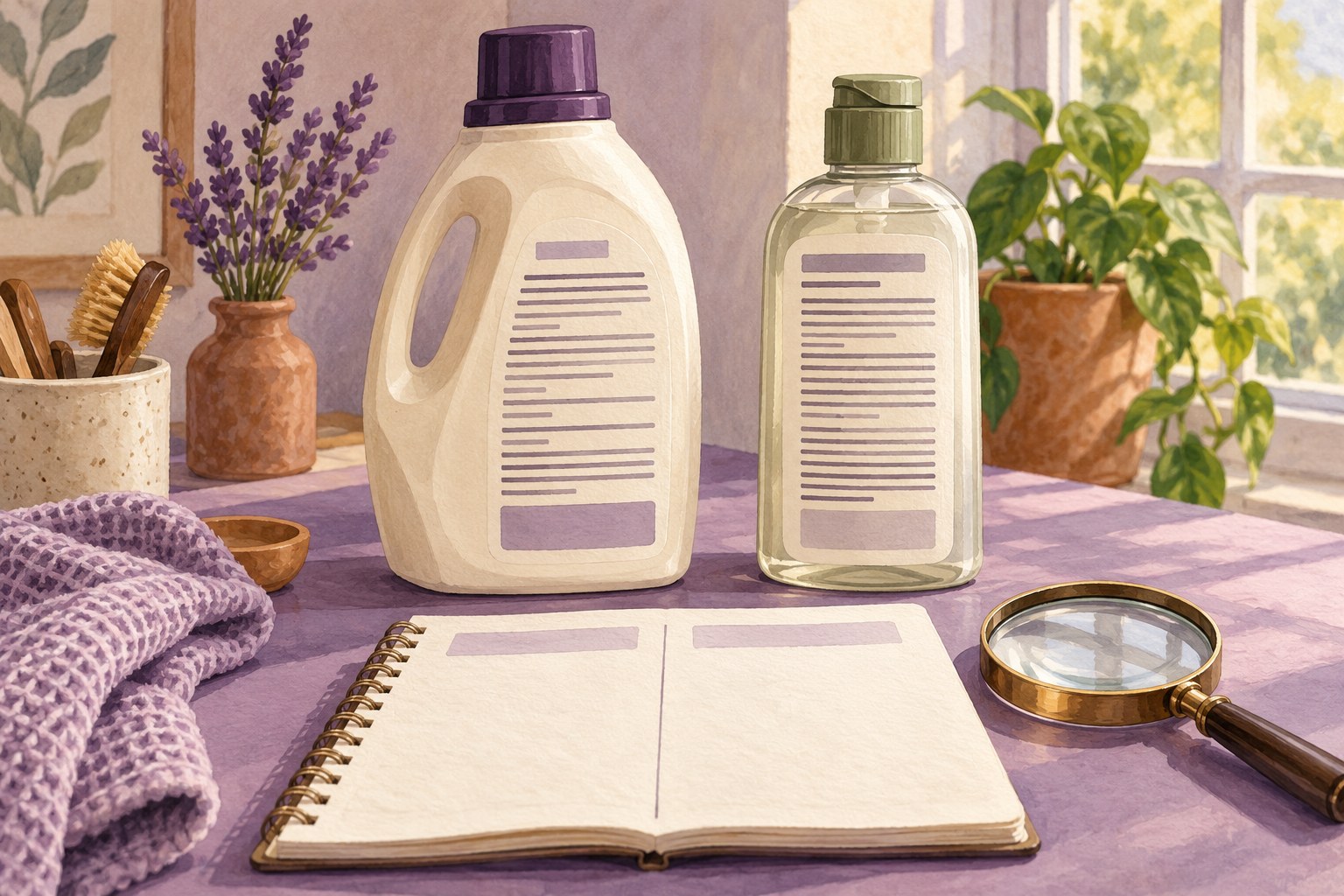
Put the same fields beside each product: intended use, directions, relevant ingredients or materials, quantity per use, warnings, packaging and price. Leave unknown information blank rather than filling it with assumptions. A shorter label is not necessarily a simpler or safer formula.
Translate claims into specific questions
If fragrance is relevant, compare the fragrance information and ingredient lists rather than the length of unrelated exclusions. If a certification matters, check the exact product and scope. A claim about packaging sourcing should not be counted as evidence about the formula's effect on skin.
Ask whether a free-from statement concerns something normally relevant to the product category. The US FTC Green Guides warn that some absence claims can mislead when the substance was not associated with that category. Even a truthful statement may not help your particular decision.
Use a small worked comparison
Imagine cleaner A has a long list of excluded substances but gives no clear instruction for your floor. Cleaner B has a shorter claim list and explicit compatibility and dilution directions for that surface. The missing compatibility information is a concrete reason to pause on A; the number of exclusions does not resolve it.
Now imagine two lotions with complete directions. One contains fragrance you prefer to avoid, while the other provides clear fragrance-free information. That is a relevant difference. It does not require declaring the first lotion universally harmful or the second incapable of causing any reaction.
Finish with a usable decision
Calculate cost using the dose or usable amount, not only bottle size. Consider whether you can follow the storage and refill directions and whether the product fits the space available. If both meet the need, a smaller initial purchase may be sensible before committing to a larger pack.
Keep unresolved questions narrow when contacting the brand. Ask for the missing surface permission, certification entry or ingredient information. A useful label comparison leads to a choice you can explain in ordinary terms, rather than an invented safety score assembled from marketing claims.