Cleaning an oven using the appliance instructions
An oven’s lining, cleaning functions and removable parts determine which methods are appropriate. Start with the model manual rather than a general cleaning recipe.
Find the exact appliance guidance
Locate the model number and manual. Conventional enamel, catalytic panels and pyrolytic functions can have different care requirements. A cleaner suitable for one area may be excluded from another. Do not assume that all dark interior panels are the same material.
Read instructions for racks, telescopic rails, door seals, glass and control surfaces separately. Some parts may need removal before a cleaning programme; others may have their own restrictions. A product marketed for ovens does not override those appliance instructions.
Choose one permitted method
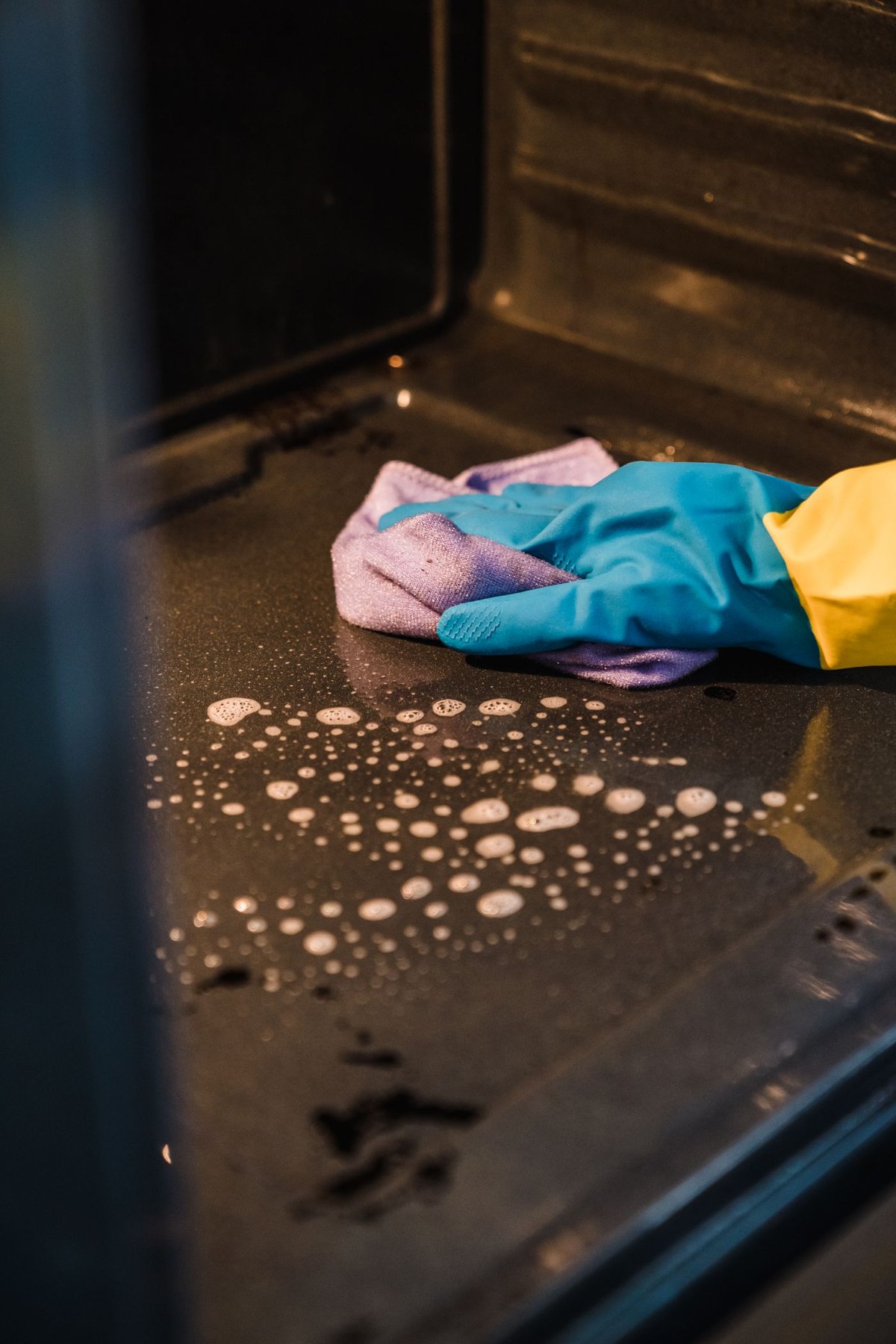
If using a cleaning product, follow both its label and the oven manual. Check temperature requirements, ventilation, protective equipment, contact time and removal. Do not use a chemical cleaner in conjunction with a high-temperature self-cleaning cycle unless the appliance explicitly permits that combination.
Bosch’s guidance illustrates the importance of appliance-specific cleaning functions and compatible products. It should not be treated as instructions for every brand or model. Use the manual belonging to your oven to resolve the details.
Prepare the area
Allow the appliance to reach the condition specified for cleaning, and protect nearby surfaces as appropriate. Keep children and pets away from open products and the work area. Arrange tools before starting so you do not leave a chemical-coated oven unattended while searching for a cloth.
Do not spray into openings, electrical areas or seals unless the instructions explicitly cover that application. Avoid improvised metal scrapers and abrasive pads on surfaces where they are prohibited. A stubborn deposit is not permission to damage a lining.
Separate grease removal from appliance maintenance
A dirty oven is not the same problem as a faulty seal, broken lamp cover or malfunctioning fan. Cleaning cannot establish that a damaged component is safe. If you discover a defect during the task, stop using the affected function and follow the manufacturer’s service advice.
Likewise, unusual smoke or odour during cooking should not automatically trigger a stronger chemical clean. Check the manual’s troubleshooting information and whether there is a visible spill that can be addressed through the permitted method. Do not reach into hot or powered components to investigate.
Keeping the model number and manual accessible makes these decisions easier. A saved general cleaning video may show a different door design or lining and encourage removal of parts that your appliance does not allow the user to dismantle.
Choose quantity for the actual schedule
A large bottle of specialist oven cleaner may remain partly used for a long time if your oven’s normal maintenance relies on a built-in function. Check the permitted cleaning schedule and buy accordingly. Do not use a product on excluded parts simply to finish it. Store any remaining cleaner securely with its directions and follow local disposal guidance when it is no longer needed.
Complete removal and checks
Wipe, rinse or run any finishing process exactly as instructed. Confirm that removable components are correctly returned before the next cooking use. Do not judge completion only from a fresh smell; fragrance can coexist with residue.
If a part is damaged, a cleaning cycle fails or residue remains where it should not, consult the manufacturer or a qualified service provider. Do not dismantle components beyond the user instructions. Regular permitted cleaning of manageable spills can be easier than repeatedly escalating to strong products after heavy build-up.