Choosing a scrub brush instead of a stronger cleaner
A better-shaped brush can improve access to dirt without changing chemicals. It still needs to be compatible with the surface and the cleaning task.
Match shape to the problem
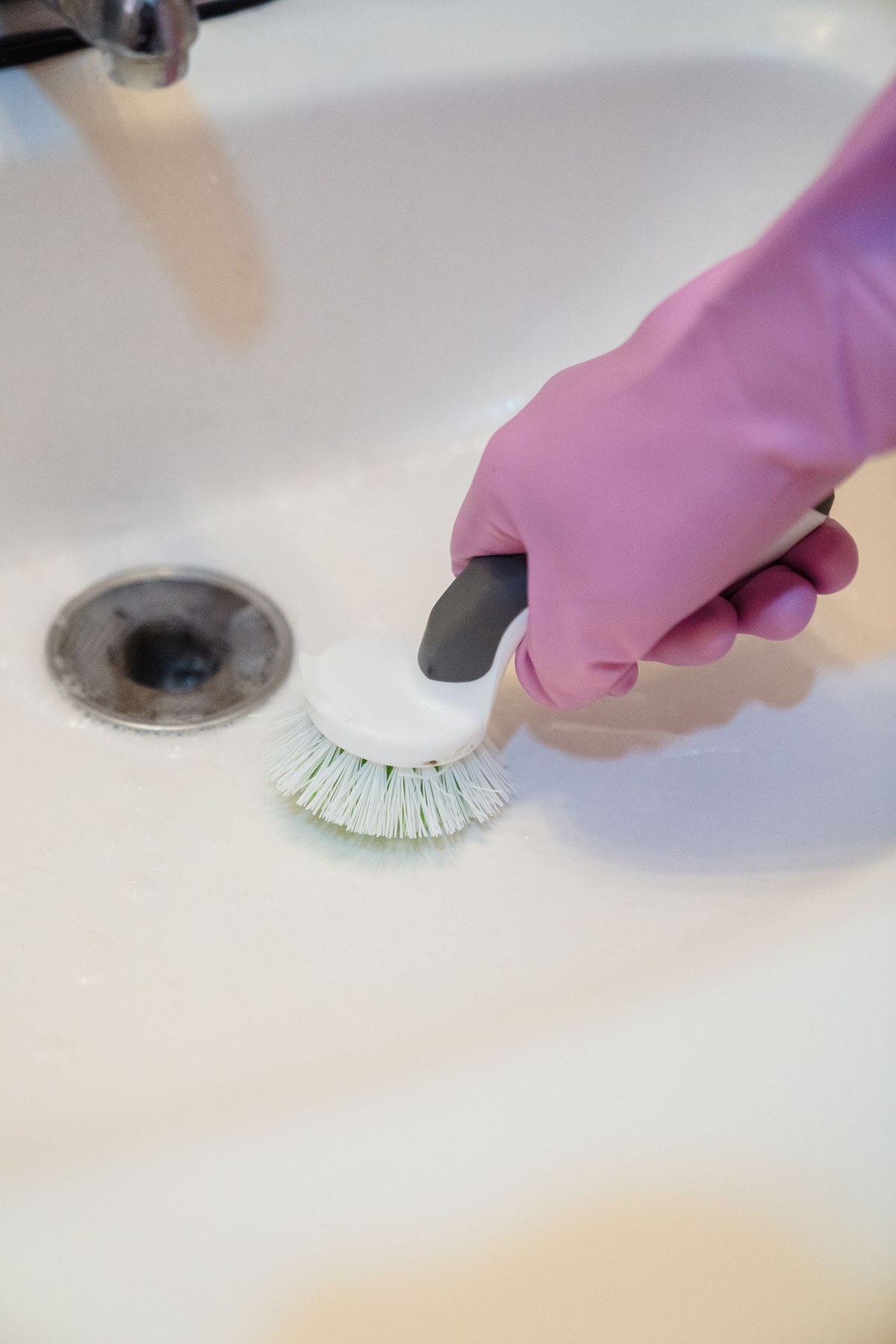
A narrow brush can reach a groove, a longer handle can reduce bending and a broad head can cover a flat surface. Start with the access problem rather than buying the stiffest bristles available. More force is not always the missing ingredient.
Check whether the surface manufacturer permits brushing and which materials are suitable. Polished stone, coated fittings and delicate plastics can be damaged by abrasives. A brush sold for grout may be unsuitable for an adjacent glossy surface.
Use mechanical work within the directions
Remove loose debris where appropriate and apply the compatible cleaner as directed. Allow any stated contact time before scrubbing, but do not extend it arbitrarily. A brush can help remove material; it does not automatically turn an ordinary cleaner into a disinfectant.
Do not combine chemicals because brushing has not removed a mark. The mark may be damage or staining rather than dirt. If the surface changes appearance during the task, stop and ask the supplier instead of applying more pressure.
Choose a handle you can control
Consider grip when wet, the angle of the head and whether the handle lets you keep your hands away from the product. A brush that slips can cause splashes. Required gloves and eye protection still apply even when a long handle reduces direct contact.
If a head is replaceable, check that replacements are actually available. A durable handle is useful only if the working part can be maintained or replaced without buying an entirely new system.
Keep each brush’s job clear
Separate bathroom, kitchen and other tools. Clean and dry the brush according to its instructions before storage, including the handle and holder when needed. A brush left standing in dirty liquid is not ready for the next task simply because its bristles look intact.
Replace worn, splayed or damaged heads that no longer work as intended. Keep a small set of tools for recurring jobs rather than buying a new chemical for every awkward corner. The benefit is a more controlled cleaning method, not a promise that brushes can replace all necessary products or hygiene steps.