Choosing a pillow protector you can wash
A pillow protector should fit the pillow and the washing routine you can maintain. Check the closure, fabric layers and drying requirements before choosing one.
Fit and washing requirements
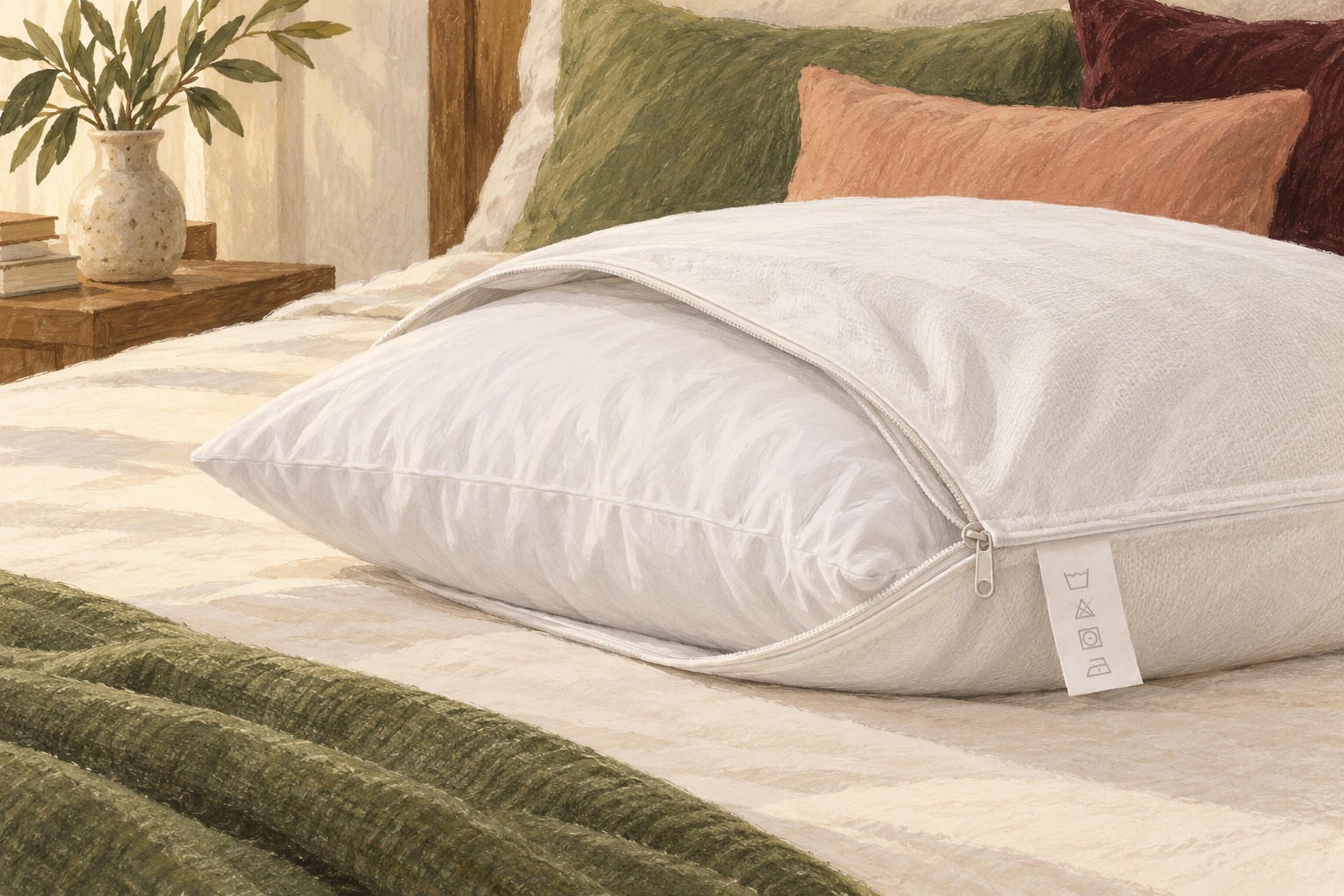
Compare the protector's dimensions with the pillow's actual shape and thickness. A tight cover can compress the pillow or strain the zip, while a very loose one may bunch under the pillowcase. For a shaped pillow, look for explicit compatibility rather than assuming a standard rectangle will behave well.
Read the construction details. A quilted protector, a thin woven cover and a waterproof barrier have different purposes and may feel different. A waterproof claim should explain the part covered and any limitations around the closure. It does not automatically mean the entire pillow can be immersed or that every seam is sealed.
Check the wash temperature, cycle, permitted detergent and drying method. A cover that requires slow air drying may need a spare if you want to wash and remake the bed on the same day. A tumble-dry restriction matters if there is little indoor drying space.
Do not choose a cover for a specific health-related claim without reading what evidence supports that claim. A general protector is not automatically a treatment for allergies or another condition. If a clinician has recommended a particular barrier or laundering routine, compare products against that requirement rather than substituting a marketing term.
Read the pillow's own care directions separately. A washable protector does not make the pillow beneath it washable. Avoid removing a pillow or mattress inner cover unless the product instructions say it is intended to be removed.
Inspect after washing
Check the zip, seams and any barrier layer for damage. Follow the maker's advice if a coating peels, a seam opens or the closure no longer works. Do not apply a fabric glue or waterproofing spray as an improvised repair to a sleeping surface.
Dry the protector fully, including the zip area, before replacing it. Keep a note of the model and care information so a second protector can be compared accurately. The most useful choice is one that can be fitted, removed, washed and dried repeatedly without turning a routine bedding change into a complicated task.