Choosing a floor cleaner for the actual flooring
Flooring should be identified by material and finish before a cleaner is chosen. A room name is not a material specification.
Find the floor’s identity
Look for the installation record, spare packaging or manufacturer’s care sheet. Laminate, vinyl, engineered wood, sealed timber and stone can look similar in photographs while requiring different treatment. If you rent, ask the landlord or managing agent rather than guessing from appearance.
The finish matters too. A surface treatment can change what cleaners and methods are suitable. If you do not know whether a wood floor is oiled or lacquered, obtain that information before using a specialist maintenance product. A cleaner labelled for wood is not necessarily suitable for every wood finish.
Check water and equipment restrictions
Read whether damp mopping, wet cleaning or steam is permitted for the exact floor. Manufacturer instructions can differ even within one range. Quick-Step, for example, publishes model-specific maintenance guidance rather than one permission that should be applied to all laminate floors.
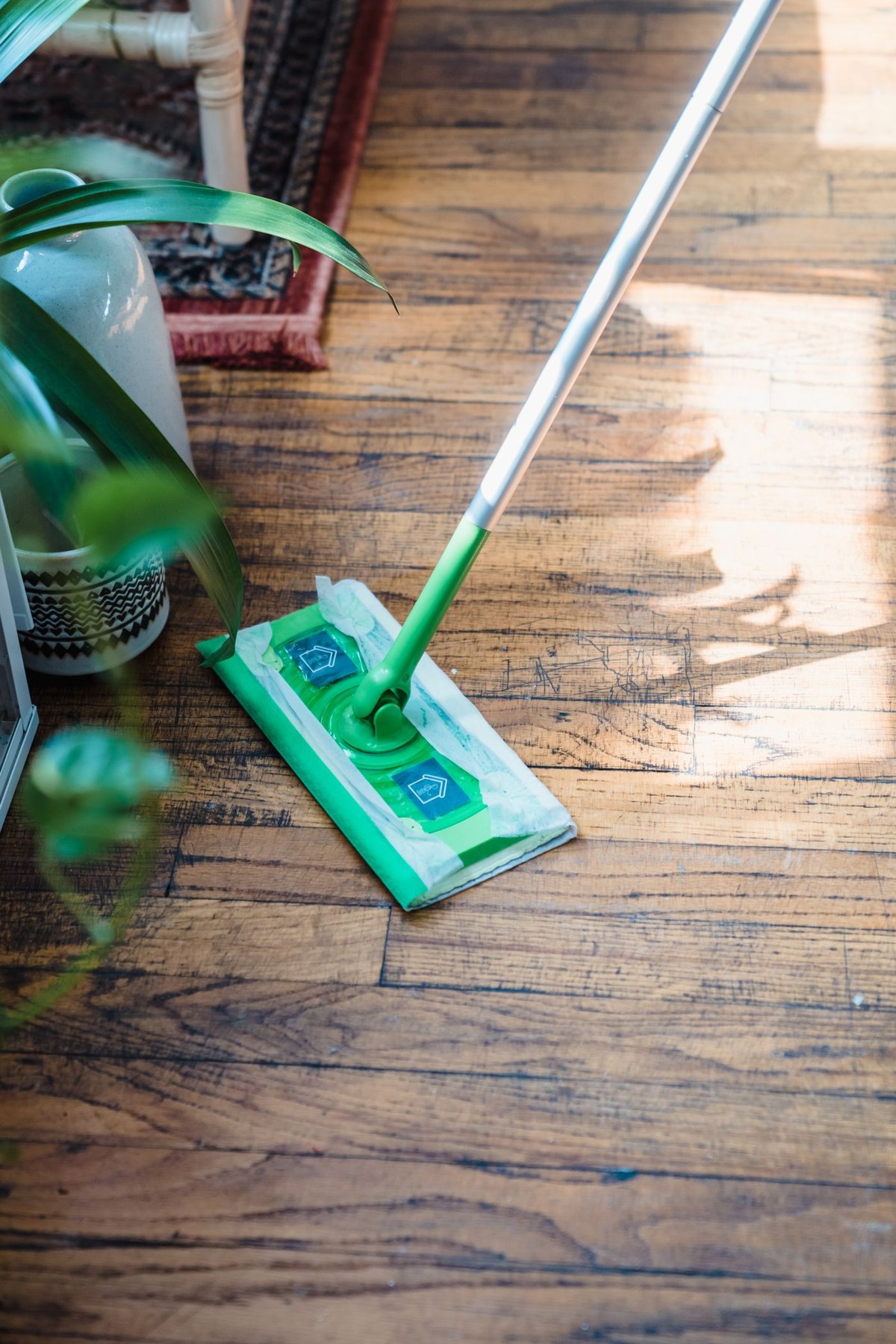
Remove loose grit with an appropriate tool before mopping so that it is not dragged across the surface. Check vacuum attachments and mop condition. A damaged wheel or dirty pad can create a problem that changing the cleaner will not fix.
Choose the compatible formula
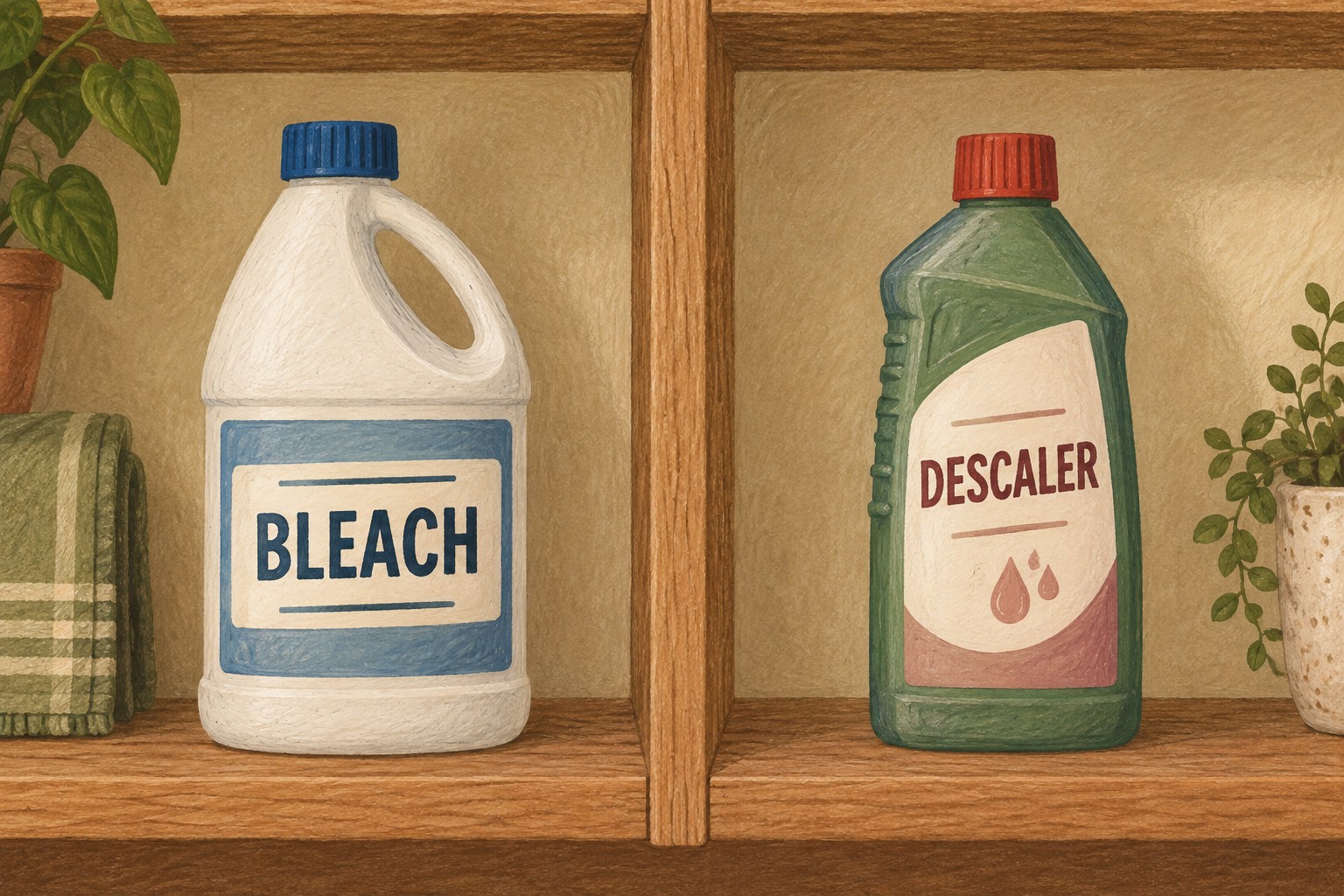
Look for explicit compatibility with the material and finish, including exclusions. Acidic descalers can damage acid-sensitive stone, and abrasive products can affect surfaces that appear hard. Natural Stone Institute guidance is a useful reminder that stone is not one uniform category.
Follow the dilution and application instructions. Do not add extra product to get a stronger scent or a glossier finish. Residue and slipperiness are reasons to review the method, not automatically to apply another layer. If rinsing is specified, include it in the job.
When a room has several floor materials
An open-plan room may connect a stone entrance to a laminate living area. A bucket prepared for one surface should not automatically travel across the boundary. Identify a method approved for both or clean the areas separately with their own compatible instructions.
Also check transitions, joints and edges where water may collect. A water-resistant surface claim does not necessarily describe every edge detail or the substrate below it. Avoid turning a product-specific warranty into a general permission to leave puddles.
If you cannot find the floor identity, begin by asking whoever supplied or installed it. A remaining offcut, invoice or property record may be more informative than an online photograph comparison. Until the material is identified, postponing a specialist chemical treatment is preferable to making the uncertainty permanent through damage.
Keep a record for future changes
Save the floor’s model and care sheet with the chosen cleaner information. If a product is discontinued, that record gives you the actual compatibility requirements for finding a replacement. Buying the same scent or a bottle from the same brand is less reliable than checking the new product against the floor’s documented restrictions.
Test the routine, not a random chemical
Where the manufacturer calls for a test in an inconspicuous area, carry it out using the intended method and wait as directed before treating the whole floor. A tiny successful test does not override an explicit exclusion on the label.
Keep people and pets away from wet surfaces and allow the floor to dry before ordinary use. Store the chosen product with the floor’s care information so another household member can repeat the method. If damage or an unexplained mark persists, ask the floor supplier before escalating to solvents, abrasive pads or stronger chemicals.