BPA-free is one claim about one part of a product
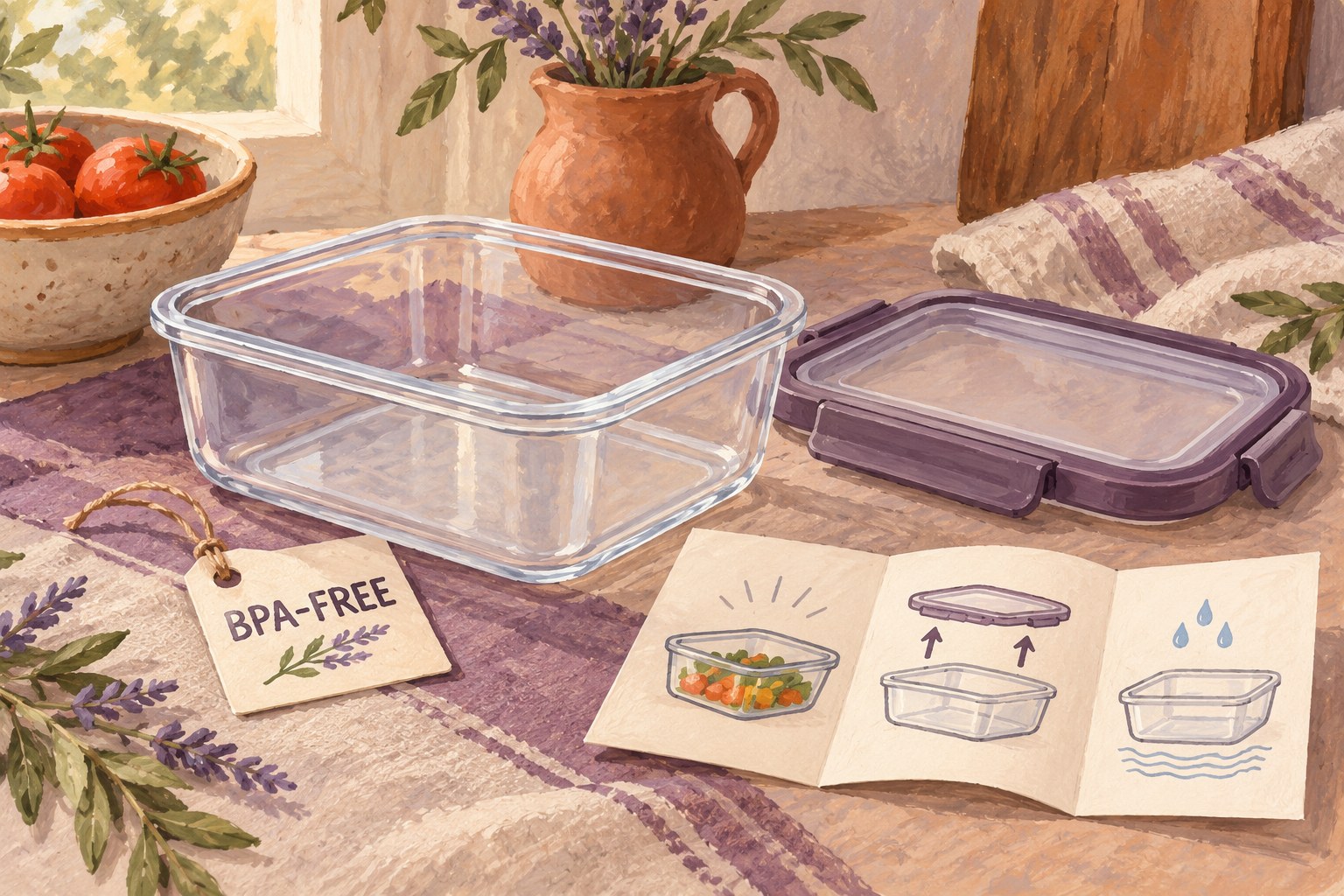
BPA-free is a statement about bisphenol A within a stated scope. It does not describe every material or every permitted use of a finished product.
Identify the part covered
Ask whether the claim applies to the container body, lid, lining, seal or complete product. A metal bottle can still include non-metal components, and a carton can have a food-contact lining. Do not assume the most visible material is the only material relevant to the claim.
Check what the manufacturer means by free. It may describe formulation, a supplier declaration or testing under a stated method. If the claim is important to your purchase, ask for that basis rather than treating the phrase as a complete specification. A long list of substances absent from the product does not identify the materials that are present.
Keep intended use in view
A BPA-free box is not automatically microwave-safe, oven-safe, freezer-safe or dishwasher-safe. Those permissions depend on the finished product and its instructions. Read temperature, food-contact and care limits separately, including any restrictions on the lid.
Do not use the claim to justify keeping a cracked or distorted container in service. Condition, cleaning access and closure performance remain relevant. Conversely, do not assume an older unlabelled item contains BPA just because the phrase is missing; ask the manufacturer about its model and materials if you need that information.
Regulation depends on the market
The European Commission adopted a ban on BPA use in specified food-contact materials in December 2024, with transition arrangements and limited exceptions. That is a regional regulatory development, not a statement that every product in every country has the same rules or transition dates. Check current local guidance for a specific compliance question.
A product legally sold in one market can still have different labelling and compliance information from a version sold elsewhere. Online sellers should be able to identify the version and intended market. Avoid treating an international marketplace photograph as proof of the exact product that will arrive.
Ask for a complete buying answer
For a lunch box, a useful enquiry asks for the material of each food-contact part, the scope of the BPA-free claim and the permitted heating and washing conditions. Those answers help you decide whether it fits your routine. Asking only whether it is non-toxic invites an answer too broad to evaluate.
Keep the response with the product reference. If the design changes or you buy a replacement lid, check again rather than assuming the earlier answer applies. One specific claim can be useful without being turned into a guarantee about every chemical, environmental property or individual health outcome.