Bathroom limescale products and acid-sensitive surfaces
Limescale removal often involves acids. The mineral deposit and the surface beneath it need to be considered together.
Identify what is being treated
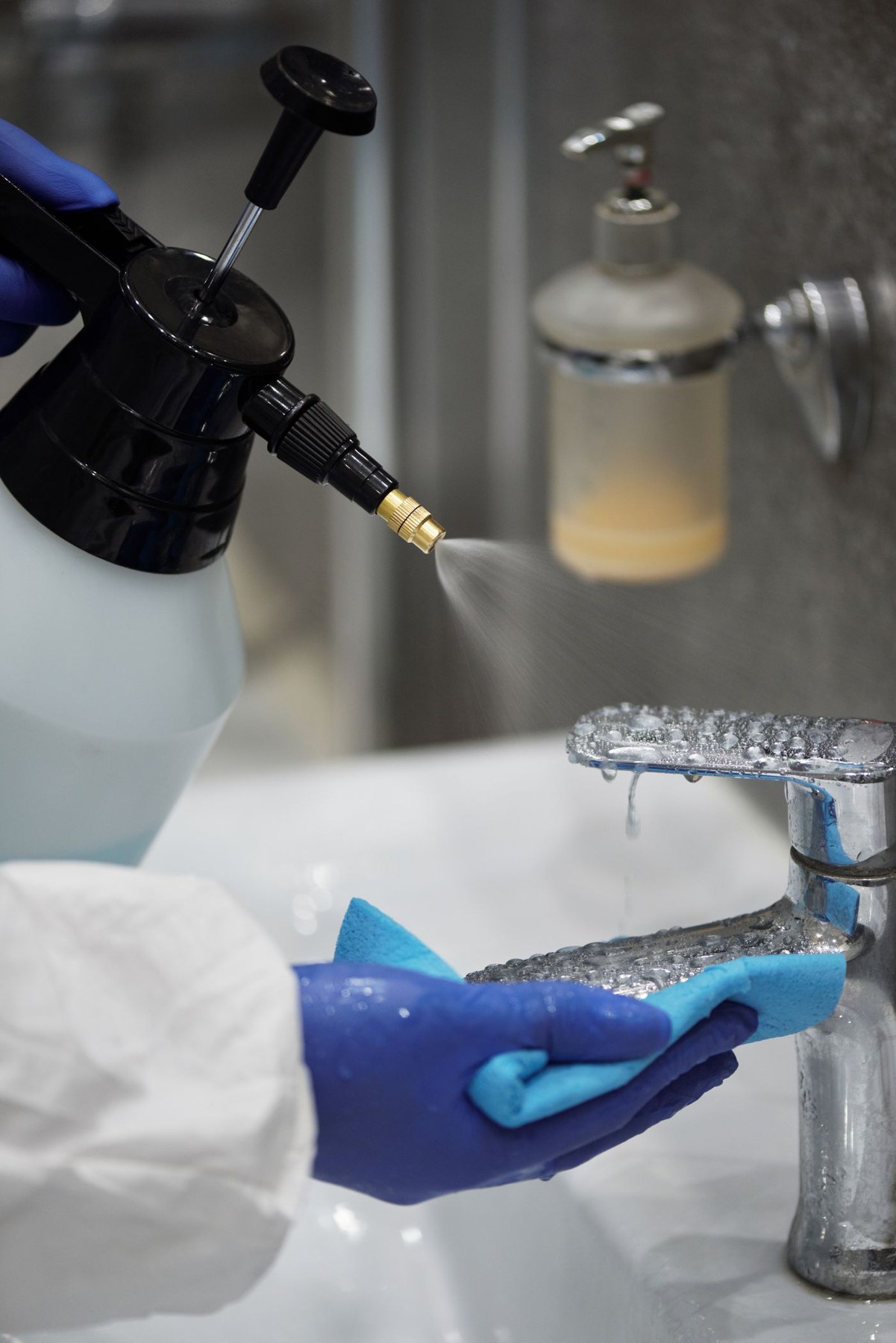
White deposits around a tap can be mineral scale, but not every pale mark is limescale. Soap residue, a damaged finish and etching can also change the appearance of a surface. If you are unsure, ask the fixture or surface supplier before choosing a stronger descaler.
Read the cleaner’s list of suitable and excluded materials. Pay attention to natural stone, plated finishes, grout, enamel and plastics where relevant. The tap and the basin immediately below it may need different methods.
Protect the surrounding materials
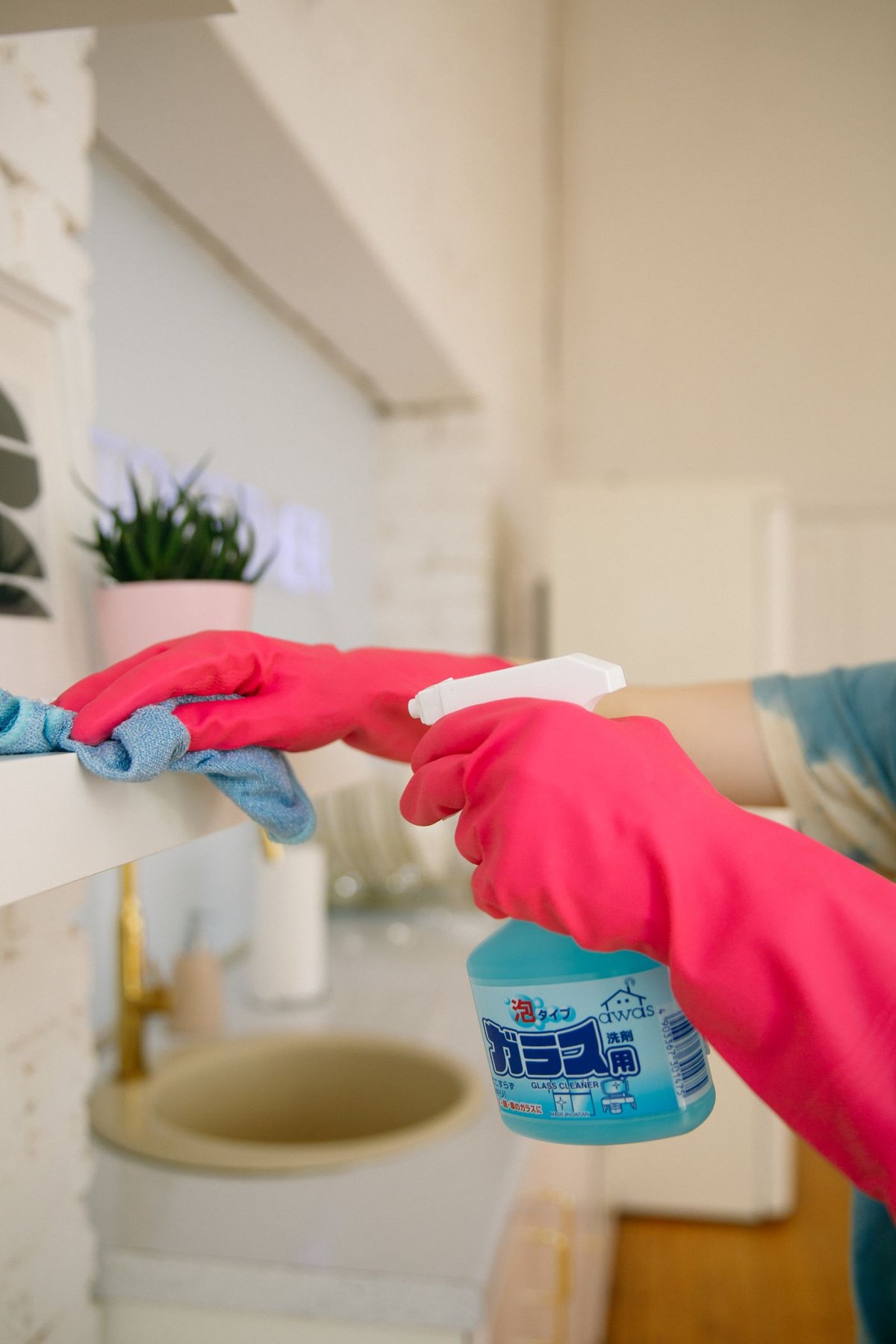
A product applied to a metal fitting can run onto a stone ledge. A spray intended for glass may land on an adjacent frame. Plan how you will keep the product in the permitted area and follow the application method on the label.
Natural Stone Institute guidance warns that acids can etch calcareous stone. Vinegar and lemon juice are acids too; their household or food origin does not make them automatically suitable for a bathroom surface. Do not use a homemade recipe to bypass a manufacturer’s exclusion.
Use time and amount as directed
Follow the stated contact period, dilution if any, and rinsing instructions. Leaving a descaler overnight is not a general improvement on a short labelled application. A cloth soaked around a tap can prolong contact with finishes and seals in ways the manufacturer has not permitted.
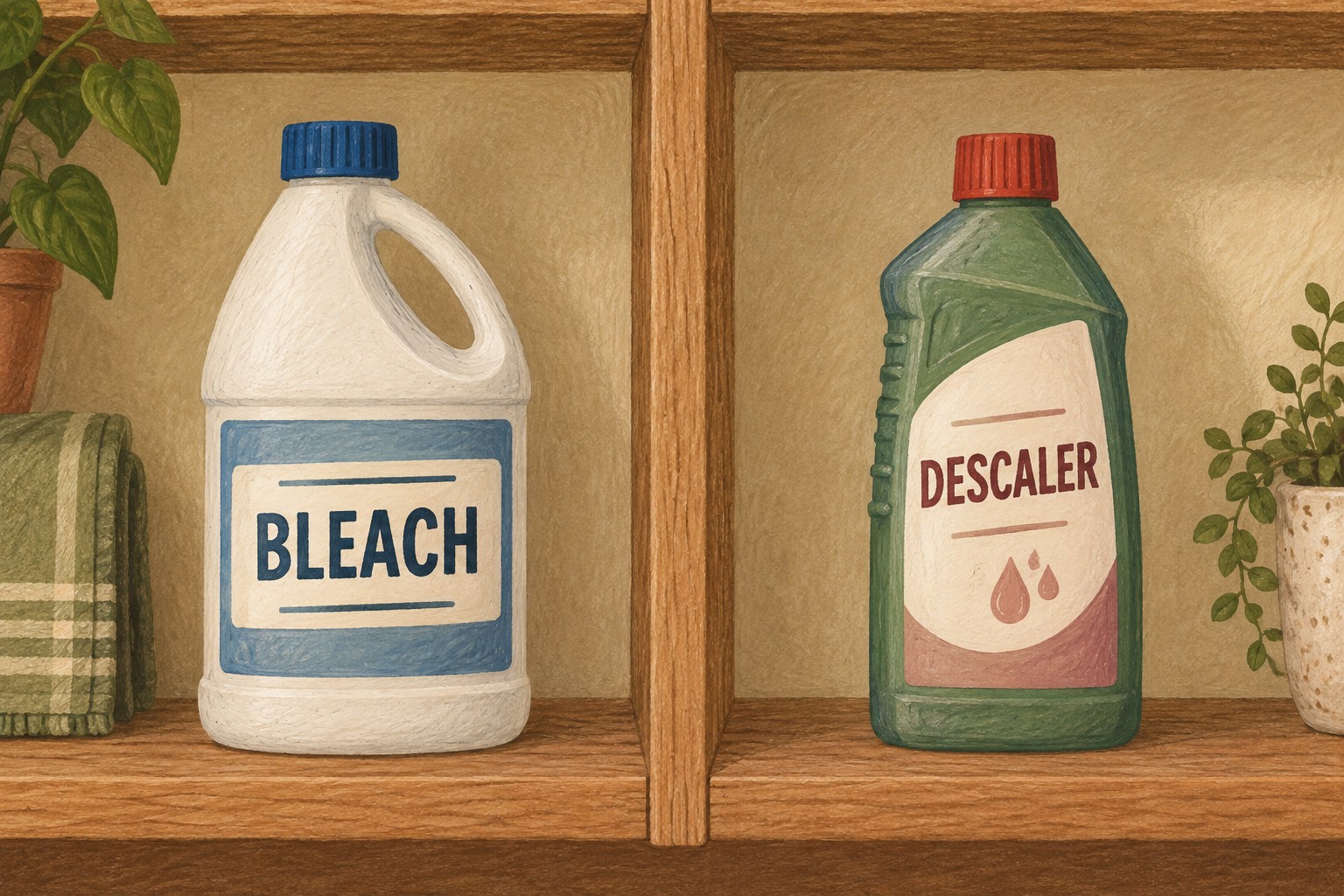
Do not apply descaler where bleach or another cleaner remains. Never mix products. If you have already tried something, record it and follow the relevant rinsing guidance before seeking advice about another method.
Use the required protective measures and ventilation. Keep the product away from children and pets while the job is in progress, not just when it is stored.
Prevent repeated over-treatment
Drying water from suitable surfaces after use can reduce the need for frequent scale removal, provided the surface’s care instructions allow the method. Maintain a simple routine that you can repeat without abrasives or unnecessary chemicals.
If a dull patch remains after permitted cleaning, stop escalating. It may be surface damage rather than a remaining deposit. A supplier or restoration specialist can advise on the material; another bottle of acid cannot diagnose the mark.