Buying online when the full label is not shown
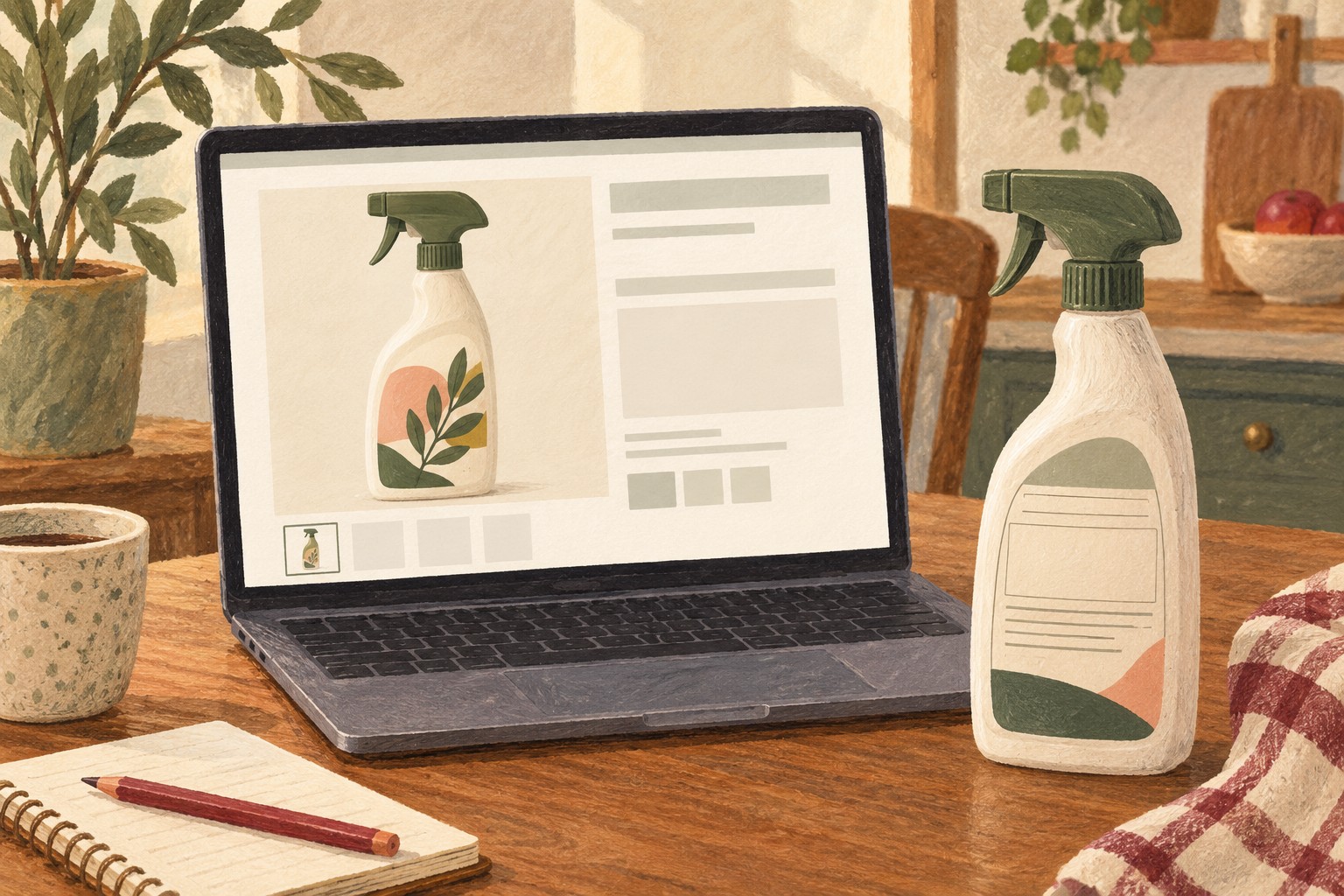
A front-of-pack photograph can tell you the brand and colour scheme while leaving the buying question unanswered. Missing information is a reason to ask before ordering.
Name the missing detail
Start by deciding what information would change your choice. For a moisturiser, it might be the current ingredient list. For a cleaner, it might be dilution instructions or a surface restriction. For a food container, it might be whether the lid and base share the same temperature limits. Asking for the full label is useful, but identifying the particular uncertainty makes a reply easier to assess.
Avoid treating a row of marketing badges as a substitute. Fragrance-free, plant-based or suitable for everyday use may address only part of your question. A product can have a detailed front description and still omit the care instruction that matters in your household. Make a short note of the information you need before looking for a lower price.
Match all the pieces to one product
Check whether the title, photographs, selected options and description refer to the same variant. Online listings sometimes combine several sizes or fragrances on one page. Changing an option may update the price without changing the label photograph. Read the selected item in the basket as well as the headline above it.
Look for the model or product reference, volume and market. A formula sold under a familiar name in another country may have different labelling. The FDA's cosmetic ingredient guidance concerns products marketed in the United States; it is not a universal explanation of the information supplied in every country. Use the manufacturer information for the version actually offered to you.
A review photograph can help reveal the packaging, but it may show an older version. Do not silently combine a current seller price with a label copied from a several-year-old review. If the manufacturer and retailer disagree, ask which information applies to the stock being sold.
Ask for the panel, not a reassurance
A useful enquiry might say: please send a readable image of the back label for the 500 ml unscented version currently supplied, including ingredients and use instructions. That is more precise than asking whether the product is clean or safe. Keep a copy of the answer with the listing if it becomes part of your buying decision.
For an appliance or reusable item, request the model-specific manual. A general sentence saying that the range is easy to clean will not answer whether a particular part can be removed, submerged or machine-washed. Likewise, an image of a recycling symbol does not explain whether a mixed-material lid separates into parts accepted by your collection service.
There is no need to keep negotiating indefinitely. If a seller cannot identify the product or provide essential instructions, choose an option with accessible information. A discount does not resolve a missing compatibility detail, and an attractive photograph cannot replace a readable warning panel.
Check the delivery before discarding the evidence
When the parcel arrives, compare the actual item with the information you used. Check the version, size, condition and supplied instructions before opening or using it where possible. If a material difference appears, contact the seller through its documented process and keep the packaging while the question is resolved.
Do not assume an ingredient-name difference automatically proves a formula change; naming conventions and markets can differ. Ask for clarification when the difference matters. Equally, do not ignore an instruction that contradicts an old screenshot simply because you preferred the older wording. Use the current manufacturer's guidance for the item in your hands.
The objective is an informed purchase rather than a perfect archive of every page. Keep enough information to explain what you ordered and why you believed it suited the task. Once that is clear, the shopping decision becomes much smaller than a search for the most reassuring collection of claims.