Avoiding duplicate cleaning products in a shared home
Three people can buy three versions of the same cleaner while an existing bottle sits behind the washing machine. A shared purchasing routine can prevent that without making every product communal.
Agree on jobs and ownership
List the recurring jobs in the shared space: dishes, worktops, floors, bathroom surfaces and laundry, for example. Then identify the products already assigned to them. Use the actual product names rather than broad categories such as the green spray. Similar-looking bottles can have very different directions.
Decide which supplies are shared and which belong to one person. Someone may use a particular laundry product because of a preference or individual advice. Do not combine that item into a communal stock system without asking. A clear distinction avoids both duplicate buying and the assumption that everyone can use whichever bottle is nearest.
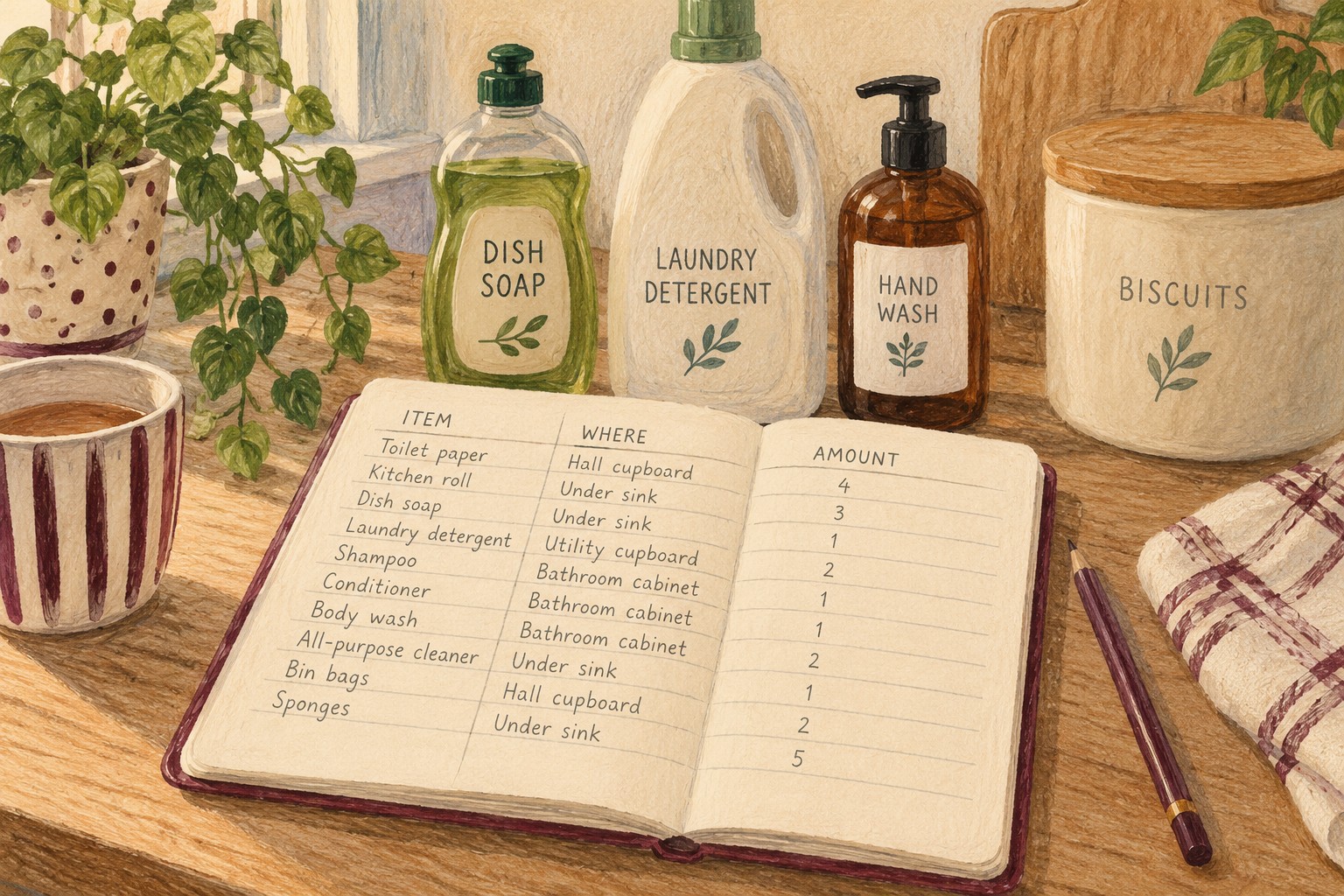
For shared supplies, agree on one place to record that an item is running low. A note on the fridge can work as well as an app. The important part is that the person buying the replacement checks it before shopping and marks the purchase afterwards.
Use an identifiable replacement point
Choose a visible trigger such as the final unopened refill being put into use. Avoid a rigid percentage that requires everyone to estimate the level of an opaque bottle. Write down the normal replacement size and variant so a well-intentioned shopper does not bring home a concentrate that needs a different routine.
For example, a household might keep one bottle in use and one sealed refill for a frequently used washing-up liquid. When the refill is opened, the shopping note changes to needed. That arrangement is an organisational example, not a rule that every household should store a spare. Available space, usage and the product's storage directions determine what is reasonable.
Keep supplies in their own labelled containers and follow the storage instructions. Never make space by pouring remnants together. EPA advises retaining original containers and labels for hazardous household products and not mixing leftovers. A crowded cupboard should be solved by purchasing less and arranging it properly, not by creating an unidentified combined product.
Resolve duplicates without creating a new task
If two unopened bottles already exist, check that they are genuinely the same variant and decide which to use next. Put that decision on the stock note. Do not open both simply to make their levels match, and do not use more product per job to finish one quickly.
When duplicates have different instructions, keep them distinct. An acidic bathroom product and a general cleaner do not become interchangeable because both are used near the sink. If an unwanted product needs disposal, consult its label and local guidance rather than emptying it into a drain to clear the shelf.
Review the arrangement after the next shopping cycle. If the same duplication happens again, simplify the recording step or assign the purchase to one person. The best shared system is one the household can understand without a meeting every time a bottle runs out.